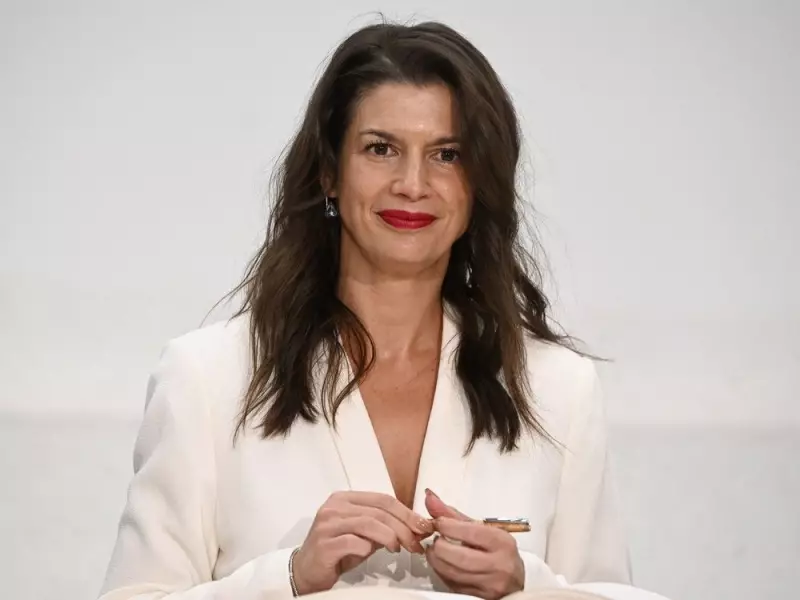
In a significant development for Quebec's political landscape, Geneviève Guilbault, a prominent minister in the Coalition Avenir Québec (CAQ) government, has declared she will leave political life at the end of her current term. The announcement, confirmed on Sunday, January 18, 2026, comes just days after Premier François Legault stated he would step down as party leader and premier.
A Swift Political Exit Following Leadership Vacuum
Guilbault, the 43-year-old Minister of Municipal Affairs, scheduled a news conference in her Louis-Hébert riding in the Quebec City region to make the formal announcement. She is expected to cite family reasons for her decision not to seek re-election in the next provincial vote, scheduled for October 2026. Her departure marks the exit of a figure once considered a rising star and potential successor to Legault, whose own resignation plans were revealed last week.
The Shadow of the SAAQclic Fiasco
Guilbault's political image, however, had been notably tarnished by her involvement in the SAAQclic digital modernization project fiasco. Although she became Transport Minister after the Société de l'assurance automobile du Québec's (SAAQ) project was conceived, she was tasked with managing the widespread chaos that followed its problematic launch.

The situation intensified last week when Guilbault and members of her team received an advance notice from the Gallant Commission, which is investigating SAAQclic. The notice indicated they would be blamed for "poor conduct" related to the project's massive cost overruns. During commission hearings, Guilbault faced tough questions about documents suggesting she had been informed of the financial issues as early as 2023, contradicting her previous assertions of having no knowledge of the problems.
From Byelection Victory to a Departure Amid Scrutiny
Guilbault's career trajectory highlights a dramatic shift in fortunes. In 2017, she secured a crucial first byelection victory for the CAQ in Louis-Hébert, a win that helped catalyze the party's subsequent landslide in the 2018 general election, where it captured 74 seats and formed a majority government. For years, she was viewed as one of the party's most capable ministers.
Her impending exit, following so closely on the heels of Legault's, signals a period of major transition and uncertainty for the governing CAQ. The party must now navigate a leadership contest and a significant cabinet reshuffle while preparing for a general election, all without two of its most recognizable figures.