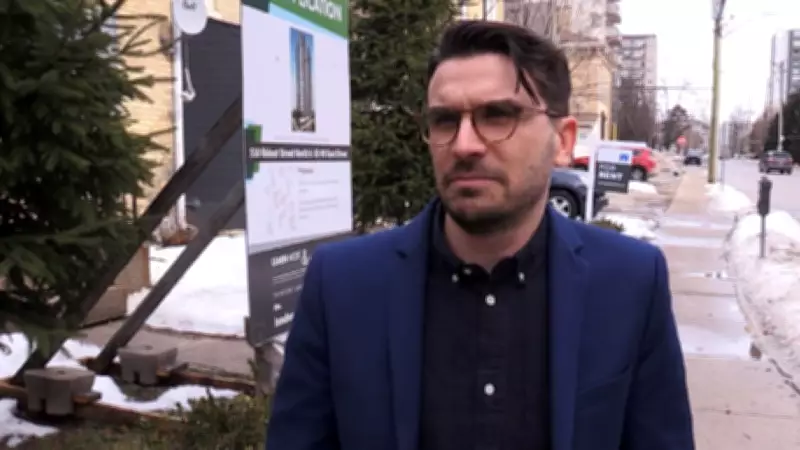
In a bold political stance, London Councillor David Ferreira is not backing down from his controversial comments linking campaign donations to decisions made by the city's planning committee. The remarks have ignited a debate over transparency and influence in municipal governance, particularly as a significant development project moves forward.
Ferreira's Unwavering Position
Councillor Ferreira, representing the interests of his constituents, has publicly stated that he will not retract his assertion that financial contributions to political campaigns can sway the outcomes of planning committee deliberations. This position comes amid heightened scrutiny of development processes in London, where ethical standards are under the microscope.
Context of the Controversy
The controversy unfolds against the backdrop of a proposed 30-storey high-rise development by York Developments at 550 Ridout St. N. and 82-90 Kent St. in London. Ferreira was recently photographed at this site, emphasizing the real-world implications of planning decisions on urban landscapes and community welfare.

"It's crucial to address the perception that money talks in politics," Ferreira remarked, highlighting concerns that campaign donations from developers might unduly influence committee members. This issue is not unique to London but resonates across municipalities grappling with balancing growth and integrity.
Broader Implications for Municipal Politics
The councillor's comments tap into a wider discourse on political ethics and accountability. In an era where public trust in institutions is often tested, Ferreira's refusal to soften his stance underscores a commitment to calling out potential conflicts of interest.
- Campaign finance reform advocates argue that stricter donation limits could mitigate such concerns.
- Opponents claim that Ferreira's statements are speculative and could hinder productive development discussions.
- The planning committee's role in shaping London's future adds urgency to this debate, as decisions impact housing, infrastructure, and community character.
Reactions and Next Steps
Responses to Ferreira's comments have been mixed, with some community members praising his courage and others accusing him of politicizing the planning process. As the development proposal undergoes review, all eyes will be on how the committee navigates these ethical waters.
Ultimately, this situation raises fundamental questions about the intersection of money and policy in local government. Ferreira's steadfastness may prompt broader conversations on reforming campaign donation practices to ensure that planning decisions are made solely in the public interest, free from undue financial influence.