Introducing Charles Milliard: The New Face of Quebec's Liberal Party
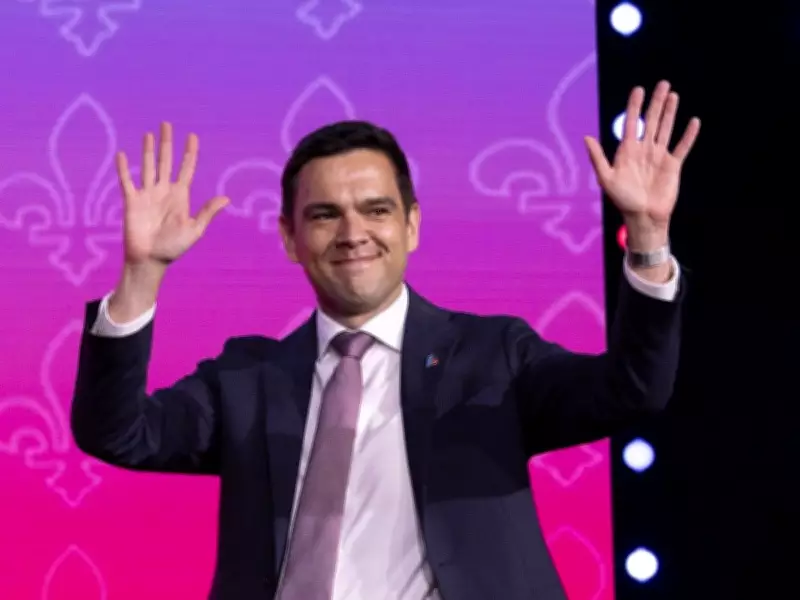
Charles Milliard has been officially acclaimed as the 17th leader of the Quebec Liberal Party, a historic political institution that has served Quebec for 159 years. In his own words, Milliard declared his vision for the party: "I want a party that is transparent, open and will regain the confidence of Quebecers." This statement came as he prepared to assume leadership of the party that has faced recent challenges and controversies.
Early Life and Professional Background
Born and raised in Lévis, directly across the river from Quebec City, Milliard describes his upbringing as typical of a francophone family. His mother worked as a French and theatre teacher within the public school system, while his father labored at the Davie shipyards and various construction projects throughout the capital region. Neither parent spoke English, with Milliard acquiring bilingualism through his education.
Professionally trained as a pharmacist, Milliard began his career with Uniprix pharmacy in 2003, steadily advancing to the position of executive vice-president by 2016. The following year marked a significant career shift into national public relations, where he served as vice-president for health. In 2020, he transitioned to become president and director-general of the Fédération des chambres de commerce du Québec, a role he maintained until 2024.

During his tenure at the federation, Milliard championed environmental causes and adopted an anti-urban-sprawl philosophy that represented a new direction for the business organization. Now 46 years old, he has been a Quebec Liberal Party member since age 18, actively participating in the Liberal youth wing while maintaining federal connections to progressive conservatives under leaders Joe Clark and Jean Charest.
Political Journey and Leadership Campaigns
Milliard's path to leadership involved two significant attempts. After losing his first leadership bid, he accepted a teaching position at the Williams School of Business at Bishop's University in Lennoxville. His second attempt in 2025 resulted in a close contest against Pablo Rodriguez, with Milliard securing 47.7 percent of the party vote compared to Rodriguez's 52.3 percent.
Reflecting on his political evolution, Milliard noted that while his initial campaign focused on establishing recognition, his second attempt allowed him to demonstrate greater confidence. "I am feeling a lot less inhibited," he told reporters after announcing his renewed candidacy on January 6. "I have stopped trying to please everyone." His determination became even more evident when he formally submitted his application, boldly stating, "I am going to win this race."
This leadership race presented Milliard with an opportunity to address the party's challenges following allegations of fundraising irregularities within the Rodriguez leadership camp that ultimately forced Rodriguez's resignation. When questioned about persistent ethical concerns, Milliard responded firmly: "I am not happy about this. I want a party that is transparent, open and will regain the confidence of Quebecers. What I can tell you is if I am the one in charge, things will happen my way."
Political Positions and Policy Stances
Milliard has positioned himself as a right-of-centre economic candidate with strong regional appeal, committing to avoid tax increases while supporting Quebec's traditional Liberal position that a robust economy and fiscal responsibility are essential for maintaining the province's social safety net.
On minority issues, he advocates for protecting and promoting French while simultaneously respecting Quebec's English-speaking community, though he has provided limited specifics about implementation. During his first campaign, Milliard indicated he would propose changes to Bill 96, the Coalition Avenir Québec government's legislation overhauling the Charter of the French Language. He has particularly criticized clauses he believes impose unnecessary burdens on small and medium-sized businesses and has questioned the requirement for immigrants to communicate exclusively in French with government agencies six months after arrival.

Milliard acknowledges that past Liberal decisions, such as advocating for more French courses in English CEGEPs, have alienated anglophone voters, stating his intention to rebuild these relationships: "I think you've been taken for granted for way too many years by the party." While he hasn't detailed specific plans regarding Quebec's secularism laws, he criticized the CAQ government in 2025 for creating legislation "on the backs of our minorities."
Political Philosophy and Federalism Views
Describing himself as a Quebec nationalist, Milliard expresses admiration for former Liberal leader Robert Bourassa, who viewed the Canadian federation primarily as an economic union. In a January interview with Le Soleil, Milliard discussed his approach to federalism, advocating for what he termed "a useful tension" with Ottawa that could enhance Quebec's influence.
He prefers policy-focused debates over personal attacks, particularly in engagements with the Parti Québécois. Following PQ Leader Paul St-Pierre Plamondon's January speech referencing the Plains of Abraham, Milliard accused his counterpart of being disconnected from reality: "When someone quotes (Pierre) Falardeau and Gandhi in the same speech when we have a historic deficit and there are people sleeping outside when it's 20 below and youth don't have the means to live decently, it is really wilful blindness of the reality of Quebec."
The Challenge Ahead: Building Recognition and Trust
Despite his impressive credentials, Milliard faces significant challenges in establishing public recognition. According to a Léger poll conducted from January 27-29, 64 percent of Quebec voters admit they don't know who he is—the lowest recognition score among all party leaders vying to become Quebec premier.
Polling expert Philippe J. Fournier notes this presents both opportunity and challenge: "Politically, Charles Milliard is thus a blank page." While only 17 percent of respondents hold negative opinions about him (minimizing personal baggage beyond party troubles), his limited public profile means his leadership may have minimal immediate impact on party standings. The poll projects his arrival might increase Liberal support from 26 to just 28 percent.
The next Quebec general election is scheduled for October 5, 2026, though the new CAQ leader replacing Premier François Legault in April could potentially call an early election. Milliard plans to seek a legislative seat in the historically Liberal riding of Orford as he works to rebuild party credibility and connect with Quebecers across the province.
Personally, Milliard represents diversity within Quebec politics. While not the first gay leader of a Quebec political party, he is the first for the Liberals. He lives in North Hatley in the Eastern Townships with his partner, embodying the diversity he champions while advocating for Quebec's place within Canada, economic strength, and respect for minority communities.