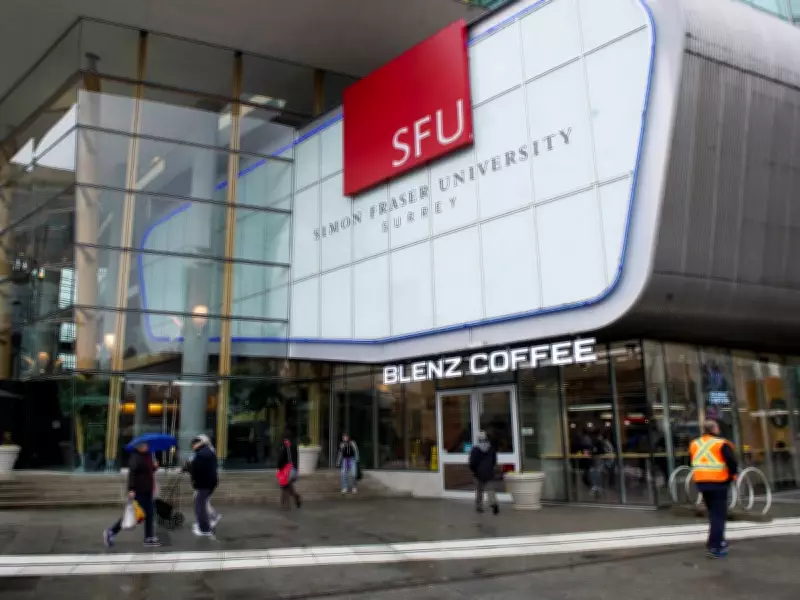
The British Columbia Human Rights Tribunal has ruled that conservatism does not qualify as a protected political belief under the province's human rights code, effectively denying a hearing to a Simon Fraser University professor who lost a tenure-track position due to his opposition to diversity, equity, and inclusion (DEI) initiatives.
Background of the Case
Josh Gordon, a political science instructor who taught at SFU's policy school on various contracts from 2014 to 2021, applied for a tenure-track position in 2021. Despite positive student evaluations, a history of contract renewals and pay increases indicating strong performance, and a viewpoint that added diversity to the policy school, his application was rejected. The tribunal decided in April not to grant a hearing, citing that his conservative views did not fall under the protected category of political belief.
Gordon's Views and the DEI Context
Gordon's positions were well-known within the faculty. He had argued against giving in to a student letter demanding the integration of DEI into the academy, stating that institutions should not be assumed to be systemically racist and that people should be treated equally. He also expressed skepticism about gender-based analysis for all issues, the effectiveness of decriminalizing drug use, and the idea that all negative phenomena in Indigenous communities stem from colonialism.

In response to the student letter, SFU appeared to accept the charge of racism and adopted a DEI-focused stance. When searching for a new tenure-track assistant professor, the dean, Jane Pulkingham, initially considered racial preferences but ultimately opted for a posting emphasizing DEI. Applicants were required to demonstrate a commitment to equity, diversity, and inclusion, an ability to center diverse perspectives, and leadership in DEI and Indigenous rights. DEI accounted for 10 per cent of a candidate's score.
The Hiring Process
Gordon applied for the position, highlighting his method of including diverse perspectives and ensuring equal treatment for students. He made the shortlist, but during a ranked ballot vote by nine faculty members, five ranked him last, eliminating him from consideration. Faculty leaders acknowledged his superior teaching experience and in-demand courses but deemed his support for DEI insufficient.
The tribunal's decision has sparked debate about the scope of political belief protections in B.C., with critics arguing that it effectively excludes conservative viewpoints from protection. The case underscores the tensions surrounding academic freedom and ideological diversity in higher education.