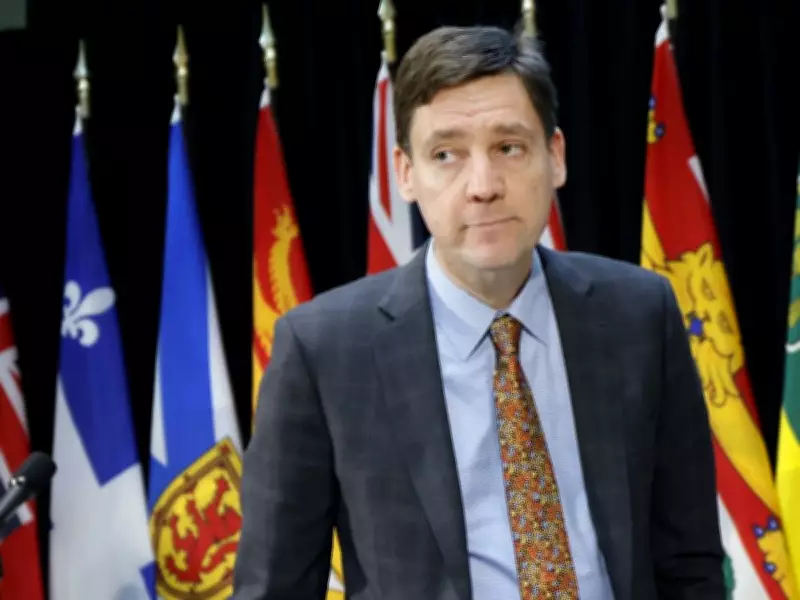
A new poll from the Angus Reid Institute has delivered sobering news for British Columbia Premier David Eby, revealing his approval rating has sunk to a record low of just 37 percent. This marks a significant decline from his peak popularity last year, when he enjoyed a 53 percent approval rating.
Steady Decline in Public Support
The latest survey of Canadian premiers shows Eby's approval has dropped 16 points since March of last year. At that time, many provincial leaders, including Eby, benefited from a "Trump bump" as they spoke out against tariffs and annexation threats from then-U.S. President Donald Trump. Eby was among the more outspoken premiers alongside Ontario's Doug Ford, reaching that record-high 53 percent approval.
Since then, support has steadily eroded. The current 37 percent rating represents a three-point drop since December, placing Eby seventh among the nine provincial leaders polled. This downward trend comes despite Eby and the B.C. NDP winning a narrow election victory in October 2024.

Multiple Challenges Weighing on Government
According to Shachi Kurl, president of the Angus Reid Institute, very little has happened in the 15 months since the election to improve the party's fortunes—quite the opposite. Kurl points to persistent problems that continue to plague British Columbians and dog the government.
Key issues cited include:
- Soaring cost of living pressures
- Critical housing affordability challenges
- Widespread difficulties accessing primary healthcare
Indigenous Reconciliation Complications
The government has also faced mounting criticism over its handling of Indigenous land title matters. Recent developments, including the Cowichan Tribes decision, have created uncertainty regarding private property rights. Additionally, Eby faced scrutiny after claiming not to know details of the federal-Musqueam agreement despite being present at its signing ceremony.
Kurl describes this reconciliation situation as "largely one of the government's own doing." She notes that while a majority of British Columbians initially believed reconciliation was possible through DRIPA (the Declaration on the Rights of Indigenous Peoples Act), recent federal and provincial decisions have created "a massive amount of uncertainty" that leaves the government with much explaining to do at a time when it has few answers.
Budgetary and Political Pressures
Eby's government took another hit last month with the release of Budget 2026, which posted a record-breaking $13.3-billion deficit and introduced unpopular tax increases, including extending PST to certain services. This fiscal approach has further strained public support.
The timing of this low approval rating is particularly challenging as the B.C. Conservatives, reinvigorated after the ouster of former leader John Rustad, prepare to elect new leadership. A recent Innovative Research Group poll conducted after the budget unveiling found 47 percent of decided voters would support the Conservatives compared to 39 percent for the NDP.
This shifting political landscape suggests Premier Eby faces significant challenges in rebuilding public trust and reversing his declining approval numbers as his government navigates complex policy issues and economic pressures affecting British Columbians.