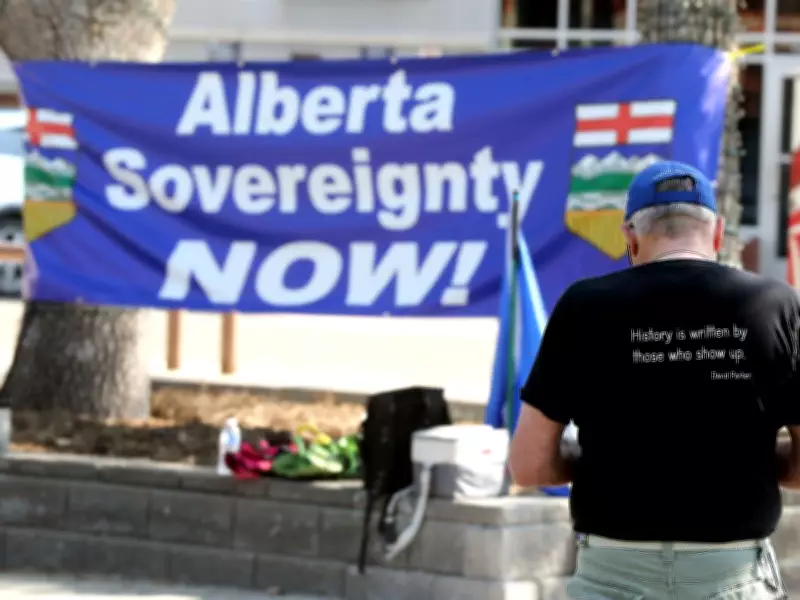
Alberta's Sovereignty Movement Gains Traction with Petition Drive
The separatist movement in Alberta is actively gathering signatures across the province, aiming to reach the threshold of 177,000 required to request a referendum on leaving Confederation. This initiative represents a significant political development that highlights deep-seated frustrations among many Albertans with the federal government in Ottawa.
Economic Grievances Fuel Independence Push
Proponents of Alberta sovereignty argue that the province would thrive as an independent nation with complete control over its natural resources, taxation policies, and spending priorities. James Dunsmuir, an Albertan from Red Deer, expressed a common sentiment when he told Global News: "We're just tired of being taken advantage of by the east. A lot of our money goes east and not a lot comes back."
The economic argument centers on Alberta's substantial contributions to federal equalization payments. This year alone, Quebec received $13.6 billion through this program while Alberta and other western provinces received nothing. Federal transfers to Alberta are projected at $8.7 billion for the current year, which represents approximately half the per capita amount that Quebec receives.

Political Landscape and Historical Context
The sovereignty movement aligns with Alberta's longstanding conservative political tradition, embodied by Premier Danielle Smith and her United Conservative Party (UCP). For more than seven decades, Albertans consistently elected conservative governments under both Social Credit and Progressive Conservative banners.
However, this political continuity was interrupted in 2015 when the New Democratic Party (NDP) secured a surprising victory. Recent polling data reveals a competitive political environment, with a Liaison Strategies survey showing the UCP at 46% support and the NDP at 44% among decided voters. This suggests that Alberta has evolved into a genuine two-party province where left-wing alternatives present a credible challenge to conservative dominance.
Potential Consequences of Independence
While separatists envision an Alberta with full control over its oil revenues and industry regulations, independence would come with significant risks. An independent Alberta would forfeit the billions it currently receives from Ottawa through health care and social transfers. Furthermore, the province would need to establish its own currency, military, and international relations apparatus.
The sovereignty movement assumes that conservative governance would persist indefinitely in an independent Alberta. However, democratic systems inherently involve political alternation. Should the NDP or another left-leaning party gain power in a separate Alberta, they might implement different spending priorities and resource management approaches than those envisioned by current separatists.
Counter-Movement and Constitutional Considerations
Opposition to separation remains substantial within Alberta. An anti-separation organization has already collected more than 450,000 signatures advocating for the province to remain part of Canada. The provincial government is not automatically obligated to act on the separatist petition even if it reaches the signature threshold, adding another layer of complexity to this constitutional debate.
The sovereignty movement reflects broader tensions in Canadian federalism, particularly regarding resource management and fiscal transfers. As Alberta contemplates this high-stakes political gamble, the province faces fundamental questions about its identity, economic future, and relationship with both Canada and its southern neighbor, the United States.