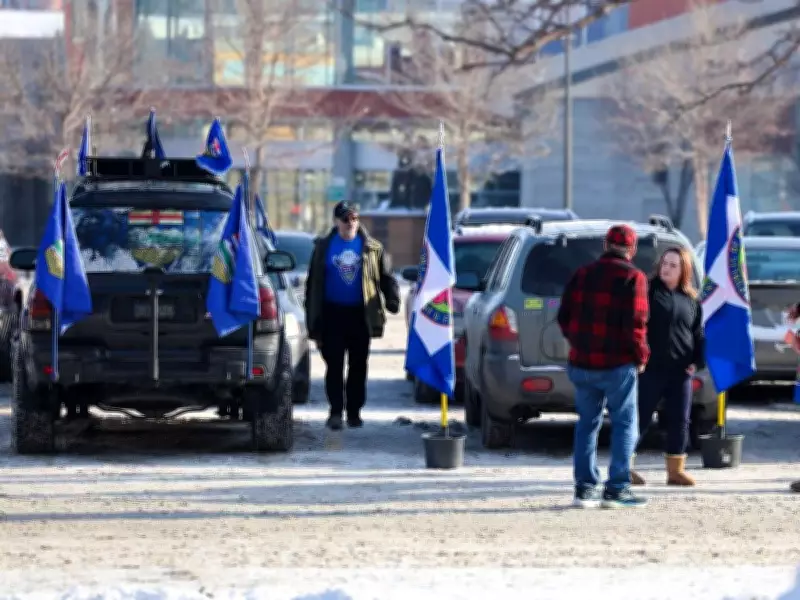
Alberta Premier's Silence on Separatism Faces Growing Pressure Amid U.S. Interest
The political landscape in Alberta has become increasingly complex as Premier Danielle Smith maintains a notable silence on both the separatist movement within her province and the growing interest from United States political figures. This strategic avoidance is drawing scrutiny from observers who argue that the stakes are simply too high for continued non-engagement on these critical issues.
World Economic Forum Context and U.S. Attention
Recent developments at the World Economic Forum in Davos, Switzerland, highlighted Canada's prominent role on the global stage. However, beneath the surface of Prime Minister Mark Carney's landmark speech and the subsequent reaction from U.S. President Donald Trump, a more concerning narrative emerged. Clear signals indicate that the Trump administration is actively monitoring Alberta's political situation with particular interest.
It has become increasingly apparent that the White House views a potential independence referendum in Canada as an opportunity to advance its own geopolitical interests. This external attention creates a delicate situation that demands careful consideration from Alberta's leadership.

The Premier's Strategic Avoidance
Premier Smith has deliberately avoided criticizing both the U.S. president and his administration, while simultaneously maintaining distance from commentary on Alberta's separatist movement. This dual avoidance strategy may prove unsustainable given the current political climate and external pressures.
With the Alberta government playing a crucial role in determining the nature, timing, and even the occurrence of any potential independence vote, clarity is urgently needed regarding several key questions:
- To what extent is this external interest on the provincial government's radar?
- What level of concern exists within the premier's office?
- What specific steps are being taken to guard against potential foreign interference?
Escalating U.S. Political Commentary
The situation intensified last week when U.S. Treasury Secretary Scott Bessent became the highest-ranking member of the Trump administration to publicly comment on Alberta's future. During an interview, Bessent made controversial claims about pipeline construction and suggested that Alberta should "come down into the U.S."
This commentary was followed by additional statements from Republican Congressman Andy Ogles, who asserted that Alberta would "prefer not to be a part of Canada" but instead desires to "be a part of the United States." Even more overt were recent comments on Trump ally Steve Bannon's podcast, where guest Brandon Weichert declared intentions to put Alberta "on the pathway to become the 51st U.S. state."
Separatist Movement Dynamics
Despite claims from Alberta separatist movements that their goals do not involve joining the United States, there has been considerable outreach to the Trump administration and MAGA-affiliated figures. This creates a complex political dynamic where external forces appear to be influencing internal provincial discussions about sovereignty and independence.
The premier now faces a challenging political year ahead, with pressing issues including the crisis in Alberta's emergency rooms and potentially ballooning provincial deficits. However, the question of how to address growing U.S. interest in Alberta's political future may emerge as one of the most significant challenges of her leadership.
Observers argue that clear communication and strategic positioning from the premier's office have become essential to navigate these complex geopolitical waters while maintaining Alberta's interests and Canadian unity.