

NDP Leadership Contest Draws Scrutiny Over Controversial Policy Proposals
The New Democratic Party's leadership race has become a focal point of political discussion, with critics arguing that the candidates' policy platforms could further alienate voters already wary of the party's direction. The contest, scheduled to conclude with a vote on March 29, features proposals that have drawn skepticism from both political opponents and former party insiders.
Electoral Setback Sparks Leadership Transition
The leadership race follows the NDP's disappointing performance in last year's federal election, which marked the party's worst showing in its 64-year history. Under former leader Jagmeet Singh, the party secured only seven seats and 6.3 percent of the popular vote, a significant decline from the 25 seats and 17.8 percent achieved in 2021. This result left the NDP without official party status for the first time since 1993, with Singh himself finishing a distant third in his Burnaby Central riding.
Candidates and Their Controversial Platforms
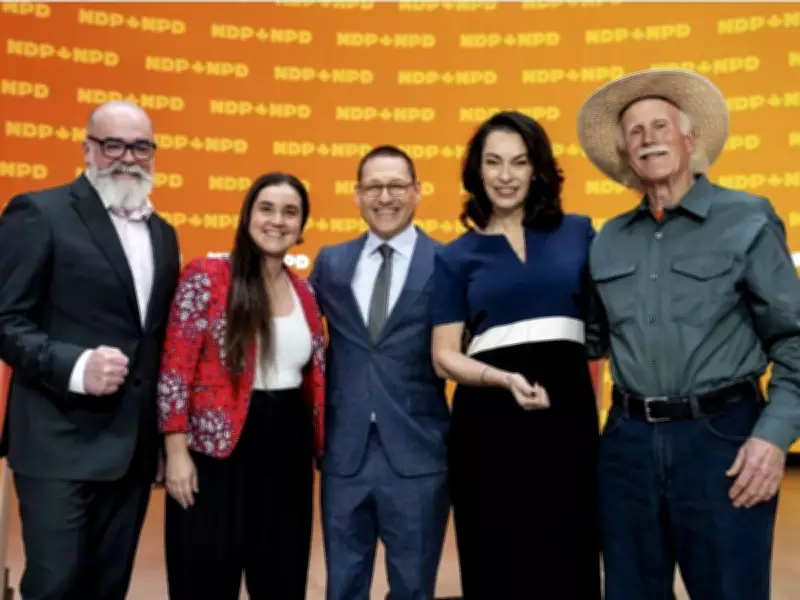
The leadership field includes three main contenders: author and socialist activist Avi Lewis, Edmonton Strathcona MP Heather McPherson, and union leader Rob Ashton. Two lesser-known candidates, Tanille Johnston and Tony McQuail, round out the field. Despite the significance of selecting a new leader, public attention has been limited, with some media outlets describing the race as underwhelming.

Rob Ashton generated brief headlines when it was revealed he used artificial intelligence to answer voter questions during an online forum, despite having previously criticized AI for potentially replacing workers and spreading misinformation.
Policy Proposals Drawing Criticism
During a recent debate, front-runner Avi Lewis emphasized his vision for expanded public ownership, including:
- Government-operated grocery stores
- Publicly-run cell phone and internet service providers
- A government bank operated through Canada Post
These proposals have drawn sharp criticism, even from within NDP circles. Former party leader Thomas Mulcair questioned the logic behind government-run grocery stores, noting that existing government services often face operational challenges.
Environmental and Economic Policy Controversies
Heather McPherson, considered Lewis's main challenger, has proposed her own suite of policies that have raised eyebrows among observers. Her environmental platform includes:
- Doubling federal funding to help municipalities transition to electric vehicles
- Implementing a $4.2-billion "excess profits" tax on oil and gas companies
- Establishing an Office of Environmental Justice to address disproportionate impacts on marginalized communities
- Government ownership stakes in early-stage clean technology companies
While Mulcair described McPherson as a "solid" MP attempting to build broader appeal than her more radical opponent, her policy proposals have nonetheless drawn scrutiny for their potential economic and practical implications.
Broader Political Implications
The leadership race occurs against a backdrop of declining NDP support in public opinion polls, leading some analysts to question whether any of the proposed policy directions can reverse the party's fortunes. The combination of radical policy proposals, internal criticism from former leaders, and limited public engagement with the leadership contest has created challenges for a party seeking to rebuild after significant electoral setbacks.
As the March 29 vote approaches, the NDP faces the dual challenge of selecting a leader who can unite the party while developing policy positions that resonate with a broader segment of Canadian voters. The outcome will likely influence not only the party's direction but also its prospects in future elections.






