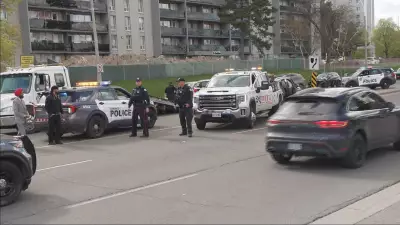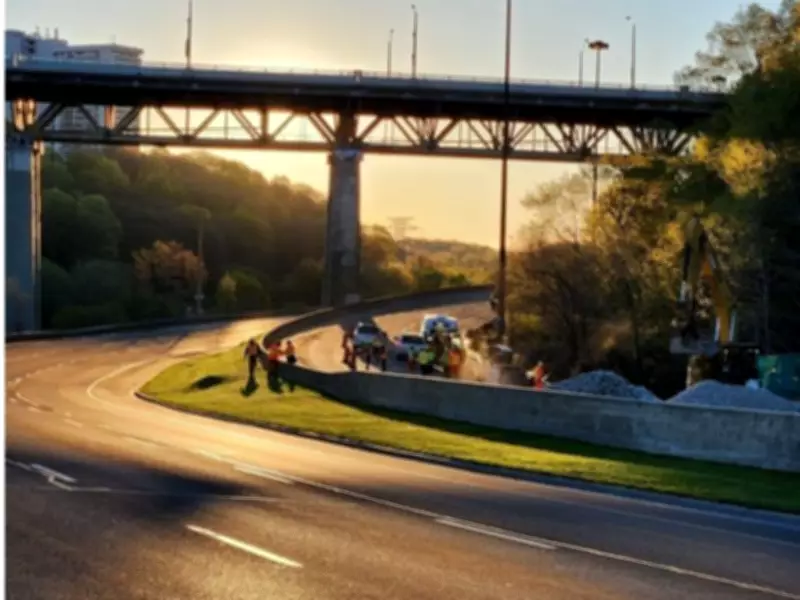
Toronto spent Mother's Day weekend proving, once again, that municipal leaders have mastered the art of making movement impossible. On the same weekend that the city hosted its biggest slate of major events so far this year, both the Don Valley Parkway (DVP) and an important stretch of the TTC's Line 2 subway were shut down. Drivers were squeezed onto already congested streets, transit riders were forced onto shuttle buses and experienced delayed commutes, and hundreds of thousands of people trying to enjoy the city were left wondering the same thing: what exactly do we pay a traffic czar for?
Weekend Events Overwhelm Infrastructure
The weekend featured two Blue Jays home games at Rogers Centre, likely drawing well over 100,000 fans combined. There was the Toronto FC match against Inter Miami, featuring Lionel Messi, which drew a record crowd of about 45,000 at BMO Field. Two sold-out Karan Aujla concerts at Scotiabank Arena each drew arena-sized crowds downtown on consecutive nights. Add in the Sporting Life Marathon, which brought tens of thousands of runners, volunteers and spectators onto city streets Sunday morning, and the scale of the challenge becomes obvious. In total, Toronto likely saw more than 200,000 to 250,000 people attending major events across the weekend—a conservative estimate. Yet the city simultaneously reduced two of the most important transportation arteries into downtown.
Coordination Failures
The problem is not that maintenance work exists. Nobody expects highways or transit systems to magically repair themselves. The issue is coordination—or the glaring lack of it. Toronto now has a "traffic czar," a position repeatedly promoted as evidence that City Hall is serious about congestion management and inter-agency planning. Residents were told there would finally be someone empowered to coordinate construction schedules, minimize overlapping disruptions, and think holistically about mobility. But weekends like the one just passed make one wonder if it would have been better to not have a czar at all, at least saving the quarter million dollars paid to the czar. If the city cannot avoid shutting down the DVP and a major portion of a key subway line during a weekend featuring Messi, two Blue Jays games, major concerts, and a marathon, then when and where exactly is this coordination happening?

Economic Consequences
Nor is this just an inconvenience issue; it is also an economic one. Toronto wants to position itself as a world-class city capable of hosting FIFA World Cup matches, attracting major entertainment events, and convincing people to spend money downtown. But world-class cities understand that transportation infrastructure is part of the event experience. If getting into the core feels like punishment, people eventually stop coming. One resident noted that instead of staying locally and spending money at a Toronto activity and restaurant, their family is going out of the city because they are not about to spend another two hours stuck in traffic with a toddler in the car.
World Cup Rehearsal Falls Flat
The timing could not be more ironic. The Inter Miami match was openly described as a rehearsal for Toronto's World Cup readiness. Officials talked about crowd management, transit planning, and regional mobility. Meanwhile, Torontonians sat in gridlock or packed shuttle buses wondering whether anyone at city hall had looked at the calendar. There is also a credibility problem. Torontonians are constantly told they must embrace congestion as the unavoidable price of growth. But people are far less patient when the congestion feels self-inflicted. Closing one major transportation corridor may be necessary. Closing several at once during one of the busiest weekends of the year feels careless.

Demand for Transparency
At a minimum, residents deserve transparency. Who approved these overlapping closures? What alternatives were considered? Was there any meaningful coordination between the city, Metrolinx, TTC, and event organizers? Most importantly, what metrics are being used to evaluate whether Toronto's traffic strategy is actually working? If this past weekend represents success, Toronto is in deeper trouble than anyone wants to admit. Our city cannot keep branding itself as open for business while making it difficult to move through it. And it certainly cannot keep asking residents to trust in "coordination" that nobody can actually see. A traffic czar should exist to prevent exactly this kind of avoidable urban dysfunction. If not, the rest of us are left asking a very expensive question: what do we pay a traffic czar for?