Six Overlooked Strategies to Revitalize Ottawa's ByWard Market
How Ottawa addresses critical issues like homelessness, traffic congestion, vacant buildings, and food culture could determine the next chapter for the historic ByWard Market. As the district prepares for its 200th anniversary in 2027, community stakeholders are proposing innovative solutions that deserve closer examination.
Addressing Homelessness with Compassionate Housing Solutions
Homelessness and addiction represent growing challenges across Canadian municipalities, with the ByWard Market serving as one of Ottawa's most visible hotspots. The Alliance to End Homelessness Ottawa advocates for a housing-first approach, emphasizing the need for affordable, non-profit housing units, including three-bedroom accommodations for families.
"When we provide the right supports, people do better when they are permanently housed," explained Kaite Burkholder-Harris, executive director of the Alliance, during a panel discussion at Ottawa Architecture Week. Regarding panhandling, she encouraged empathy: "If you don't want someone to spend money on drugs, don't give it. If you want to give money, give it with freedom and no judgment."

Transforming Traffic Patterns Through Pedestrian Zones
The constant stream of vehicles searching for parking has become a defining characteristic of the modern ByWard Market experience. Despite the ByWard Market District Authority's inventory of over 3,100 parking spaces within the Market and approximately 8,000 nearby spots, demand consistently exceeds supply.
Ottawa's ByWard Market Public Realm Plan proposes dramatic changes, including converting sections of York and William streets into pedestrian-only zones and reimagining a parking garage as a destination building. Mandy Gosewich, owner of Stunning! fashion boutique on York Street and a local resident, acknowledges the transition will involve challenges but believes the long-term benefits will justify the temporary disruptions.
"We're not always going to find a happy place for everybody," Gosewich noted. "But when people are on their bikes and walking and becoming more urban dwellers, it will be a way of life and this will all be hunky dory."
Revitalizing Vacant Commercial Properties
The proliferation of empty storefronts has become increasingly noticeable in the ByWard Market area, particularly since the COVID-19 pandemic. Prominent vacancies include the substantial retail space formerly occupied by Hudson's Bay on Rideau Street, along with long-term empty properties like 111 Parent Avenue, previously home to the lively Pier 21 bar.
During Ottawa Architecture Week discussions, urban planners highlighted how commercial vacancies contribute to neighborhood deterioration and increased vandalism. Several observers proposed implementing a vacant-unit tax on commercial properties, similar to the municipal tax on empty residential units that has successfully returned housing to Ottawa's rental market.
Reimagining Food Culture and Community Spaces
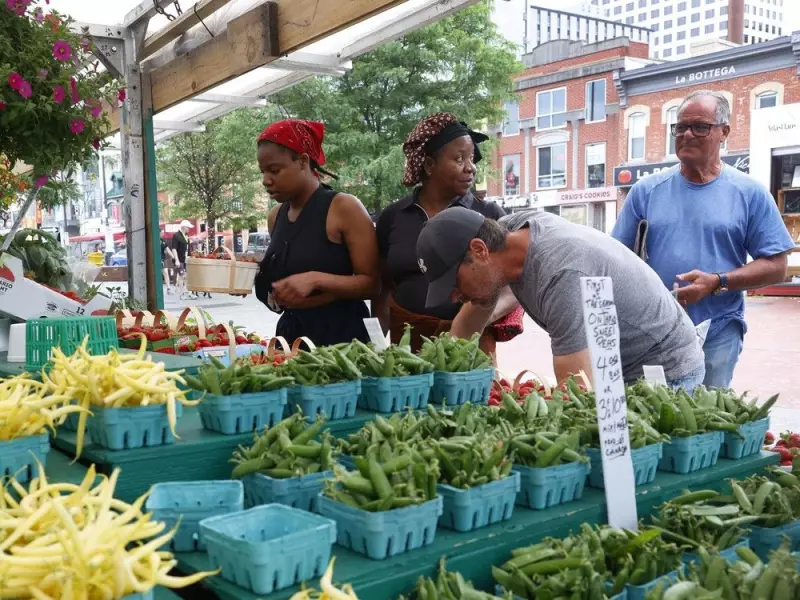
Some Ottawa residents advocate for restoring a farmers' market featuring local produce to the ByWard Market, recognizing how food culture can strengthen community connections. This suggestion aligns with broader efforts to balance the district's commercial vitality with its historical character as a gathering place.
The ongoing debate about the Market's future continues to generate diverse perspectives as stakeholders consider:
- How to maintain security while preserving accessibility
- Balancing vehicle access with pedestrian safety
- Supporting local businesses while attracting new investment
- Creating year-round attractions beyond seasonal events
As Ottawa's historic heart approaches its bicentennial, these six overlooked strategies offer potential pathways toward a more vibrant, sustainable, and inclusive ByWard Market that honors its past while embracing its future.