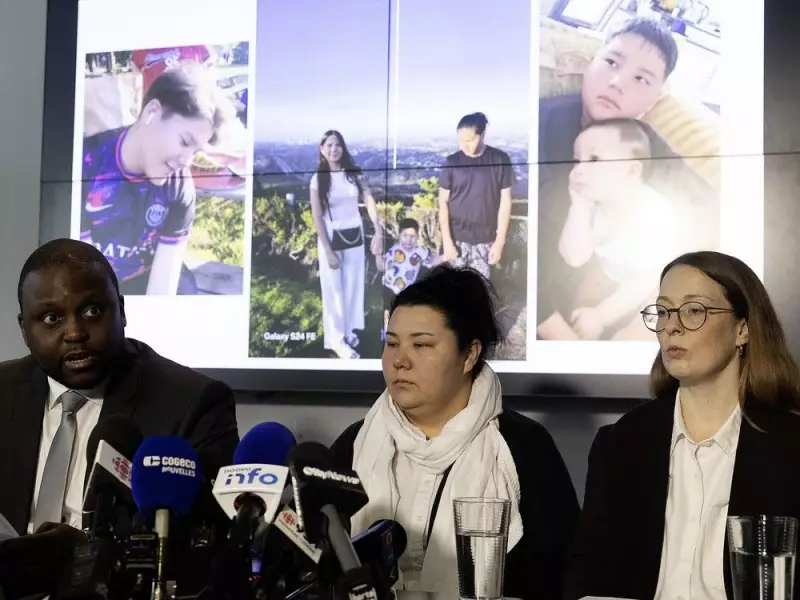
In a rare move for a municipal leader, Longueuil Mayor Catherine Fournier is publicly demanding accountability and transparency following the police-involved death of a 15-year-old girl in her city. The case of Nooran Rezayi, shot and killed by Longueuil police officers on a September afternoon, has taken a significant turn with the mayor's unprecedented actions.
Video and Legal Action Shed Light on Tragic Incident
Nooran Rezayi was fatally shot by Longueuil police on September 7, 2025, after officers responded to a 911 call reporting a group of armed individuals. The circumstances, like many police shootings in Quebec, risked remaining obscure. However, the family's civil lawsuit, seeking over $2 million from the city and officers, has brought new evidence to light.
Last week, lawyers for Nooran's family released home security footage capturing the moments before the shooting. The video shows a group of youths sitting calmly on a curb in a residential area. They suddenly scatter as a police cruiser speeds around the corner. An officer is heard shouting "get on the ground" off-camera before two gunshots ring out. The entire sequence, from police arrival to the shots, lasted just 11 seconds.

The Bureau des enquêtes indépendantes (BEI), Quebec's independent police watchdog, later confirmed that no weapon was found at the scene aside from the service weapon used by the officer.
Mayor Fournier's Unprecedented Public Challenge
The case escalated dramatically when Mayor Catherine Fournier revealed she had formally requested Quebec's Public Security Minister, Ian Lafrenière, to investigate the Longueuil police chief and the department's conduct. She made her request public and posted the supporting documentation online, a highly unusual step.
Fournier's primary concern, as stated, is the integrity of the Longueuil police force and maintaining public trust. Her actions stem from learning of potential serious breaches of protocol by her own city's police service following the teenager's death.
The core issue revolves around a significant delay. According to the correspondence released by Fournier, the Service de police de l'agglomération de Longueuil (SPAL) took one hour and 36 minutes to notify the BEI of the shooting, a potential violation of the Police Act that requires immediate notification.
Discrepancies in Police Explanations
The released letters reveal a troubling back-and-forth between BEI Director Brigitte Bishop and Longueuil Police Chief Patrick Bélanger. In his explanation for the delay, Chief Bélanger cited officers being occupied with multiple tasks, including providing first aid to Nooran and responding to a second 911 call about a possibly armed youth a few kilometres away, which they believed might be connected.
However, Director Bishop challenged this account. She pointed out that the officer involved had radioed at 3:01 p.m., just minutes after the 2:58 p.m. shooting, to confirm no other suspects were involved. "You indicated that the intervention sequence was prolonged because of the possibility of the presence of a second armed person," Bishop wrote. "But unless certain required communications have not been transmitted to us, this information doesn't come out of any element of proof presently in our possession."
Bishop's letter also raised a major red flag: SPAL officers took written statements from 16 civilian witnesses between 3:36 p.m. and 6:22 p.m., asking questions that directly pertained to the actions of their own police force. This compromised the appearance of independence crucial to a BEI investigation, forcing the watchdog to re-interview several witnesses.
A Call for Answers and Systemic Scrutiny
In her letter to Minister Lafrenière, Mayor Fournier stated she felt "obligated" to demand a ministry probe to avoid any perception of political interference. She included a list of pointed questions, asking what steps the police chief took to verify his facts and whether there is a history of similar procedural lapses within the SPAL.

Minister Lafrenière has stated he will order an investigation, timing it around the ongoing BEI probe and a parallel examination by Montreal police. For Nooran Rezayi's grieving family, including her mother Fahima Rezayi, these developments offer little solace but may represent a crucial fight for answers often denied in such tragedies.
By forcing these details into the open, Mayor Catherine Fournier has broken from the typical opaque process surrounding police shootings. Her actions ensure that the death of Nooran Rezayi will be scrutinized not just for the seconds of the intervention, but for the hours and procedures that followed.