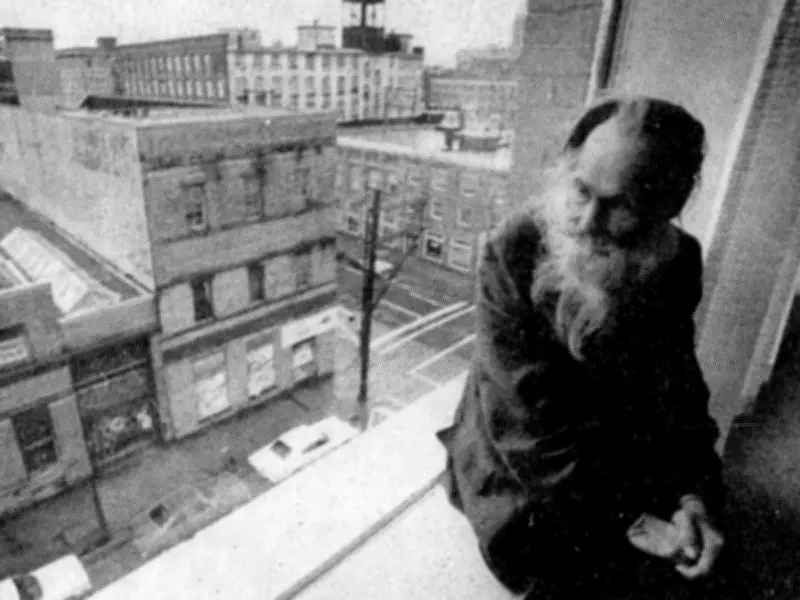
The Human Cost of Expo 86: Olaf Solheim's Tragic Story
As British Columbia prepares to mark the 40th anniversary of Expo 86 this summer, the celebrations will undoubtedly evoke warm memories of the world's fair that transformed Vancouver. However, behind the glittering facade lies a darker chapter—one marked by the forced displacement of vulnerable residents from single-room occupancy hotels to accommodate tourists.
A Life Uprooted After Six Decades
Olaf Solheim became one of the first casualties of this displacement in early March 1986. The 88-year-old retired logger was evicted from the Patricia Hotel at 403 East Hastings Street, where he had lived for over sixty years since immigrating from Norway. The eviction proved devastating to the man known affectionately as "Old Olaf" in Vancouver's Downtown Eastside.
"He lies on his bed, fully clothed, with a bedspread pulled over him for hours every day," reported Vancouver Sun journalist Bob Sarti on March 27, 1986. "His hot lunch sits uneaten—and cold—on a table nearby."

The Rapid Decline of a Community Fixture
Solheim had been a beloved fixture in the neighborhood for decades, recognizable by his chest-length white beard. He enjoyed watching children play at Oppenheimer Park and visited the 44 Centre on East Cordova twice daily for affordable meals, often bringing chocolates for the staff. His connection to the Patricia Hotel ran deep—he had worked in the beer parlor there when he first arrived in British Columbia at age 26.
After his eviction, Solheim's health deteriorated rapidly. Patricia Hotel manager Max Mitchele acknowledged that staff who once "fussed over" Solheim were now too busy preparing for Expo. "We're not a nursing home," Mitchele stated bluntly.
A Death Attributed to Displacement
Olaf Solheim died on April 18, 1986—just six weeks after being removed from his longtime home. His friend Jim Harvey told Sarti, "Honestly speaking, I don't believe Olaf had the will to live anymore. After he was evicted, his equilibrium was upset. He couldn't get himself back in the old groove."
Vancouver's chief medical health officer, Dr. John Blatherwick, confirmed that Solheim's death was directly attributable to the forced relocation. "The spark went out of him after the eviction, and he just said, 'That's it,'" Blatherwick explained. "This was a man whose way of life was completely disrupted. He was conscious of what he was doing. He just stopped living."
Political Responses and Lasting Impact
Despite the medical assessment, then-B.C. Human Resources Minister Jim Nielsen disputed any connection between Expo 86 and Solheim's death. "I can only conclude that those who would do so have ulterior motives," Nielsen stated in a news release.
Jim Green of the Downtown Eastside Residents Association strongly disagreed, noting that Solheim's case contradicted political claims that Expo benefited everyone. "Olaf Solheim proves differently," Green asserted.
Research by Simon Fraser University's Andy Yan suggests the displacement was more extensive than initially reported. While contemporary estimates suggested 500 people were evicted from SRO hotels for Expo, later analysis indicates the number may have approached 1,000. Solheim was among several individuals who died following their evictions during this period.
As anniversary celebrations approach, Olaf Solheim's story serves as a poignant reminder of the human costs sometimes exacted by large-scale urban developments—a legacy that continues to resonate in Vancouver's ongoing housing debates four decades later.