Edmonton Council Pushes Dense Infill Despite Public and Administrative Opposition
Edmonton's city council is moving forward with controversial high-density infill projects, despite significant pushback from residents, administrative recommendations, and judicial guidance. The council recently voted 8-4 to maintain the current maximum size for mid-block infills at eight units, a decision that has sparked widespread concern about the future character of the city's mature neighborhoods.
Overriding Public Sentiment and Expert Advice
The council's decision comes in direct opposition to strong public sentiment and the recommendations of city administration, which had advocated for reducing the maximum unit count to six. This move highlights a growing divide between elected officials and the communities they represent, with many residents fearing the loss of Edmonton's traditional tree-lined streets and green spaces.
Emergency services have also expressed concerns about the practical implications of these developments. While not formally opposing the infills, first responders have warned that the increased density could lead to streets becoming choked with resident vehicles, potentially hindering access for firetrucks and ambulances during emergencies.

The Reality of Urban Density and Transportation
Council members supporting the infill policy often cite environmental benefits and reduced car dependency as justifications. However, statistics tell a different story: 86% of Edmonton commuters use private vehicles for work or school, over 80% of city families own two or more vehicles, and only about 2% own no cars at all. These numbers suggest that infill residents will likely continue to rely on personal vehicles, contradicting assumptions about reduced car ownership in dense developments.
Environmental Concerns and Tree Protection
While the council is considering a bylaw that would require approval before cutting down trees on private property, critics argue this measure may prove ineffective. Developers seeking to clear land for large infill projects could easily obtain permission to remove trees, potentially undermining the very environmental benefits these policies claim to promote.
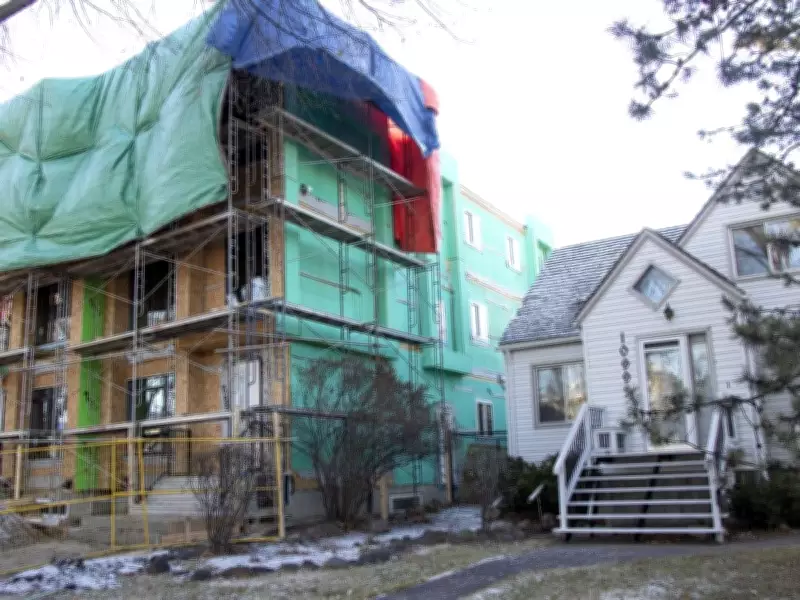
The visual impact of these developments is another point of contention. Opponents warn that mature neighborhoods could become dominated by monolithic, multi-suite buildings stretching from front sidewalks to alleys, with limited green space and only potted flowers on balconies replacing traditional lawns and gardens.
Political Divisions and Voting Patterns
The council vote revealed clear political divisions, with every re-elected left-leaning member supporting the eight-unit maximum. The opposition came from Ward tastawiyiniwak Councillor Karen Principe, who proposed reducing the limit to six units, joined by Councillors Mike Elliott (Ward pihêsiwin), Thu Parmar (Ward sipiwiyiniwak), and Reed Clarke (Ward Nakota Isga).
This ongoing debate reflects broader tensions between development priorities and community preservation in Edmonton's urban planning. As the council continues to advance its infill agenda, residents and administrators alike are left questioning whether the city's democratic processes are adequately representing community interests in shaping Edmonton's future landscape.