Ottawa Parish Seeks Divine Intervention Against Parking Tickets During Sunday Mass
Parishioners at Blessed Sacrament Parish in Ottawa's Glebe neighborhood are facing an unexpected challenge that has them turning to heavenly intervention. The congregation is grappling with $80 parking tickets being issued by city bylaw officers while they attend Sunday mass and other church functions, creating what many describe as a significant disruption to their worship experience.
The Parking Predicament at Blessed Sacrament
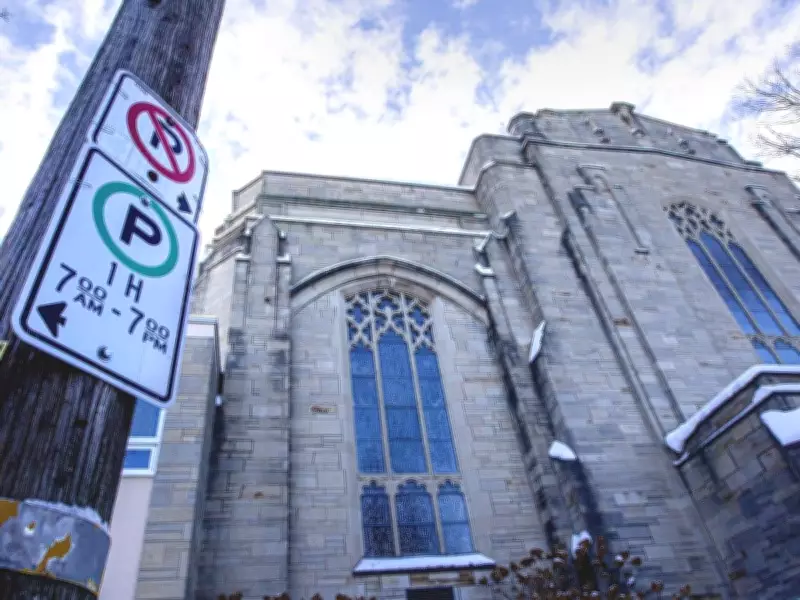
The church, located on Fourth Avenue in the Glebe, offers free street parking in the immediate vicinity. However, between 7 am and 7 pm, parking is limited to just one hour—almost exactly the duration of the Sunday 10 a.m. mass. This creates a difficult situation for parishioners who arrive early for pre-mass activities like the holy rosary or stay afterward for fellowship and coffee with other church members.
"I love coming to church, and I leave full of joy," says parishioner Alex D'Angelo, who has received two such tickets, including one in October. "Then, when I go and see a parking ticket on my car, it's a mood killer. Anywhere you're going to practise your faith, there shouldn't be a time limit."

Community Impact and Parishioner Response
The situation has created what parishioner Gabrielle Berard describes as a source of apprehension among church-goers. "I think a lot of people have quite a bit of anxiety during mass about whether they'll squeeze in under that 60 minutes," she explains. "It's unfortunate in that it's Sunday morning and there's not a huge demand for parking spaces in this area at this time."
Berard emphasizes the community's contributions, noting that "what you have here is a tremendously vibrant faith community that is gathering in the Glebe and gives back 365 days a year. I think that's why parishioners find it so discouraging. It feels petty."
The impact has been significant enough that some church members, according to parishioner Jason Morin, have chosen to forego mass at Blessed Sacrament altogether, instead finding alternative venues for worship to avoid the parking ticket dilemma.
Seeking Solutions Through Prayer and Advocacy
Months ago, church officials launched a campaign lobbying the city to have the street parking limit changed to three hours, which is the standard in other residential neighborhoods across Ottawa. Their request is modest—asking for what they describe as some grace and discretion—but so far, their pleas appear to have fallen on deaf ears with city officials.
In response to this bureaucratic impasse, the church has turned to spiritual intervention. Recently, Blessed Sacrament distributed novena prayer cards to parishioners dedicated to St. Jude, the patron saint of hopeless cases. These prayer cards include specific intentions for parking relief during mass times, particularly on Sundays and solemnities.
The novena prayer reads in part: "Please pray for me because I am helpless and alone. Intercede with God for me, that He send visible and timely help where help is almost impossible to come by... That Blessed Sacrament Parish will enjoy unhindered parking during any of our Mass Times, especially on Sundays & Solemnities."
Broader Implications for Religious Communities
This situation raises important questions about how municipalities accommodate religious practices within urban planning frameworks. The conflict between standardized parking regulations and the specific needs of faith communities highlights a growing tension in many Canadian cities as neighborhoods evolve and parking becomes increasingly regulated.
The parish's struggle represents a microcosm of larger conversations about:
- Religious accommodation in public policy
- Balancing neighborhood parking needs with community access
- The role of discretion in bylaw enforcement
- How cities support community institutions
As the congregation continues its dual approach of earthly advocacy and spiritual petition, the outcome may set a precedent for how Ottawa and other municipalities address similar conflicts between municipal regulations and religious community needs in the future.