Canadian voters appear to be shifting away from progressive municipal leadership, creating a stark contrast with political trends in American cities like New York. Recent election results and polling data from major Canadian urban centers suggest growing dissatisfaction with left-leaning mayors and their policies.
Calgary's Political Earthquake
In a dramatic political reversal, Calgary Mayor Jyoti Gondek suffered a crushing defeat in the October 2025 election, finishing a distant third and becoming the first incumbent mayor to lose in Calgary since 1980. The numbers tell a compelling story: Gondek received only 71,466 votes (20%), a massive decline from the 176,344 votes (45%) that secured her victory just four years earlier.
Several controversial decisions contributed to her downfall. Gondek declared a climate emergency and suggested the city should move past oil and gas, then allocated over $200 million toward climate initiatives. She also defended a since-reversed decision to cancel Canada Day fireworks over cultural sensitivity concerns and implemented significant property tax increases—7.8% in 2024 and 6.4% in 2025, with another 5.4% hike planned for 2026.

Toronto's Challenging Political Landscape
The discontent with progressive leadership extends to Toronto, where Mayor Olivia Chow faces an uphill battle ahead of next year's municipal election. Recent polling reveals troubling signs for the incumbent. A One Persuasion poll shows Chow trailing challenger Brad Bradford 40% to 32% in a hypothetical matchup.
Even more concerning for Chow's camp: approximately 70% of Toronto voters believe the city is heading in the wrong direction. The Canada Pulse Insights survey found that 64% of Torontonians think the city is on the wrong track, 51% rate Chow's performance as poor, and 65% want new leadership. A Leger poll showed her approval rating dropping to 43% in October, with strong disapproval jumping to 27% from 17% previously.
Policy Consequences and Voter Response
The backlash against progressive mayors appears closely tied to specific policy decisions. Like her Calgary counterpart, Chow implemented substantial property tax increases—9.5% in 2024 followed by 6.9% in 2025. Meanwhile, essential city services including public transit and snow removal have deteriorated, and Toronto's homeless population has more than doubled from April 2021 to October 2024.
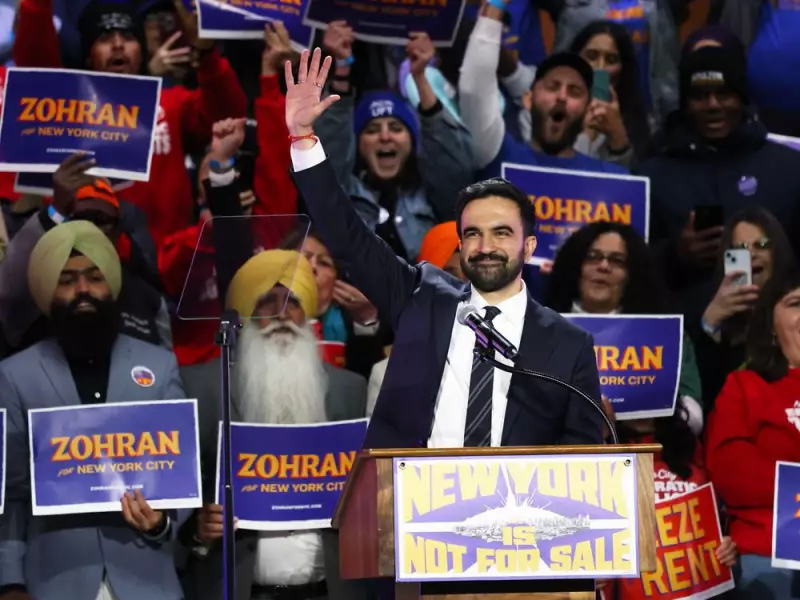
This Canadian trend contrasts sharply with New York City politics, where progressive candidates like Zohran Mamdani continue to gain traction. The divergence suggests Canadian urban voters are prioritizing practical governance and fiscal responsibility over ideological agendas.
As newly elected Calgary Mayor Jeromy Farkas works to reduce planned tax increases, and Montreal replaces retiring mayor Valerie Plante with more centrist Soraya Martinez Ferrada, the message from Canadian voters seems clear: municipal leadership must balance progressive ideals with practical governance and fiscal restraint.