A young man in his 20s tragically lost his life in a devastating early-morning motor vehicle collision in southeast Calgary on Wednesday, February 11, 2026. This incident marks the city's fifth traffic fatality of the year, following a particularly deadly period on Calgary's roads.
Details of the Fatal Collision
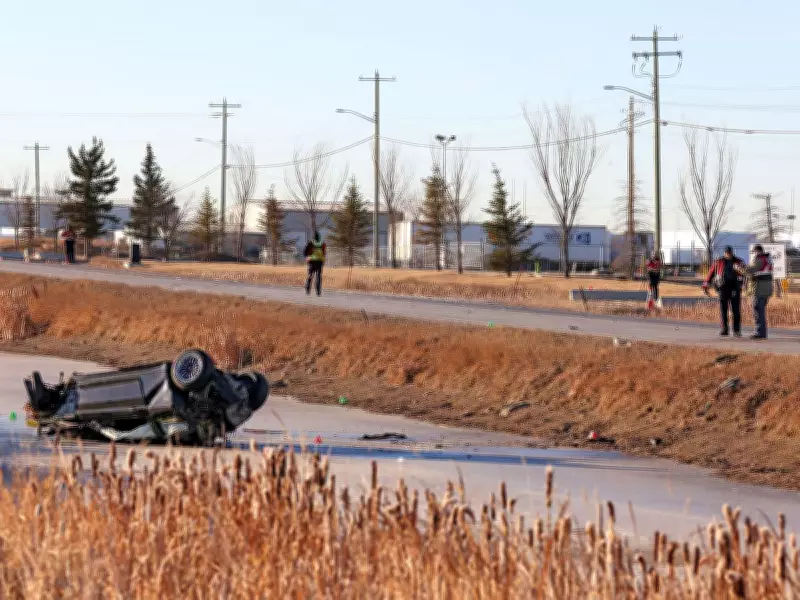
The fatal crash occurred at approximately 2:30 a.m. in the 7000 block of 84th Street S.E. According to police reports, the man was operating a 2014 BMW at high speed when his vehicle left the roadway. The car rolled into the ditch west of the street, then continued tumbling across the road before finally coming to rest in the ditch east of 84th Street S.E.
Emergency responders removed the driver from the vehicle, but he was pronounced dead at the scene. The Calgary Police Service has launched a comprehensive investigation into the circumstances surrounding this tragic event.

Alarming Road Safety Statistics
This fatality represents the fifth traffic-related death in Calgary during 2026, continuing a concerning trend from the previous year. In 2025, the city recorded 37 traffic fatalities—the highest number in over a decade, signaling a significant deterioration in road safety.
Police Resources Stretched Thin
Road safety emerged as a primary concern during the Calgary Police Commission meeting in November. Inspector Rob Patterson, commander of the CPS traffic section, revealed that traffic response teams are currently operating at only 60 percent capacity.
"We could use more people right now," Patterson stated when questioned about whether his team had sufficient personnel to address mounting road safety issues. "Having a full 40 officers to deploy onto the street—we're sitting now at about 29 officers—would be more effective."
Speed Identified as Primary Factor
As with this latest fatality, Calgary police have consistently identified excessive speed as the main contributing factor in serious collisions. This issue has become particularly contentious following provincial changes to photo radar enforcement.
The Alberta government recently ended the use of photo radar on provincial highways and significantly restricted its application by municipalities, except in designated school zones, playground areas, and construction sites. This policy shift resulted in the elimination of approximately 70 percent of Calgary's photo radar technology—equipment that provincial officials had previously characterized as a "cash cow and revenue-generating fishing hole."
Effectiveness of Traffic Enforcement Technology
Despite these changes, Calgary police have presented compelling statistics demonstrating the effectiveness of automated enforcement. According to CPS data, photo radar deployment reduced injury collisions by 25 percent at the twenty most frequently monitored locations throughout the city.
Additionally, intersection cameras contributed to a 50 percent reduction in right-angle collisions, while rear-end collisions decreased by approximately 40 percent citywide. Although Calgary has managed to restore automated traffic enforcement at three intersections through special provincial dispensation, officials maintain that this limited restoration falls far short of what's needed to adequately address road safety concerns.
Broader Context of Traffic Safety
This fatal collision occurs against a backdrop of increasing concern about pedestrian safety and distracted driving. Earlier this year, a man in his 90s died after being struck by a truck, marking Calgary's first pedestrian fatality of 2026. Police have repeatedly urged drivers to remain vigilant behind the wheel, particularly during Distracted Driving Awareness Month campaigns.
The Calgary Police Service continues to emphasize the importance of responsible driving behaviors while grappling with resource constraints that limit their ability to enforce traffic laws effectively. As the city approaches the anniversary of its deadliest year on the roads in over a decade, community leaders and safety advocates are calling for comprehensive strategies to reverse this troubling trend.