Calgary Fire Department's 2025 Response Times Fall Short of Targets
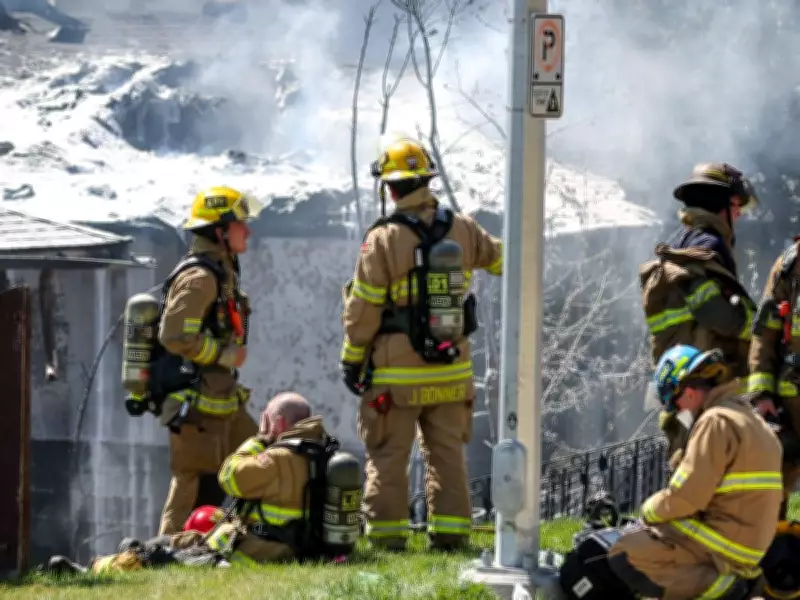
Calgary Fire Department response times failed to meet established targets in 2025, according to Fire Chief Steven Dongworth, who attributes the shortfall to the challenges of serving an expanding urban landscape.
Specific Response Time Deficits
The average response time for a first fire truck to arrive at a fire scene was seven minutes and 45 seconds on 90 percent of calls in 2025. This figure lags 45 seconds behind the department's council-directed target of seven minutes. Furthermore, it exceeds the Canadian national fire standard, which aims for a response time of six minutes and 20 seconds for fires.
Another critical target missed involved the arrival of a full team. The department aims for an 11-minute response time for a complete team of three vehicles and twelve firefighters. However, the average last year was 12 minutes and 45 seconds, a deficit of one minute and 45 seconds.

"In many ways, that second measure is really the crucial one where we have the biggest deficit," Chief Dongworth emphasized in an interview. "If you have a serious fire that is escalating and spreading to adjoining buildings, one fire engine just gets you to start doing something. You really need that effective response force to deal with that."
Growing City, Growing Challenges
Chief Dongworth explained that as Calgary's population and geographic boundaries continue to expand, the fire department faces increasing difficulty in meeting its response time objectives. The department's call volume has seen a significant upward trend, rising nearly 50 percent since 2020, despite a slight decrease from 2023 to 2024, when crews responded to nearly 90,000 calls, or approximately 250 events per day.
"We've tried our best to make the argument that we need to invest in the fire service to keep up proportionally with that growth," Dongworth stated. "We've had varying degrees of success. We've had cycles where we've had no growth, or even reductions in service, which challenges us. Even zero growth investment becomes a reduction in service, because as the city grows, if you don't increase your service, you're more challenged."
Future Funding and Strategic Plans
The detailed response time figures and other performance metrics will be formally presented to a city council committee this spring as part of the Calgary Fire Department's annual update. Looking ahead, Chief Dongworth hinted at a significant funding request similar to that of the Calgary Police Service, which plans to ask for 660 additional officers over the next four-year budget cycle.
"I'm not sure the magnitude compared to the Calgary Police Service, but I think we are going to have a significant ask," Dongworth revealed, referring to the upcoming deliberations for the 2027-30 fiscal plan in November. This request is anticipated to address the need for more personnel and resources to alleviate current service pressures and improve future response capabilities.
The situation underscores a critical need for strategic investment in emergency services to ensure public safety keeps pace with urban development in one of Canada's fastest-growing cities.