Calgary Council Braces for Marathon Hearing on Repealing Divisive Blanket Rezoning Policy
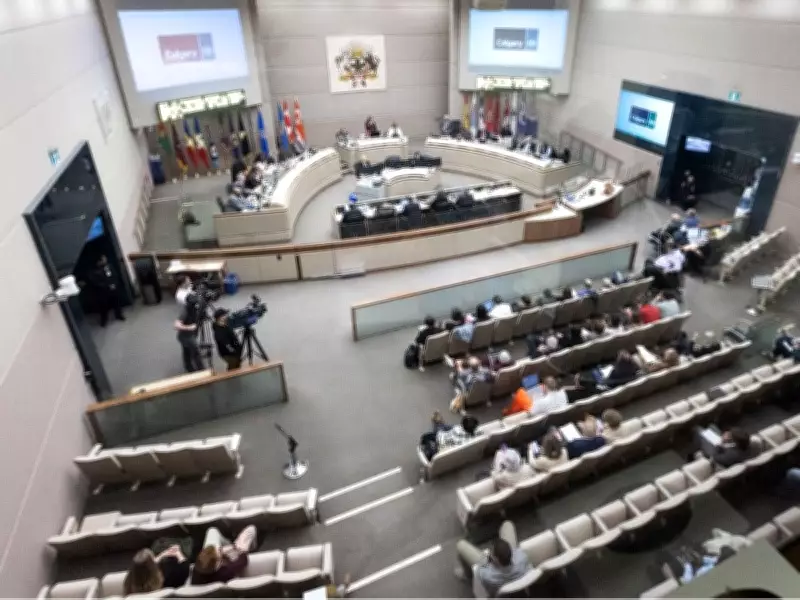
Calgary City Council is set to convene on Monday for what is anticipated to be a week-long public hearing focused on repealing blanket rezoning, a contentious regulation originally approved by the previous council in 2024. This hearing promises to be a significant event, with 339 Calgarians already signed up to speak and the city having received 2,390 written submissions as of Friday morning.
Deja Vu for Many Residents
For numerous Calgarians, this upcoming hearing evokes a strong sense of deja vu, following a similar proceeding nearly two years ago when the rezoning policy was first introduced. Council has allocated the entirety of next week for the hearing, with the possibility of it extending into a second week. While the deadline for written submissions has passed, individuals are still permitted to sign up to speak until the hearing concludes.
Understanding Blanket Rezoning
Blanket rezoning established residential grade-oriented infill (R-CG) as Calgary's default residential zoning district. This policy allows for the development of up to four housing units on a single parcel, enabling property owners to redevelop their single-family detached homes into duplexes, fourplexes, or rowhouses without first needing to obtain a land use redesignation.

This change to the city's land-use bylaw introduced a new approach to densification in Calgary. Typically, such redevelopments would require a rezoning public hearing, but blanket rezoning streamlined the process. The policy was a key component of the city's 2023 housing strategy, which aims to increase Calgary's housing stock and accelerate the development approval process to address housing affordability concerns.
Contentious Implementation
While enabling R-CG citywide did not impact new neighborhoods in Calgary, which are already zoned for the same level of density, the move proved highly contentious in most older communities that were previously zoned solely for single-family detached housing. The previous council approved the regulation in May 2024 after a two-week public hearing that saw more than 730 Calgarians share their views at city hall, with approximately 70 percent of public speakers opposing the measure.
Critics Voice Strong Opposition
During the 2024 hearing, opponents argued that blanket rezoning would result in an infill development free-for-all and spark neighborly conflicts. Critics contended that the change would alter community character, increase traffic and parking congestion, and strain city infrastructure.
Robert Lehodey, a member of the group Calgarians for Thoughtful Growth, expressed strong opposition, stating, "The principle reasons we're opposed to it is that it's not sensitive development. It's not within the context of maintaining community sense. It creates significant problems in communities when it's applied in a blanket, sweeping basis."
Lehodey further emphasized, "This really blunt tool affected 311,000 properties adversely, in our view." Critics also disputed the argument that blanket rezoning would enhance Calgary's overall housing affordability, noting that modern infills typically sell for higher prices than the older bungalows they replace. Opponents argued that blanket rezoning primarily benefits developers rather than addressing genuine housing needs.
The upcoming hearing represents a critical juncture for Calgary's urban development policy, with significant implications for housing, community planning, and municipal governance. As council members prepare to listen to hundreds of residents, the outcome will shape the city's approach to densification and housing strategy for years to come.