Banff Reaches Critical Breaking Point Amid Tourism Overload Crisis
During my tenure in municipal office in Banff, I consistently raised alarms about the dangers of unmanaged growth within our cherished national park community. The issues were clear and present: escalating traffic congestion, vehicle overload on our limited roadways, and a complete absence of meaningful limits on how many people and vehicles we welcome into a town with finite space. These were not hypothetical concerns but observable realities that demanded urgent attention and decisive action.
Warning Signs Ignored for Years
I advocated repeatedly for practical solutions including reservation systems, vehicle caps during peak visitation periods, and better alignment between tourism promotion efforts and our actual on-the-ground capacity. While these warnings were often acknowledged in principle, they were rarely translated into concrete policy changes or operational adjustments. The result has been a gradual erosion of our community's functionality and safety.
The Skijoring Event That Revealed Systemic Failure
The recent skijoring event in Banff served as a stark illustration of how precarious our situation has become. While well-intentioned in its conception, the event's planning proved inadequate for the visitor numbers it attracted, forcing officials to turn away vehicles and creating potentially dangerous congestion throughout the town's streets. What unfolded that weekend was not merely an operational failure but a profound governance failure that exposed fundamental weaknesses in our approach to tourism management.

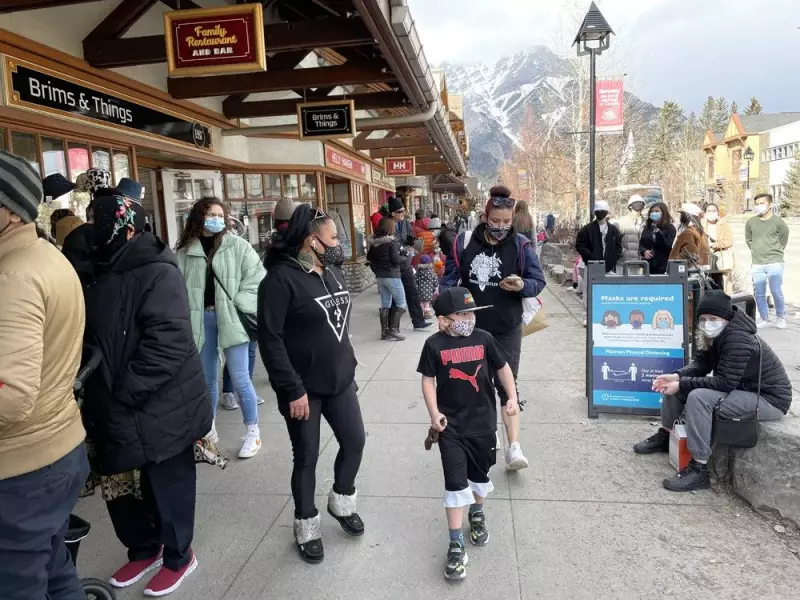
Reports from that weekend painted a deeply concerning picture. Traffic queues extended well beyond the townsite boundaries, creating congestion levels that exceeded anything many longtime residents and first responders had ever witnessed. Gridlock persisted for hours, effectively collapsing local mobility and narrowing emergency response margins to unacceptable levels. Residents found themselves displaced from their own community, while visitors experienced frustration rather than enjoyment.
Beyond Inconvenience: A Safety Crisis Emerges
These were not mere inconveniences but serious warning signs that our current approach is unsustainable. When a single event can push traffic volumes to the edge of a national highway inside a national park, the core issue transcends weather conditions, volunteer coordination, or communication strategies. The problem is fundamentally strategic in nature, rooted in years of promoting growth without establishing or enforcing reasonable limits.
Banff is not struggling because people want to visit our beautiful community within a national park. We are struggling because we have never been honest with ourselves about how many visitors we can realistically accommodate while maintaining safety, accessibility, and quality of life for both residents and guests alike.
Rethinking the Tourism Success Equation
Tourism remains essential to Banff's economy, and this fundamental reality is not in dispute. What requires urgent reconsideration is the long-standing assumption that more visitors automatically translate to greater success. In a community with fixed road infrastructure, limited parking availability, fragile ecosystems, and permanent residents who call this place home, unlimited growth does not represent prosperity but rather systematic erosion of everything that makes Banff special.
The Accountability Gap in Tourism Marketing
At the center of this critical conversation must be Banff and Lake Louise Tourism, the organization responsible for promoting visitation to our region. Today, this organization operates with an annual budget approaching $18 to $19 million, with more than $11 million devoted specifically to marketing activities. Yet there exists no comparable level of public accountability tying these marketing decisions to transportation capacity, emergency access considerations, or resident impact assessments.

To put this budgetary reality in perspective, Banff and Lake Louise Tourism's financial resources rival or even exceed those of some core municipal departments responsible for infrastructure maintenance, public safety, and essential community services. This disparity highlights a fundamental imbalance in how we allocate resources and prioritize different aspects of community wellbeing.
The recent events in Banff have made one reality unmistakably clear: our community has reached a breaking point that demands immediate, thoughtful, and courageous action. The familiar refrain of "we'll do better next time" is no longer sufficient. What we need now is a fundamental rethinking of how we manage tourism growth within the unique constraints of a national park community, before we face consequences far more serious than traffic congestion.