Saskatoon's 1963 Fire Safety Initiative: Demolishing Downtown Hazards
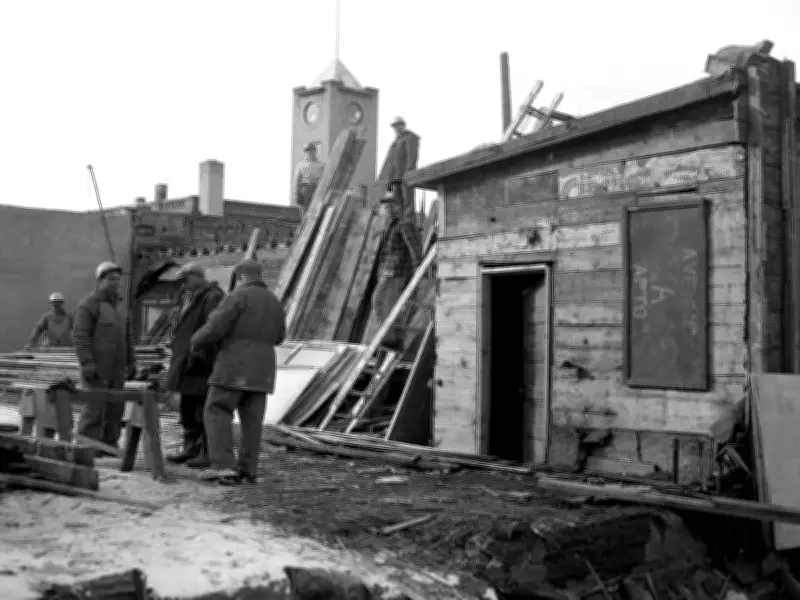
On March 5, 1963, the Saskatoon Fire Department initiated a significant urban safety campaign that would reshape the city's downtown landscape for years to come. Fire Chief Tom Lennon announced a comprehensive program to eliminate buildings deemed fire hazards, beginning with the demolition of an apartment block at the intersection of Avenue A and 21st Street.
Multi-Year Demolition and Renovation Program
The fire department's ambitious plan aimed to clear Saskatoon of hazardous structures within three to four years. Chief Lennon revealed that approximately ten orders for demolition or renovation would be issued annually until all identified fire risks were addressed. While most buildings would require renovations to meet fire safety standards, some owners faced no alternative but complete demolition.
The program's first target was Bridge Apartments, which was actively being torn down as the campaign launched. A second structure, Victory Apartments located on Avenue B north of 22nd Street, had also received a demolition order, though its owners were appealing the decision through District Court after the provincial fire commissioner upheld the local department's ruling.

Geographical Scope and Implementation
Most structures targeted during the initial year of the program were situated west of the CNR tracks, though the comprehensive initiative would eventually address buildings on both sides of the railway corridor. Chief Lennon noted that six or seven additional demolition or renovation orders would be issued throughout 1963 alone.
In some instances, renovation costs proved prohibitive for property owners, leaving them with the difficult choice between bringing structures up to code or tearing them down entirely. The fire department maintained that safety standards must be met regardless of financial considerations.
Notable Cases and Future Plans
A particularly significant case involved a building on Second Avenue that had been gutted by fire earlier in 1963. The fire department issued an order requiring its removal and replacement with a new fire-resistant structure, demonstrating the program's forward-looking approach to urban safety.
Chief Lennon emphasized that the campaign represented a proactive effort to prevent future tragedies rather than merely responding to existing problems. The systematic approach to identifying and addressing fire hazards marked a new era in Saskatoon's urban planning and public safety initiatives.
Historical Context and Archival Significance
This demolition program occurred during a period of significant urban development in Saskatoon, as the city grappled with balancing growth with safety concerns. The images of buildings being torn down, preserved in the City of Saskatoon Archives, provide valuable insight into mid-century urban renewal efforts and fire prevention strategies.
The campaign's documentation through archival photographs and newspaper records offers contemporary researchers and residents a window into how Saskatoon addressed public safety challenges during a transformative period in the city's history.