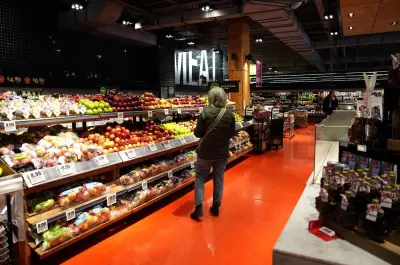
Canada's food system is poised to become more costly and less secure due to Mark Carney's new National Food Security Strategy, which expands government control over food production and sales. As Milton Friedman once noted, government programs often produce opposite effects to their intended goals.
Details of the Strategy
The strategy involves over $3 billion in spending over a decade, including $1 billion for a new Agri-food Project Finance Fund, another $1 billion for food terminals and hubs, $750 million to expand year-round fruit and vegetable production, $150 million for equipment upgrades, $100 million for agri-food processing expansion, and nearly $130 million to enhance Competition Bureau and Competition Tribunal regulation.
Impact on Competition and Security
Increased government spending will likely reduce competitiveness and security in Canada's food system. Corporate welfare directs capital by central planners rather than entrepreneurs, leading to inefficiency—as seen in the Soviet Union's central planning failures.

The $3 billion in corporate welfare encourages businesses to chase handouts instead of producing food. Additionally, cost overruns are likely, as seen with the dental care plan, which ballooned from $13 billion to over $18 billion.
Regulatory Expansion Concerns
Expanded funding for the Competition Bureau and Competition Tribunal may cause more harm than the corporate welfare funds. Increased regulation of grocery stores could reduce efficiency, competition, and investment. This approach extends the Trudeau-era blame on private businesses for high prices.