Vice President Vance's 'Absolute Immunity' Defense Under Fire Following Second Fatal ICE Incident
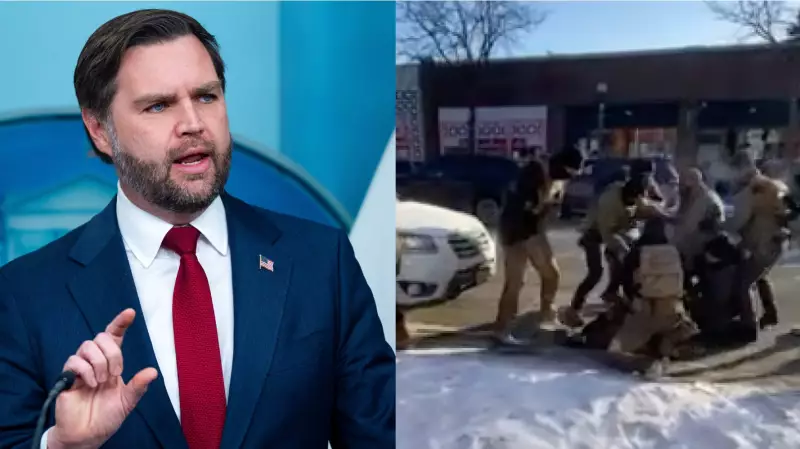
The day after Renée Good was tragically killed in Minneapolis, Vice President JD Vance made a statement that sent shockwaves through legal and public circles. He offered what many interpreted as a chilling defense—or perhaps a veiled threat—regarding Immigration and Customs Enforcement (ICE) officers. Vance asserted that the officer responsible for shooting Good "is protected by absolute immunity." He added, "The precedent is simple," but this claim has since been widely contested and, as of Thursday, Vance himself appeared to hedge on it, acknowledging complexities in the legal framework.
A Second Tragedy Unfolds in Minneapolis
Now, the situation has escalated with another devastating incident. Federal agents have shot and killed 37-year-old nurse Alex Pretti in Minneapolis, an event captured in graphic footage that has circulated online. Drop Site obtained harrowing video of this latest killing, which appears to be filmed from the perspective of a bystander, a woman in pink standing on the sidewalk. The footage has sparked outrage and renewed debates over law enforcement accountability.
Vance's Response to the Latest Shooting
In the wake of this ghastly slaughter by federal officers deployed under his administration's directives, Vice President Vance's reaction has drawn sharp criticism. Rather than addressing the actions of the federal agents involved, he shifted blame to local police forces and controversially labeled the victim, Alex Pretti, as a terrorist. This response has left many questioning the consistency and ethics of his earlier statements on immunity.

Legal and Ethical Implications
The concept of absolute immunity, as invoked by Vance, is a contentious legal doctrine that typically shields government officials from civil lawsuits for actions performed within their official duties. However, its application in cases involving fatal shootings by ICE officers raises profound ethical and constitutional issues. Legal experts argue that such immunity is not absolute in practice and must be balanced against accountability for potential abuses of power.
- The shooting of Renée Good prompted initial defenses from Vance that have since been nuanced.
- The death of Alex Pretti has intensified scrutiny on federal agents' use of force.
- Vance's blame-shifting to local authorities and victim-labeling tactics have sparked public backlash.
- Ongoing investigations into both incidents are likely to test the limits of immunity claims.
As these events unfold, a critical question emerges for Vice President Vance and the administration: Is this what you meant by absolute immunity? The answer will have significant ramifications for justice, public trust, and the rule of law in Canada and beyond, highlighting the need for transparent and accountable governance in handling such sensitive matters.