The U.S. Department of Justice temporarily removed several images, including one depicting former President Donald Trump, from its public release of documents related to Jeffrey Epstein. Officials stated the action was taken to comply with a federal judge's order aimed at safeguarding victims' identities.
Judge's Order Drives Temporary Removal
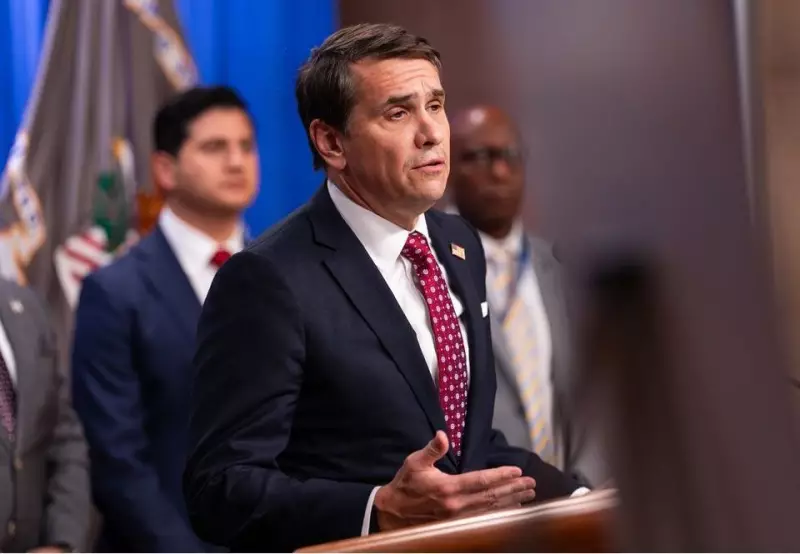
Deputy Attorney General Todd Blanche clarified the department's actions during a Sunday appearance on NBC's Meet the Press. "There were a number of photographs that were pulled down after being released on Friday," Blanche stated. He explained that a judge in New York has mandated the department to address concerns from victims or victim advocacy groups regarding the released material.
The focus fell on an image showing a desk drawer containing several photographs, one of which pictured Donald Trump before his presidency. This image was among those taken offline. "You can see in that photo there’s photographs of women," Blanche noted. "And so we learned after releasing that photograph that there were concerns about those women... So we pulled that photo down. It has nothing to do with President Trump."

Photo Restored Following Review
Later on Sunday, the Justice Department announced it had restored the specific photograph featuring Trump. In a post on the social media platform X, the department stated a review determined "there is no evidence that any Epstein victims are depicted in the photograph."
The initial removal was described as an "abundance of caution" after prosecutors from the Southern District of New York flagged the image for potential further action to protect victims. Blanche emphasized the department's ongoing commitment to this principle: "If we need to redact faces or other information, we will. And then we’ll put it back up."
Political Reactions and Release Context
The partial document release, which occurred on December 19, 2025, was mandated by Congress through the Epstein Files Transparency Act. Blanche, a former personal attorney for Trump who has become the DOJ's lead on this file, informed Congress that the agency could not meet the full deadline due to the volume of material and protective restrictions.
He reported that over 1,200 victims or relatives were identified during the review, leading to extensive redactions of their names and information covered by legal privileges. The redactions prompted immediate criticism from some Democratic lawmakers.
Representative Jamie Raskin suggested the administration was "covering up things that, for whatever reason, Donald Trump doesn’t want to go public." Blanche firmly rejected any allegation of shielding the former president, pledging that all material related to Trump, barring victim information, would be made public.
The incident highlights the complex balance between government transparency and the legal and ethical duty to protect the identities of victims associated with the Epstein case.