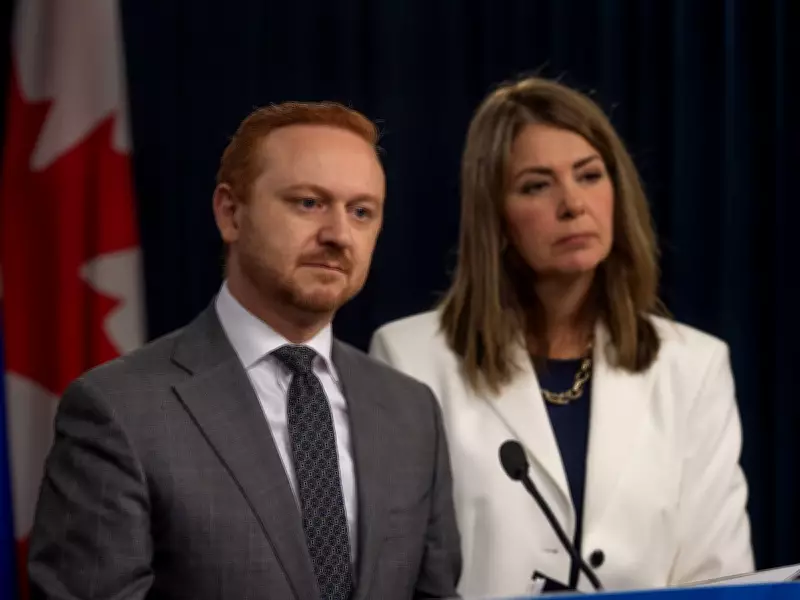
Three provincial governments have formally aligned with Alberta Premier Danielle Smith's initiative demanding significant changes to how the federal government appoints judges across Canada. This growing provincial coalition represents a substantial challenge to Ottawa's current judicial selection framework.
Joint Provincial Letter to Prime Minister Carney
In a coordinated political move, Ontario Premier Doug Ford, Quebec Premier François Legault, Saskatchewan Premier Scott Moe, and Alberta Premier Danielle Smith have jointly addressed Prime Minister Mark Carney. Their collective correspondence insists that provincial administrations must receive a direct and meaningful role in appointing judges to fill vacancies within their respective jurisdictions.
Premier Smith's Rationale for Provincial Involvement
"When provinces are at the table, decisions better reflect the needs of the people they serve," Smith emphasized in a Tuesday press release. She further argued that "a more collaborative approach will strengthen confidence in the justice system and ensure the appointment process is transparent and consistent."

The initial demand for judicial appointment reforms emerged last month when Smith publicly disclosed she had sent a separate letter to Carney outlining the necessity for enhanced provincial participation. During that announcement, Smith indicated her government might withhold funding for new judicial positions if Carney's administration failed to implement meaningful changes.
Specific Demands from Provincial Leaders
The premiers are advocating for a fundamental restructuring of federal judicial appointments to superior trial courts and courts of appeals. They propose that candidates should be selected exclusively from those recommended and approved by provincial governments. Additionally, they seek complete access to identical information on all assessed judicial candidates currently available to federal authorities.
Smith has also requested that Carney reconsider the bilingual requirement for judicial appointments, which she contends "alienates Albertans and western Canadians" and creates unnecessary barriers to qualified candidates from certain regions.
Proposed Advisory Committee Structure
Smith previously suggested establishing a special advisory committee composed of four non-partisan legal experts. Under this proposal, two members would be appointed by Alberta and two by the federal government. This committee would evaluate potential candidates for judicial vacancies in Alberta and forward recommendations to the minister of justice, who would then "work collaboratively" to identify suitable appointees.
For Supreme Court of Canada vacancies, Smith's plan involves candidates recommended by this committee and mutually agreed upon with the justice minister before submission to Prime Minister Carney for final consideration.
Justice Minister Amery's Perspective
Alberta Justice Minister Mickey Amery asserted that the time has come for provinces to assume greater control over judicial appointments affecting their jurisdictions. "Standing together with other provinces on this matter will let the federal government know that Canadians are serious about granting provincial governments appropriate authority over provincial matters," Amery stated, highlighting the significance of this multi-province alliance.
This coordinated provincial effort represents one of the most substantial challenges to federal judicial appointment protocols in recent years, with implications for the balance of power between provincial and federal authorities in Canada's justice system.