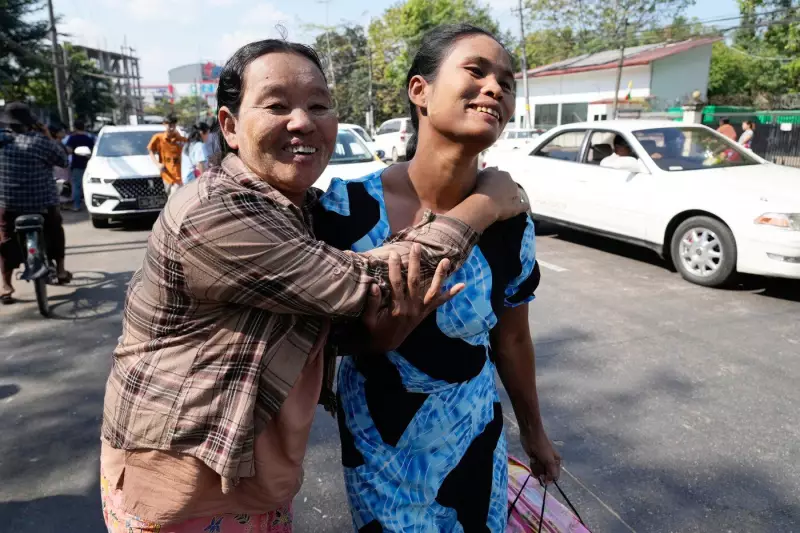
Myanmar's ruling military junta has granted freedom to more than 6,100 prisoners in a significant amnesty marking the nation's Independence Day anniversary. The release, which occurred on Sunday, January 4, 2026, included individuals held at the notorious Insein Prison in Yangon, among other facilities across the country.
A Gesture on a National Holiday
The mass prisoner release is a customary practice in Myanmar, often used by successive governments to mark important national holidays. January 4th commemorates the day in 1948 when Myanmar, then known as Burma, gained independence from British colonial rule. This year's amnesty saw emotional scenes outside prisons as families and colleagues welcomed the freed inmates back into society.
Photographs from the scene depicted one released prisoner being warmly embraced by a colleague just outside the gates of Insein Prison. While the government's announcement did not provide a detailed breakdown of all those released, such amnesties in the past have included a mix of political detainees and common criminals.

Context of the Release
This act of clemency comes amid ongoing political turmoil in the Southeast Asian nation. The military, known as the Tatmadaw, seized power in a coup in February 2021, overthrowing the democratically elected government led by Aung San Suu Kyi. Since then, the country has been embroiled in a severe political and humanitarian crisis, with widespread protests, a brutal crackdown by security forces, and a burgeoning civil war.
Prisoner amnesties are often viewed by international observers as a tool for the military government to reduce international pressure and placate domestic dissent. However, human rights organizations frequently note that such releases are often followed by fresh arrests of activists and opposition figures.
International and Domestic Reactions
The international community, including Canada, which has imposed sanctions on the Myanmar junta, closely monitors such developments. While the release of any prisoner is a positive step, advocates for democracy in Myanmar consistently call for the unconditional release of all political prisoners, the restoration of civilian rule, and an end to violence against the populace.
The actual impact of this release on the overall prison population, which includes thousands detained for opposing the military regime, remains to be fully assessed. The move is unlikely to significantly alter the fundamental political dynamics or the international stance towards the junta, which continues to face widespread condemnation for its human rights record.