Maduro's Defense Seeks Dismissal Over Blocked Legal Funding
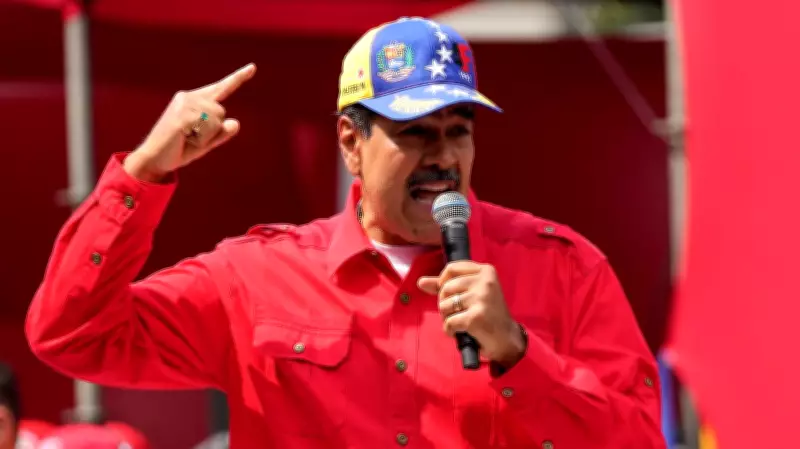
In a significant legal maneuver, the attorney representing deposed Venezuelan President Nicolas Maduro has formally requested a federal judge to dismiss the indictment against his client. The motion, filed on Thursday in Manhattan federal court, contends that the United States government has unconstitutionally violated Maduro's rights by blocking Venezuelan funds designated to cover his legal defense costs.
Constitutional Due Process at Stake
Attorney Barry Pollack submitted detailed court papers asserting that the U.S. government's actions have directly infringed upon Maduro's due process rights under the Constitution. Pollack emphasized that his client, as Venezuela's head of state, possesses both a legal right and a reasonable expectation to have his legal expenses funded by the Venezuelan government. This expectation is rooted in Venezuelan laws and established practices, which mandate state payment for legal defenses in such circumstances.
The submission included a formal declaration from Maduro himself, in which he stated, "I am entitled to have the government of Venezuela pay for my legal defense." He further explained that he has relied on this expectation and lacks the personal financial resources to fund his own defense. Maduro confirmed that he has been actively collaborating with Pollack on his legal strategy and considers him his chosen counsel. The declaration was signed as "President Nicolas Maduro Moros."

Background of the Case and Serious Charges
Maduro and his wife, Cilia Flores, have been detained in New York since early January, following a covert nighttime U.S. military operation that extracted them from their Venezuelan residence. Both have entered pleas of not guilty to the charges against them.
The indictment, spanning twenty-five pages, accuses Maduro and several associates of conspiring with international drug cartels and members of the Venezuelan military to facilitate the shipment of thousands of tons of cocaine into the United States. The charges carry severe penalties, with both Maduro and his wife facing potential life imprisonment if convicted.
Furthermore, the indictment alleges that as part of this extensive conspiracy, Maduro and his wife ordered kidnappings, brutal beatings, and murders targeting individuals who owed them drug money. One specific incident cited involves the killing of a local drug boss in Caracas.
Dispute Over Legal Fee Authorization
Pollack revealed in court documents that the U.S. Treasury Department's Office of Foreign Assets Control (OFAC), which administers sanctions against Venezuela, initially granted permission on January 9 for the Venezuelan government to pay Maduro's legal fees. However, this authorization was rescinded less than three hours later without any explanation provided.
Notably, Pollack pointed out that OFAC has permitted the payment of legal fees for the defense of First Lady Cilia Flores, creating what he describes as an inconsistent and unfair application of the sanctions. He argued that this selective blocking of funds for Maduro's defense undermines the fundamental right to a fair trial.
"The conduct of the United States government not only undermines Mr. Maduro's rights but also this Court's mandate to provide a fair trial to all defendants," Pollack wrote. He warned that any trial proceeding under these financially constrained circumstances would be "constitutionally defective" and that any resulting verdict would be vulnerable to legal challenges.
Broader Foreign Policy Implications
The legal fee dispute is deeply intertwined with complex U.S. foreign policy toward Venezuela. The Trump administration severed diplomatic ties with Maduro's government in 2019, instead recognizing the then-opposition leader of the National Assembly as Venezuela's legitimate head of state. The Biden administration has largely maintained this policy stance.
Pollack criticized the U.S. government for authorizing numerous commercial transactions with Venezuela while simultaneously prohibiting the use of what he describes as "untainted funds" for Maduro's legal defense. He argued this contradiction highlights the punitive nature of the financial blockade against his client.

The U.S. Department of Justice has not yet responded to requests for comment on the matter. Pollack indicated that if the judge denies the motion to dismiss and allows the charges to stand, he intends to resign from the case. This would necessitate the court appointing alternative counsel to represent Maduro, further complicating the legal proceedings.