Toronto Judge Grants Leniency to Repeat Crack Dealer Based on Family Circumstances and Indigenous Heritage
A Toronto judge has demonstrated significant judicial leniency toward a repeat crack cocaine dealer, citing the defendant's role as a father to nine children and his connection to Indigenous ancestry as mitigating factors in sentencing. The decision highlights the complex interplay between criminal justice, family welfare, and recognition of historical trauma within Canada's legal system.
Repeated Offenses in Troubled Neighborhood
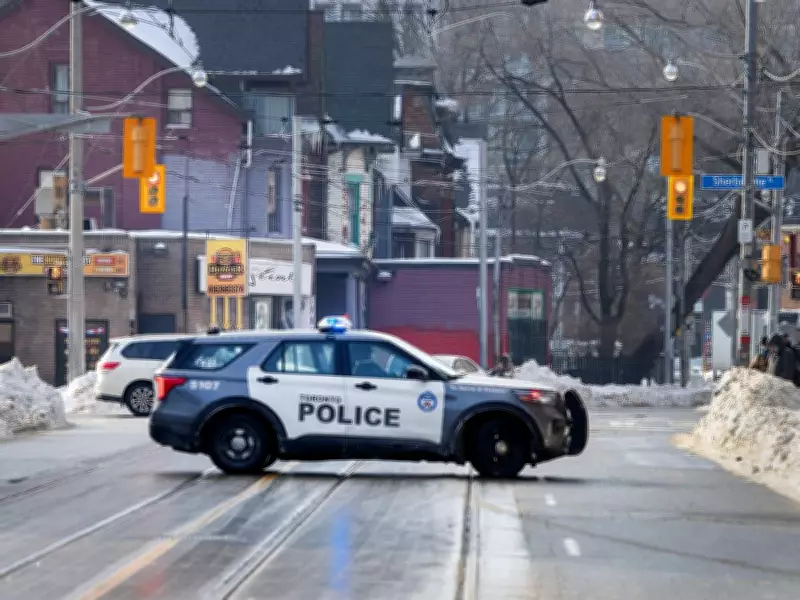
Lloyd Williams, 44, pleaded guilty in Ontario's Court of Justice to three separate counts of possession of cocaine for the purpose of trafficking. The offenses occurred over a ten-month period in what Justice André Chamberlain described as the "deeply troubled" neighborhood surrounding the intersection of Dundas and Sherbourne streets in downtown Toronto.
The arrests took place on March 3, 2024, October 25, 2024, and January 4, 2025. Despite being released after each arrest—twice on bail and once with a GPS tracking device requirement—Williams continued his criminal activities. He also pleaded guilty to additional charges including possession of proceeds of crime and failing to comply with a release order.

Divergent Sentencing Recommendations
The Crown prosecution recommended a substantial prison sentence of six and a half years for Williams' repeated drug trafficking offenses. In stark contrast, Williams' defense lawyer argued for a significantly reduced sentence of two years less a day, placing the punishment in what's known as the "upper reformatory range" rather than federal penitentiary time.
Justice Chamberlain's decision ultimately fell closer to the defense's position, though the exact sentence details weren't specified in the available information. The judge's written decision, dated January 23, 2026, reveals the careful consideration given to multiple mitigating factors beyond the criminal acts themselves.
Family Responsibilities as Mitigating Factor
Central to the judge's decision was Williams' role as a father to nine children ranging in age from just ten months to sixteen years old. The family includes two stepchildren and seven biological children, with one of the nine-year-old twins being on the autism spectrum.
Justice Chamberlain noted in his decision that "the youngest is just 10 months old," with additional children aged 22 months, three years, nine years (twins), ten years (two children), and sixteen years. The judge accepted Williams' argument that "any lengthy absence would have a significant impact on their health and well-being," acknowledging the defendant's claimed role in providing paternal support despite his criminal activities.
Indigenous Heritage Considerations
Williams identified himself as both Black and Mi'kmaq, though he couldn't provide formal documentation of his Indigenous ancestry. Despite this lack of proof, Justice Chamberlain stated he was "satisfied" that Williams "has established a connection to Indigenous ancestry."
The judge elaborated on this point, noting that "it is not unusual for Indigenous people who have struggled under the yoke of colonialism in this country and its intergenerational impact to have lost connections to their roots and community." Chamberlain further observed that markers of intergenerational trauma—including poverty, familial addiction, educational struggles, mental health issues, and overrepresentation in criminal justice and child welfare systems—often accompany confirmed Indigenous identity.
Health and Addiction Considerations
Additional mitigating factors included Williams' health condition and relationship to the drugs he sold. Diagnosed with epilepsy at age three, Williams continues to experience seizures, adding complexity to his personal circumstances.
His defense lawyer argued that Williams' addiction to the very drugs he trafficked should further mitigate his sentence, characterizing him as an "addict-trafficker" deserving of reduced moral blameworthiness. While the judge acknowledged these arguments, the primary focus remained on family impact and Indigenous heritage considerations.

Broader Legal Context
This decision occurs within a growing legal trend recognizing how systemic factors and personal circumstances should influence sentencing, particularly for Indigenous offenders. The judge explicitly stated that Williams "deserves consideration for the reduced moral blameworthiness associated with these challenges," referencing both his family responsibilities and Indigenous heritage.
The case raises important questions about how Canada's justice system balances punishment with recognition of historical injustices, family preservation, and rehabilitation. It follows similar cases where Indigenous status and personal circumstances have influenced sentencing outcomes, reflecting evolving judicial approaches to criminal justice in Canada.
As Justice Chamberlain's decision demonstrates, Toronto courts continue to grapple with how to appropriately sentence repeat offenders while considering the complex web of personal, historical, and social factors that contribute to criminal behavior and its consequences.