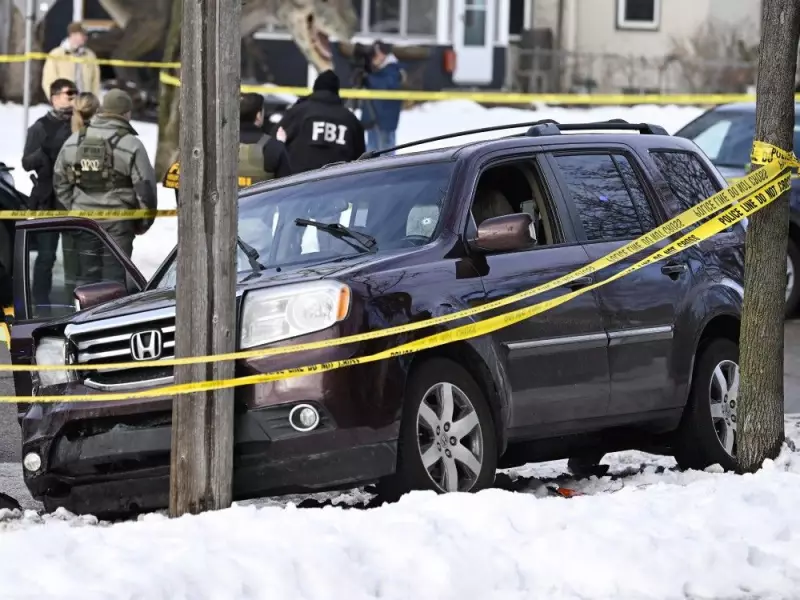
A fatal encounter between U.S. Immigration and Customs Enforcement (ICE) agents and a driver in Minneapolis, Minnesota, has ignited a fierce national debate over police use of force and protocol. The incident, which occurred on Wednesday, January 7, 2026, resulted in the death of a woman after an ICE agent discharged his firearm. While critics have labeled the shooting a murder, law enforcement officials and former President Donald Trump have rallied to defend the officers' actions, stating they acted in self-defense.
The Minneapolis Incident: A Timeline of Events
According to a statement from the Department of Homeland Security, the events unfolded during a federal law enforcement operation. ICE agents had surrounded a vehicle and issued clear commands for the driver to stop. Authorities allege that the driver not only refused to comply but reversed the car, then put it back into drive and revved the engine in an attempt to flee the scene.
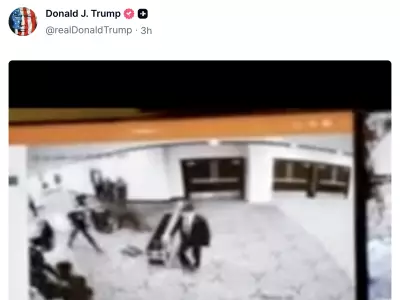
Video evidence from the incident reportedly shows an officer with his weapon drawn nearly being struck by the vehicle as he fired at the driver. The car subsequently crashed a short distance away, and the driver was pronounced dead. An ICE officer was also injured and hospitalized but is expected to recover.

Political and Public Reaction: A Nation Divided
The shooting immediately drew strong reactions from political commentators and public figures. Political commentator Keith Olbermann took to social media platform X, calling the event "the Kent State of our time" and stating plainly, "this is murder."
Conversely, former President Donald J. Trump voiced strong support for the officers on his Truth Social platform. After viewing footage, he stated the driver was "very disorderly, obstructing and resisting" and had "violently, willfully, and viciously ran over the ICE Officer." He concluded the agent "seems to have shot her in self-defense."
Veteran journalist Geraldo Rivera also commented, questioning the immediate justification from DHS and urging a full investigation, noting the driver was "an unarmed woman trying to flee." Minnesota Governor Tim Walz cautioned the public not to "believe the propaganda," highlighting the deeply polarized interpretations of the event.
Parallels in Canadian Policing and the SIU Process
The incident raises familiar questions about police conduct during high-risk arrests, scenarios that have also played out in Canada. In Ontario, such cases are automatically investigated by the province's Special Investigations Unit (SIU).
A comparable case cited is the death of Jamal Francique, 28, in Mississauga on January 7, 2020. The SIU reported that during an attempted arrest, Francique got back into his vehicle and "drove at" approaching officers. An officer fired through the windshield, fatally wounding Francique.
In his ruling, SIU Director Joseph Martino cleared the officers involved. He cited Section 25(1) of the Criminal Code, which protects officers from criminal liability for force used in the course of their duties, provided it was "reasonably necessary." Martino found he could not conclude that the "lethal force fell outside the limits of legal justification."
This legal precedent underscores a central argument in the Minneapolis case: police are authorized to use force, including lethal force, to protect themselves and others from imminent threat. The key determination rests on whether the officer reasonably believed their life or the lives of others were in danger.
Key Takeaways and Broader Implications
The tragic outcome in Minneapolis serves as a stark reminder of the potential consequences when individuals choose to resist or flee from law enforcement. The core advice from policing experts remains unchanged: when an officer gives a lawful command to stop, compliance is the safest course of action. Failure to do so escalates the situation and can lead to fatal results, as officers are trained to neutralize perceived threats.

While the political rhetoric surrounding the case is intense—with some accusing activists of trying to "start a civil war"—the operational facts will be scrutinized by investigators. The debate will hinge on whether the driver's actions constituted a lethal threat to the officer on foot. Regardless of the eventual findings, the incident has already deepened existing societal divisions regarding law enforcement, immigration enforcement, and the appropriate limits of police power.