Federal Officers' Fatal Shooting of ICU Nurse Prompts Congressional Notification
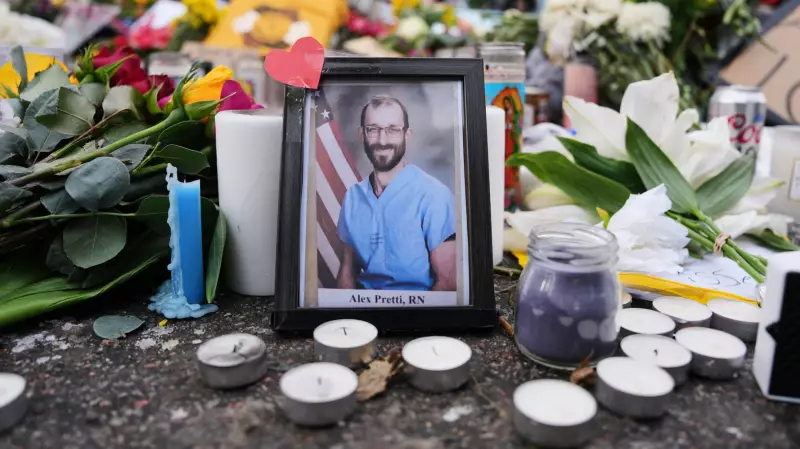
Two federal officers discharged their firearms during an encounter that resulted in the death of intensive care unit nurse Alex Pretti in Minneapolis, according to official congressional notification documents obtained by The Associated Press. A Customs and Border Protection official disclosed to Congress that one Border Patrol officer and one CBP officer both fired their Glock pistols during the incident.
Investigation Details and Official Account
The Customs and Border Protection's Office of Professional Responsibility conducted a thorough analysis based on comprehensive reviews of body-worn camera footage and agency documentation. Federal regulations mandate that CBP must report in-custody deaths and certain other fatalities involving its agents and officers directly to congressional oversight bodies.
According to the official notification, officers attempted to take Pretti into custody when he resisted, leading to a physical struggle. During this confrontation, a Border Patrol agent repeatedly shouted warnings about a weapon, yelling "He's got a gun!" multiple times according to the official account. The 37-year-old nurse was fatally wounded during this encounter over the weekend of January 26, 2026.

Parallel Immigration Case Developments
In a related development, federal immigration authorities have released an Ecuadorian man identified in court documents as "Juan T.R.," whose detention prompted extraordinary judicial intervention. Chief Judge Patrick J. Schiltz of Minnesota had expressed significant frustration with the Trump administration's handling of this and other immigration cases, taking the unprecedented step of ordering acting ICE Director Todd Lyons to personally appear in his courtroom.
Attorney Graham Ojala-Barbour confirmed his client's release in Texas, receiving notification from the U.S. attorney's office in Minneapolis shortly after 1 p.m. Central Time. Judge Schiltz had explicitly stated in his Monday order that he would cancel Lyons' mandatory appearance if the detainee was released from custody, demonstrating the direct connection between judicial pressure and administrative action.
Political and Administrative Responses
The judicial order followed President Donald Trump's directive for border czar Tom Homan to assume control of immigration enforcement operations in Minnesota after the second death this month involving immigration law enforcement personnel. President Trump described having "great calls" with Minnesota Governor Tim Walz and Minneapolis Mayor Jacob Frey, while simultaneously acknowledging that a "big investigation" was underway regarding Pretti's killing.
Governor Walz's office confirmed the Democratic leader met with Homan and called for impartial investigations into the shootings involving federal officers. Both parties agreed on the necessity of continued dialogue. Similarly, Mayor Frey and Minneapolis Police Chief Brian O'Hara reported having a "productive conversation" with the border czar, with city leaders committing to ongoing discussions.
Enforcement Patterns and Judicial Commentary
While many south Minneapolis neighborhoods where immigration agents had been regularly sighted remained relatively quiet, Associated Press staff observed continued enforcement activity in northeast Minneapolis and the northern suburb of Little Canada. This ongoing presence occurred despite shifting administrative approaches following the fatal shooting incident.
Judge Schiltz acknowledged in his written order that compelling the head of a federal agency to appear personally represents an extraordinary judicial measure. However, he justified this action by stating that "the extent of ICE's violation of court orders is likewise extraordinary, and lesser measures have been tried and failed." The judge noted persistent assurances from immigration officials about compliance with court orders, while simultaneously observing that "the violations continue" despite these promises.

Broader Legal Context
These developments unfolded alongside a separate federal court hearing regarding a request by Minnesota state authorities and the mayors of Minneapolis and St. Paul to halt the immigration enforcement surge. Although the presiding judge indicated she would prioritize the ruling, no specific timeline for a decision was provided, leaving the legal landscape uncertain as multiple judicial and administrative processes intersected.