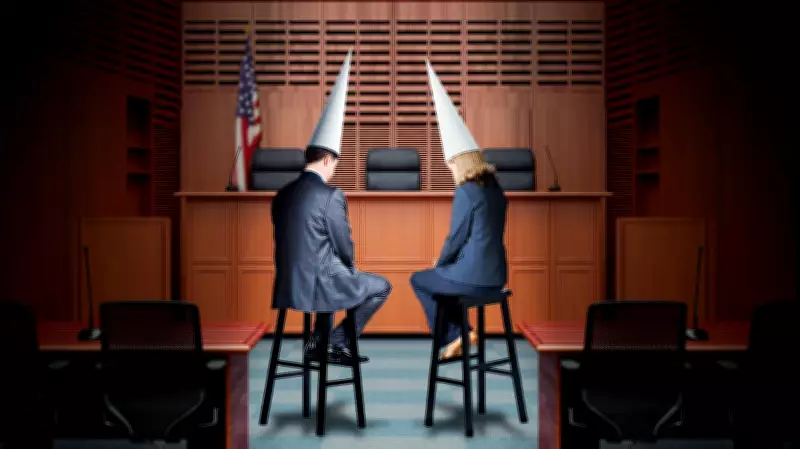
Federal Attorneys' Repeated 'I Don't Know' Answers Frustrate Judges in Immigration Cases
As legal challenges against the Trump administration accumulate, federal lawyers representing the U.S. government have increasingly resorted to a concerning courtroom strategy: claiming complete ignorance about the very cases they're defending. This pattern of attorneys stating they "don't know" basic facts about immigration enforcement actions has prompted judicial frustration and raised serious questions about the Justice Department's current state.
Judicial Frustration Mounts Over Government Attorneys' Lack of Knowledge
In the case of Kilmar Abrego Garcia, a Salvadoran national and Maryland resident mistakenly deported last year, U.S. District Judge Paula Xinis grew so exasperated with government lawyers' inability to answer fundamental questions that she considered holding them in contempt. During a prolonged hearing about Abrego Garcia's status last spring, government attorney Drew Ensign repeatedly told the court, "We have said what we can say. I do not have that information."
Judge Xinis noted that Ensign's lack of knowledge about Abrego Garcia's whereabouts and what actions the administration had taken to secure his release suggested the government was "playing a game with their own lawyers." In a subsequent order, she criticized Department of Justice attorneys for their "willful bad faith refusal to comply with discovery obligations" and their use of "specious" tactics to avoid answering judicial questions. Remarkably, one year later, Abrego Garcia's case remains unresolved, with the government recently stating it still intends to deport him.

A Pattern of Ignorance Across Multiple Cases
This troubling pattern extends beyond a single case. In January proceedings alleging that Immigration and Customs Enforcement routinely denied detainees at Minnesota's Whipple Federal Building access to phones or legal counsel, a U.S. district judge and government attorney Christina Parascandola couldn't even agree on whether phones were available inside the facility. Parascandola admitted she couldn't determine the names of detained individuals, making it impossible to verify if all detainees had received their legally mandated phone access.
"I can't say with a hundred percent certainty" if the government maintains such records, Parascandola told the court. Regarding the phones themselves, she stated she hadn't personally visited the facility and could only rely on what ICE agents had told her.
In a West Virginia case concerning the legality of a warrantless ICE traffic stop that resulted in a driver being jailed for nine days, government lawyer Christopher Arthur informed U.S. District Judge Joseph Goodwin he was "not prepared to answer" questions about who authorized the stop or their position within the agency. When Judge Goodwin pressed him to "just answer me" and explain "why this stop was lawful," Arthur responded: "OK. The answer is, I don't know what initiated the initial stop."
Judge Goodwin appeared astonished by this response. "Can you imagine ever coming to court to try to convince somebody that a person is being lawfully held with absolutely no information? You don't have anything," he remarked.
Systemic Issues or Deliberate Strategy?
While "I don't know" isn't inherently unacceptable in court proceedings, a review of prominent federal immigration cases reveals U.S. attorneys frequently default to this response or variations thereof, even after judges have repeatedly requested information or granted additional time to gather answers. Some lawyers have maintained this position despite judicial threats of professional or legal consequences, suggesting either deliberate obfuscation or systemic incompetence within the Justice Department under President Donald Trump.
Legal experts express deep concern about either possibility. Whether attorneys are intentionally incompetent or genuinely uninformed, the reality remains that lives hang in the balance while the Justice Department's credibility teeters precariously. Amy Powell, who served as a senior trial counsel for the Justice Department for two decades before resigning last year, told reporters that the "brain drain from the department has been dramatic" over the past two years, with immediate consequences.

"The DOJ is never going to be the same," Powell stated. "Even if we elect a competent administration and they appoint competent people, career people don't suddenly get hired back. The institutional loss is generational, and it's going to be decades to rebuild what has been lost."
Department Standards at 'Rock Bottom'
A former DOJ official, speaking anonymously due to fear of professional repercussions, described current standards within the department as being at "rock bottom." The official bluntly stated, "If you've got a pulse, you can get into the Justice Department." This assessment aligns with dramatic staffing reductions, with Justice Connection research showing the number of attorneys employed by the DOJ plummeting from 12,955 in December 2024 to just over 3,400 in January 2026.
The Justice Department declined to respond to specific questions about its strategy or attorneys failing to answer judicial questions directly. None of the prosecutors mentioned in these cases responded to requests for comment.
Consequences of Non-Compliance and Defiance
The administration's approach has resulted in numerous instances of court order defiance. When President Trump invoked the Alien Enemies Act last year to rapidly deport over 100 men accused of being Venezuelan gang members to El Salvador's CECOT prison, the Justice Department ignored Chief District Judge James Boasberg's orders to return planes carrying deportees. During hearings, attorney Drew Ensign repeatedly claimed, "I don't know the status of the planes" and "I don't know the answer to that question," while asserting that information couldn't be shared due to national security concerns.
Despite judicial instructions to return the planes, deportations proceeded, with Salvadoran President Nayib Bukele mocking the court order on social media. Men sent to CECOT later described enduring horrific experiences including beatings, mental abuse, and sexual assault.
Broken Systems and Ethical Dilemmas
The ethical challenges facing government attorneys became starkly apparent during a February hearing where former ICE attorney Julie Le, volunteering to assist with immigration cases, unraveled before U.S. District Judge Jerry Blackwell. Le repeatedly stated she didn't know why people had been unlawfully detained beyond court-ordered release dates, explaining that her requests for detainee information were being "slow-walked" by higher-ups.
"What do you want me to do? The system sucks. This job sucks," Le told the court. "Our email just never stops." She was fired from the U.S. attorney's office less than a week later.
Mentors for young lawyers report that up-and-coming attorneys worry that associating with Trump's Justice Department might jeopardize their long-term careers, for which they must maintain professional ethics standards. "They don't want to get disbarred later," explained another former DOJ official speaking anonymously.
Credibility Crisis and Lasting Damage
The department's current approach doesn't exist in isolation and will undermine its future effectiveness. According to Amy Powell, "The DOJ as an institution has lost credibility. The politicization of the department, its decisions, public statements, what appear to be outright lies and defiance of court orders in multiple cases, means that those presumptions the government has long relied upon are falling by the wayside."
Powell added that judges who previously trusted career attorneys or political officials "without pause a few years ago have developed an intense skepticism." She concluded, "It's terrible for public service, it's terrible for the department, it's terrible for the American people. It's all heartbreaking for those of us who are refugees from the department, watching its dissolution."
The Washington Post found last year that in 165 cases where judges ruled against the administration, the government defied one in every three court orders. Many involved outright noncompliance, while others featured attorneys providing false information or withholding evidence. The cumulative effect represents a fundamental challenge to the rule of law and the proper functioning of the American justice system.