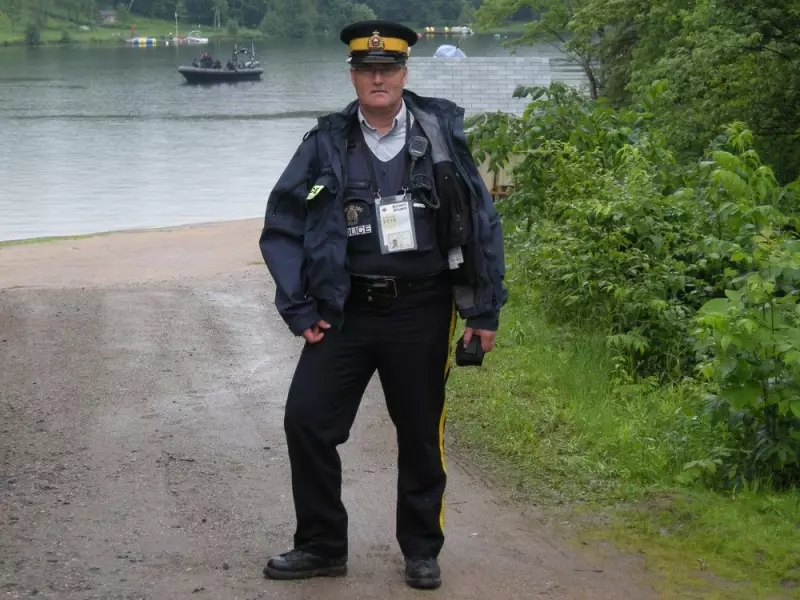
For two decades, a retired Royal Canadian Mounted Police officer has been locked in a grueling battle with the federal government, seeking recognition and compensation for severe injuries he sustained while intervening in a disturbance, believing he was fulfilling his duty as a Mountie.
A Fateful Confrontation in a Calgary Park
Tom Christie, then an active frontline RCMP constable, was on vacation in Calgary in July 2004. On the evening of July 23, he was biking with his three young sons, aged eight, ten, and thirteen, when he encountered a group of four or five intoxicated and rowdy teenagers in a park.
Witnessing the teens littering and causing a disturbance near seniors and families, Christie felt compelled to act. He sent his children home and approached the group to ask them to clean up. The situation escalated rapidly.

"It didn't go well. Some of them ended up attacking me and knocking me down," Christie recalled. The assault that followed was brutal. He was beaten repeatedly, suffering an estimated 50 blows, including being kicked in the head approximately 30 times. The attack left him with a significant closed head injury and left facial nerve palsy.
The "Always On Duty" Ethos and a Lengthy Legal Aftermath
Christie's decision to intervene was rooted deeply in his RCMP training. He explained that recruits are ingrained with the principle that they are never truly off duty.
"Recruits were told we were on duty 24/7; that if you saw a situation, you had to intervene," said Christie, now 67 and retired. "You just can't walk away."
Following the assault, a 17-year-old and a 15-year-old were convicted of aggravated assault, each receiving a sentence of seven months. However, Christie's personal battle was just beginning. He applied for compensation through Veterans Affairs Canada, the agency responsible for Mounties' injury claims, launching a 20-year struggle that continues today.
Two Decades of Denials and Appeals
Despite a recent decision from a Veterans Affairs reconsideration panel in 2025 that indicated he was entitled to full compensation for his injuries, Christie received a crushing update. A letter dated October 28, 2025, informed him that his disability assessment remained at "nil" and he did not qualify for a monetary benefit, though he is entitled to treatment.
The department stated it reviewed neuropsychiatric testing from 2005, Christie's RCMP medical exam from 2011, and a doctor's note from a decade later. Based on this, they concluded no financial award was warranted.
"I am now appealing again as there are lingering issues. After all, I was booted in the head 30 times," Christie stated. He is seeking compensation for his reduced quality of life, pain, and suffering—recognition for the lifelong impact of injuries sustained while upholding the RCMP's code.
This case highlights the complex and often protracted challenges faced by first responders when seeking support for injuries linked to their professional ethos, even when they occur outside of scheduled shifts.