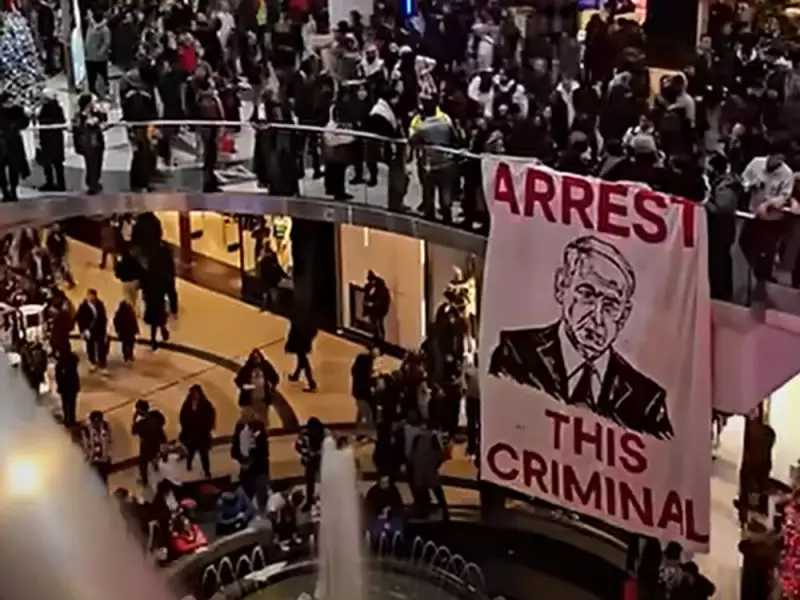
On December 26, Boxing Day, a large group of pro-Palestinian demonstrators occupied a central area of Toronto's iconic Eaton Centre. The mall, one of Canada's busiest public spaces, was filled with holiday shoppers, families, and tourists when the incident occurred.
The Nature of the Chant: A Call to Violence?
According to columnist Matthew Taub in the National Post, the gathering crossed a line from protest into intimidation. The core of his argument focuses on the demonstrators' chants for "intifada." Taub emphasizes that this term is not a vague political slogan but a direct reference to violent uprisings.
He notes that authorities, including London's Metropolitan Police—which arrested two people for similar calls this month—view it as incitement. Historically, the intifadas have been associated with suicide bombings, stabbings, and attacks targeting civilians.

A Fracturing Social Contract in Canada
Taub contends that allowing movements that glorify violence to seize public spaces begins to break the fundamental social contract. He states this event cannot be viewed in isolation, pointing to the mass murder at Bondi Beach in Australia less than two weeks prior, which killed 15 people, including a 10-year-old girl.
The columnist challenges the common request for Canadian Jews to separate criticism of Israel from antisemitism. He argues that this becomes an impossible fiction when mobs openly chant for violent uprising and the targeted community is told to stay calm and rely on institutions he believes have failed them.
A Double Standard in Response?
The article raises a critical question about the public and institutional response. Taub asserts that if a crowd in a major Canadian mall chanted for violence against any other group—be it Muslims, Christians, or LGBTQ+ Canadians—the reaction would be swift and clear.
This would involve immediate police intervention, strong political condemnation, and unambiguous media coverage. However, he observes that when the targets are Jews, the response is often "hesitation, euphemism, and moral fog," with the situation being dismissed as overly complicated.
Taub concludes that the Eaton Centre event was a warning sign. He calls for an end to pretending that calls for violent intifada in Canadian public spaces constitute protected free speech, which he argues does not extend to incitement or the glorification of mass murder.
The piece references Toronto MP Kevin Vuong's social media post from December 27, which highlighted the chants and urged Canadian leaders to act against such calls for hate and violence.