

Durham Region Establishes Controversial Hate Reporting Initiative
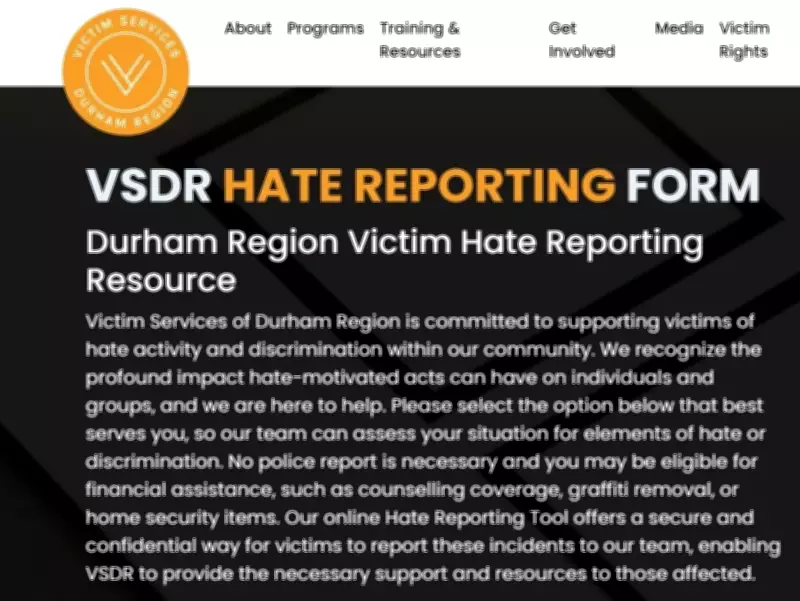
Durham Region has introduced a new Community-Based Hate Reporting Program, creating what some critics are calling a "hate police" department. This initiative, believed to be a first in Canada, operates separately from the Durham Regional Police and allows residents to report incidents of hate through a secure online platform.
Program Details and Anonymous Reporting
The program offers a confidential online tool where residents can report hate incidents, even when they don't meet the threshold of a criminal offense. According to program materials, it provides "an alternative for those who are unwilling or unable to report directly to the police" with an option to remain completely anonymous.
Victim Services of Durham Region (VSDR) manages the submissions, providing trauma-informed support to those affected by hate incidents. The program emphasizes that police involvement only occurs if the person reporting chooses to involve law enforcement.

Funding and Operational Questions
While the program appears to be funded through regional taxpayers and provincial government sources, specific budget details and staffing numbers remain unclear. As of recent inquiries, neither Durham Region nor Chair John Henry have revealed the program's financial scope or operational scale.
The region has partnered with VSDR, leveraging their expertise and trained staff to implement the program. Officials describe it as groundbreaking and potentially landscape-changing in how communities address hate incidents.
Criticism and Charter Concerns
The program has faced immediate criticism from some quarters, with opponents questioning whether it functions as a sophisticated "snitch line." Legal experts have raised concerns about potential violations of Charter rights, particularly freedom of expression.
Program administrators have anticipated these concerns, addressing them directly on their webpage with the question: "Isn't the Community-Based Hate Reporting tool just a snitch line?" Their response emphasizes that the tool is designed to "empower individuals to report hate incidents" rather than encourage inappropriate reporting.
Definition and Scope of Hate Incidents
The program uses Canada's Criminal Code definition of hate incidents, which includes acts motivated by bias, prejudice, or hate toward identifiable groups. These may involve:
- Race, ancestry, or ethnic origin
- Sex, sexual orientation, or gender identity
- Religion or creed
- Age, disability, or family status
- Other protected characteristics
Officials acknowledge that "the concept of hate can feel different for everyone," but maintain that legal standards provide clear guidelines for what constitutes reportable incidents.
Potential Overreach and Monitoring
Critics question where the program's boundaries lie, wondering if it could extend to:
- Comedy performances or private conversations
- Social media posts deemed offensive
- Artistic expressions that push boundaries
- Everyday interactions at community events
Allison Hector-Alexander, director of the region's Diversity, Equity and Inclusion Division, stated that "combatting hate requires all of us," emphasizing the collaborative nature of the initiative involving government, human rights groups, faith organizations, and service providers.
However, the program's operation outside traditional police structures and judicial oversight has raised questions about accountability, data management, and who ultimately determines what constitutes hateful behavior in practice.






