In a dramatic and defiant first appearance before a United States judge, deposed Venezuelan President Nicolas Maduro pleaded not guilty to drugs and weapons charges on Monday, January 5, 2026, declaring himself an innocent man and a "prisoner of war."
A Defiant Entrance and a Heated Exchange
The 63-year-old former leader entered the packed, wood-panelled courtroom in Manhattan with his shoulders back, scanning the public gallery and offering greetings in Spanish before making his declaration of innocence. Wearing a dark shirt over orange prison fatigues, Maduro used the 30-minute hearing to condemn the U.S. military raid that captured him and his wife, Cilia Flores, at their home in Caracas on Saturday, January 3.
"I'm here kidnapped since January 3, Saturday. I was captured at my home in Caracas, Venezuela," Maduro stated through a court interpreter, as he listened to proceedings via headphones. He asserted, "I'm a decent man. I am still president of my country." Judge Alvin Hellerstein was forced to cut him off, reminding him there would be a time and place for such arguments.

The hearing culminated in a shouting match when a man in the public gallery yelled that Maduro would pay for his crimes. "I am a prisoner of war," Maduro shot back before being led out of the courtroom by U.S. marshals.
Heavy Security and Divided Protests
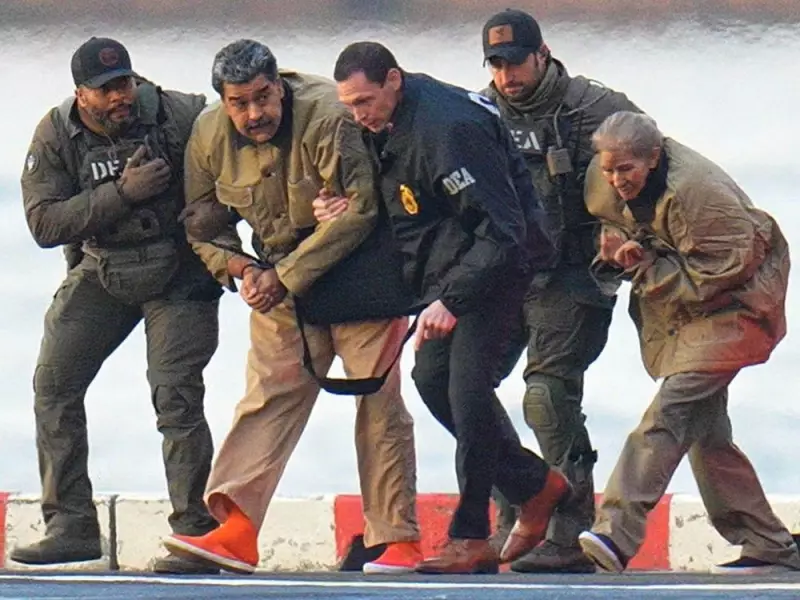
The scene inside the federal courthouse, filled with lawyers, law enforcement, and journalists, contrasted sharply with the heavy security visible earlier in the day. Images showed Maduro and Flores, her blonde hair tied up and wearing similar prison attire, being escorted in an armored vehicle from a Brooklyn jail by heavily armed federal agents.
Outside the courthouse, scores of police officers patrolled behind metal barriers. Several dozen protesters gathered, representing both sides of the polarizing figure. One group waved Venezuelan flags with signs reading "USA hands off Venezuela" and chanted in support of Maduro. On the other side of the barrier, demonstrators celebrated his arrest, leading to occasional arguments separated by law enforcement.
Legal Proceedings Begin Amidst Geopolitical Tensions
Throughout the hearing, Maduro took notes with a pen and paper, rarely looking up from his desk. His wife sat beside him, separated by one of their three defense attorneys. The charges against Maduro, which include serious allegations related to narcotics and weapons, mark the beginning of a complex legal battle with significant international implications.
The case immediately raises profound questions about sovereignty, international law, and the future political landscape of Venezuela. Maduro's framing of himself as a "prisoner of war" is seen as a strategic move to politicize the proceedings and rally his supporters, both domestically and abroad, against what he labels U.S. intervention.
As the U.S. justice system moves forward with its case, the world watches to see how this unprecedented prosecution of a former head of state will unfold, setting a potentially landmark precedent for international justice and foreign policy.