Federal Government Declines to Prosecute Woman Arrested at Trump's State of the Union Address
In a significant development, the federal government announced on Thursday that it will not seek criminal charges against Aliya Rahman, the Minneapolis woman who was forcibly removed from President Donald Trump's State of the Union address in February. This decision was confirmed by her attorney, Jessica Gingold of the MacArthur Justice Center, who praised the move as a step toward justice.
Unjust Arrest and Legal Response
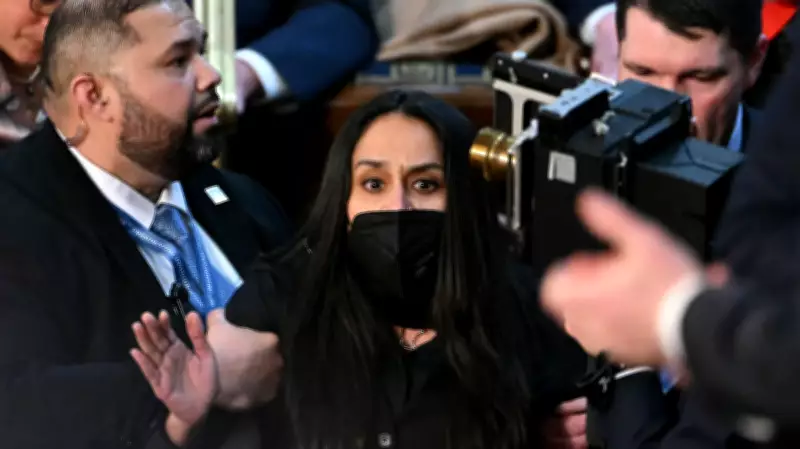
Aliya Rahman, a Bangladeshi American software engineer who is autistic and has physical disabilities, was attending the speech as a guest of Representative Ilhan Omar, a Democrat from Minnesota. During the event, Rahman stood up multiple times, which led to Capitol Police approaching her and instructing her that she "couldn't stand up." Shortly after, officers aggressively grabbed her, dragged her into a stairwell without her cane, and placed her in handcuffs. The confrontation was so severe that she required hospital treatment for her injuries before being booked at Capitol Police headquarters.
In a statement, Gingold emphasized that Rahman should never have been arrested, stating, "Aliya committed no crime and did nothing wrong. While we celebrate that no criminal case will go forward, the experience of being singled out for standing and roughly arrested has not been without its costs to Aliya and is now yet another thing from which Aliya must heal."

Background of Trauma and Advocacy
This incident is not the first time Rahman has faced harsh treatment from federal authorities. Earlier, she endured a violent encounter with immigration enforcement agents in Minneapolis, where she was dragged from her car and detained in a federal center. She testified before Congress about this ordeal, which she believes nearly cost her life. The arrest at the State of the Union added to her trauma, with Rahman describing it as "a particularly heavy weight" given the previous incident.
Capitol Police initially arrested Rahman for "demonstrating," an offense that could have resulted in up to six months in prison. However, with the government's decision not to file charges, she avoids any legal penalties. Rahman expressed gratitude for this outcome, saying, "I am grateful that the government chose not to file charges. I will continue my steadfast focus on helping my community in Minneapolis and healing from the wounds inflicted on me by my own government."
Implications and Moving Forward
The case highlights ongoing concerns about the treatment of individuals with disabilities and the use of force by law enforcement during public events. Rahman's experience underscores the need for greater sensitivity and accountability in such situations. As she focuses on recovery and community work, this decision may prompt broader discussions on civil liberties and justice in the United States.