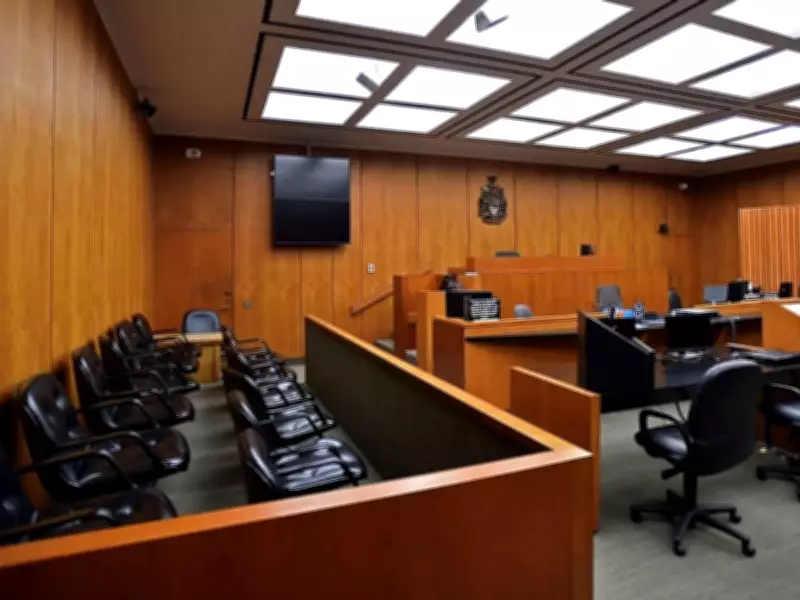
The Canadian Bar Association, under the leadership of President Bianca Kratt, has issued a controversial statement warning media organizations about the dangers of what it describes as delegitimizing judges. The association expressed concern that recent media commentary risks undermining public confidence in the judiciary, though it failed to specify which particular criticism prompted this warning.
Vague Criticism Targets Unnamed Journalist
The association's news release appears to reference an article by National Post journalist Jamie Sarkonak, who criticized Justice Faisal Mirza of the Ontario Superior Court for what she characterized as excessive reliance on racial considerations in his criminal law rulings. Despite clearly targeting this specific criticism, the CBA's statement avoided naming either the journalist or the judge involved, instead issuing a generalized warning about media commentary regarding sitting judges.
In its statement, the Canadian Bar Association implied that such criticism was both uninformed and unfair, while positioning itself as defending the principles of judicial independence and the rule of law. This approach has drawn significant criticism from legal experts who argue that vague condemnations of media scrutiny are inappropriate in a democratic society that values transparency and accountability.

Growing Trend in Legal Circles
This incident reflects a broader trend within Canadian legal institutions to characterize criticism of judicial decisions as attacks on fundamental legal principles. Chief Justice of Canada Richard Wagner has previously condemned what he calls misinformation about the legal system and denounced instances where courts are questioned and judges are attacked.
Following this lead, chief justices in Ontario and Alberta have issued their own public statements about judicial independence in response to criticisms from politicians. Various legal regulators have also launched a national campaign addressing what they describe as political threats to the rule of law in Canada.
Significant Counterreaction Emerges
The Canadian Bar Association's statement has generated substantial pushback from legal professionals and commentators. Lawyer and former Chief of the Alberta Human Rights Commission Collin May has argued forcefully that the bar association's willingness to suppress public scrutiny of legal matters is entirely inappropriate for a free and democratic society.
May contends that the association's vague approach to criticizing media commentary represents a troubling development that could chill legitimate public discussion about judicial decisions. Other critics have noted that none of the recent interventions by judicial figures or legal organizations have specifically identified particular violations of judicial independence or named specific transgressors.
Specificity Lacking in Judicial Statements
This lack of specificity has become a focal point of criticism. The statements issued by judiciary representatives in Ontario and Alberta over recent months have similarly failed to outline specific violations of judicial independence. In Alberta, a spokesperson for the judges declined to confirm whether their statement was addressing comments made by Premier Danielle Smith, further contributing to the ambiguity surrounding these interventions.
Legal experts argue that while elected officials certainly have a responsibility to uphold the rule of law, and while judicial independence through security of tenure, secure remuneration, and administrative independence remains essential, these principles should not be invoked to shield judges from legitimate public scrutiny and criticism of their decisions.
Broader Implications for Democratic Discourse
The controversy raises important questions about the balance between protecting judicial independence and maintaining robust public discourse about legal decisions. Critics argue that characterizing media criticism as attacks on the rule of law represents a concerning development that could undermine democratic accountability mechanisms.

As this debate continues, legal observers are watching closely to see whether Canadian legal institutions will adopt more transparent approaches to addressing concerns about judicial criticism or whether the current trend toward vague condemnations of media scrutiny will persist. The outcome may have significant implications for how Canadians discuss and evaluate their justice system in the years ahead.