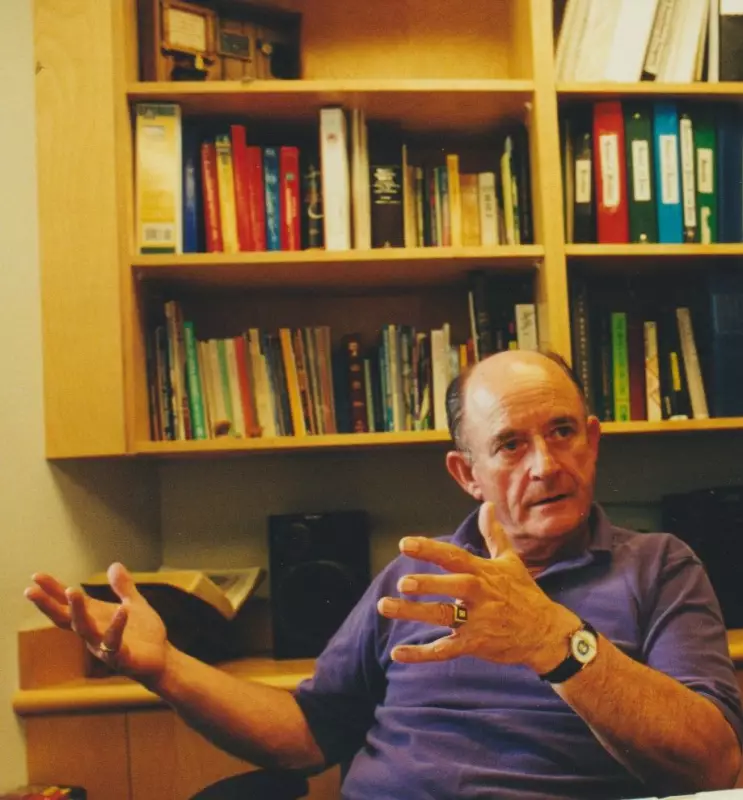
The Calgary teacher who played a pivotal role in capturing one of America's most notorious serial killers during a dramatic confrontation in a downtown department store has passed away.
A Fateful Night During Stampede
Sean Patrick Doyle died of natural causes on December 12 in a Calgary nursing home. He was 85 years old. In the summer of 1985, Doyle, a teacher moonlighting as a store detective, and Calgary firefighter George Forster were working security at the downtown Hudson's Bay store during Stampede week.
Their vigilance led them to observe a man shoplifting canned food from the grocery counter. That man was Charles Ng, a former U.S. Marine who was, at the time, one of America's most wanted fugitives.

A Violent Struggle and a Heroic Capture
When Doyle and Forster moved to apprehend him, Ng pulled a pistol from his fanny pack and fired shots. A violent struggle ensued on the store floor. Doyle was shot in the hand during the grapple but managed to help subdue the armed killer.
For their bravery, Doyle and Forster later shared a U.S. $25,000 reward. The injury left Doyle with a permanently disfigured finger, and he suffered from PTSD for years following the traumatic event, plagued by nightmares.
The Legacy of a Killer and a Teacher's Forgiveness
Charles Ng, now 65, was eventually extradited to California. In 1999, he was sentenced to death for his role in the torture-murders of 11 people in the mid-1980s. Authorities believe he and his partner, Leonard Lake, may have killed up to 25 people. Ng remains on death row at the California Medical Facility, though the state has halted executions.
Despite the physical and psychological scars, Doyle expressed a profound sense of forgiveness. He stated he prayed Ng would not be executed, famously saying in a 1999 interview, "If we kill him, then we are no better than he is." He credited overcoming his hatred for Ng with finally finding peace from his nightmares.
Sean Doyle immigrated to Canada from Dublin, Ireland, in 1957 as an 18-year-old. He dedicated his life to education, teaching generations of Calgary students over a career spanning five decades, leaving behind a legacy defined by both courage in a moment of crisis and compassion in its long aftermath.