A Saskatchewan elder is urging the public to reflect on the true significance of Red Dress Day, an annual observance held on May 5 that began in 2010 to honor missing and murdered Indigenous women and girls across Canada.
Prince Albert elder Liz Settee acknowledged that the issue is now more publicly recognized, but expressed frustration over the slow pace of change needed to reduce the number of missing and murdered Indigenous women.
"This is still significant and it’s everywhere," Settee said. "We just need to bring awareness, and we need to be cognizant of the families that are still in limbo."

Settee described the day as a refresher for the public, reminding Canadians that Indigenous women and girls continue to go missing at alarming rates. She believes that reducing these numbers requires significant changes to the justice system, including harsher penalties for domestic abusers and faster processing of cases.
"I’m not biting my tongue on this one. Everybody says our justice system is not just," Settee said. "You beat a woman and you might get six months community sentence. You beat a dog and you get a huge fine or a year jail sentence or two-year jail sentence, so where does that put the priority on women? Is that justice?"
Events Across Saskatchewan Mark Red Dress Day
Numerous events and walks were held in Saskatoon and Regina to recognize Red Dress Day, including gatherings at the University of Saskatchewan and University of Regina campuses, Wanuskewin Heritage Park, the Saskatchewan legislature, and events hosted by the Saskatoon and Regina Police Services.
"Red Dress Day is a powerful reminder of the lives lost and the families and communities who continue to carry that loss," said Minister Responsible for Status of Women Alana Ross in a statement. "There is no place for any form of violence in Saskatchewan."
NDP Leader Carla Beck noted that Indigenous women and girls are approximately six times more likely to be murdered than any other group in Canada. According to Statistics Canada, homicide rates for Indigenous women in Saskatchewan are about 11 times higher than for non-Indigenous women.
"The way we honour our sisters, mothers, aunties, and kohkums, is strive each and every day to close the gaps created by a system that has failed them, and work towards that path to reconciliation that the Truth and Reconciliation Calls to Action lay before us," Beck said in a statement.
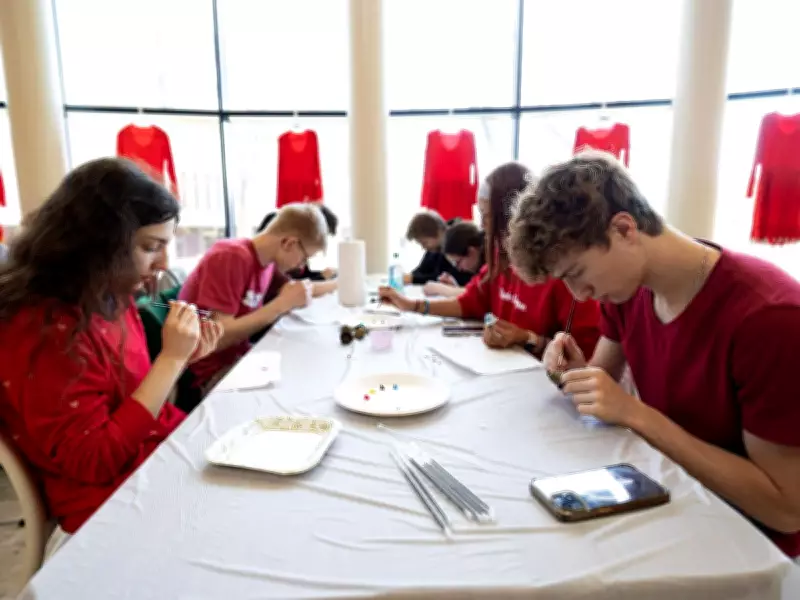
Community members also participated in a collaborative memorial installation called "Red Dress Day 2026: Voices in the Wind" at the Gordon Oakes Red Bear Student Centre, where they painted brass bells that will be hung outdoors as a living memorial honoring Missing and Murdered Indigenous Women, Girls and Two-Spirit people.