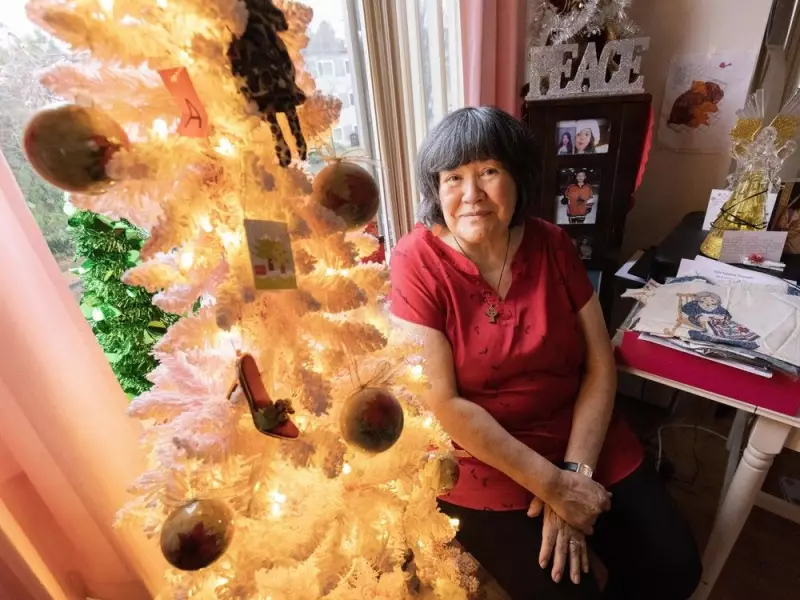
Frances Ceen-ne Carlick, a 74-year-old survivor of Catholic residential schools in Northern British Columbia, now embraces the Christmas season with profound joy, a stark contrast to the deprivation and abuse she endured as a child. Living in Vancouver, her apartment brims with festive decorations, a conscious celebration she links to her early experiences.
A Beacon of Light in a Dark Place
Carlick attended the Lower Post residential school, just south of the Yukon border, in the 1960s. She describes the Catholic nuns there as strict, abusive, and sometimes sadistic. The routine was monotonous and oppressive. However, one teacher, Miss Jacquie from Chicago, offered a different kind of guidance.
"Miss Jacquie gave us a lot more freedom than the nuns," Carlick recalls. This teacher encouraged the children to tap dance and perform ballet for the annual Christmas concert, activities that provided a crucial escape. "That kind of thing helped get us away from the nuns and the boring, boring routine. I think that really saved me," Carlick stated.

Reclaiming Culture at Christmas
The teacher's support extended to embracing the children's Indigenous heritage. For a nativity play, Miss Jacquie encouraged them to wear their traditional dancing regalia. Carlick brought her family's bear skin to school for the performance, an act she describes as "very rare" and deeply meaningful.
"Miss Jacquie instilled something really special. Nobody else encouraged us to do anything like that," she said. This early validation of her identity became a cornerstone of her resilience. After her time at residential schools in Lower Post and Whitehorse, Carlick built a life, marrying a Coast Salish residential school survivor, having three children, and becoming an educator in B.C. public schools and colleges.
A Personal Path to Festive Joy
Carlick is acutely aware that her enthusiastic approach to Christmas is not universal among survivors. "I know other people that went to the same residential school as me who are really triggered by Christmas. They can’t even bear to hear Christmas carols," she noted, emphasizing she speaks only for herself.
Her perspective reflects the diverse range of views on religion and the holiday within Indigenous communities. The 2021 census found that 47% of Canada’s Indigenous people identify as Christian, while another 47% report having no religion. About 4% identify with traditional North American Indigenous spirituality.
For Carlick, the festive season is now a personal triumph. Surrounded by ornaments, cards, and multiple Christmas trees in her East Vancouver home, she reflects, "I’ve got angels everywhere. It's almost like it’s because I was deprived as a child." Her story stands as a powerful testament to finding light and personal celebration after profound darkness.