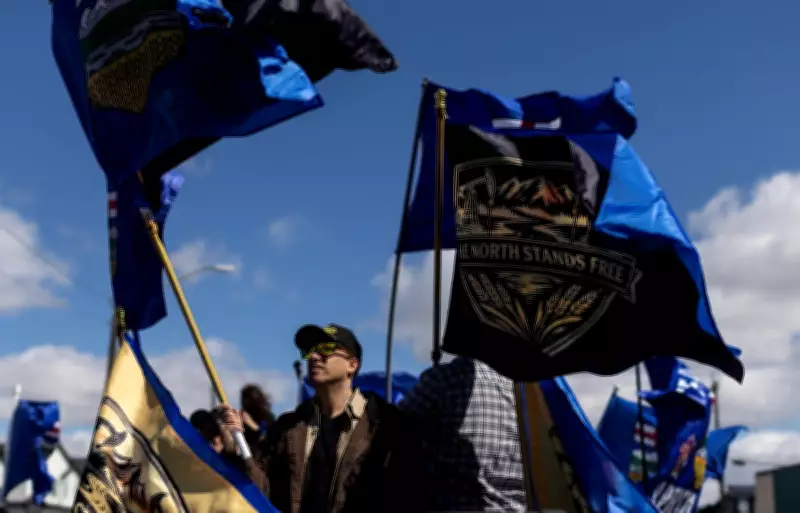
An Alberta judge has quashed a petition seeking a referendum on provincial separation, ruling that the initiative infringed upon the rights of First Nations. The decision, delivered on May 13, 2026, marks a significant legal victory for Indigenous communities and reaffirms the primacy of treaty obligations in Canadian constitutional law.
Background of the Case
The petition, spearheaded by Alberta separatist advocate Mitch Sylvestre, sought to force a province-wide vote on whether Alberta should leave Canada. Sylvestre submitted thousands of signatures to Elections Alberta in early May, arguing that the province's economic grievances warranted a formal separation process. However, the application was immediately challenged by several First Nations groups, who argued that any unilateral separation would violate their inherent and treaty rights.
Legal Arguments
The court heard that the proposed referendum failed to consider the consent of Indigenous peoples, whose lands and rights are protected under Section 35 of the Constitution Act, 1982. Lawyers for the First Nations emphasized that Alberta's territory includes vast areas subject to historic treaties and unceded lands, and that any change to the province's political status would require Indigenous participation and approval.

In his ruling, Justice Michael Thompson stated: "A unilateral separation referendum, without the full and free consent of First Nations, would undermine the foundational principles of reconciliation and the rule of law. The Crown's duty to consult and accommodate Indigenous peoples cannot be sidestepped by provincial political ambitions."
Implications for Alberta and Canada
The decision is expected to have far-reaching implications for other separatist movements across Canada. Legal experts noted that the ruling reinforces the idea that provincial sovereignty is not absolute and must be exercised within the framework of Indigenous rights and federal constitutional arrangements.
Alberta Premier Danielle Smith, who had previously expressed openness to discussing separation, acknowledged the court's decision but stopped short of endorsing it. "We respect the judiciary's role," she said in a statement. "Our government remains focused on addressing the legitimate concerns of Albertans within the existing constitutional framework."
Reactions from Indigenous Leaders
First Nations leaders hailed the ruling as a landmark affirmation of their rights. Chief Mary Yellowbird of the Treaty 6 Alliance said: "This is a victory for all Indigenous peoples in Alberta. It sends a clear message that our consent is not optional—it is a constitutional requirement."
Elder Wilton Littlechild, a former member of Parliament, added: "The courts have once again upheld the sacred promises made in our treaties. Canada cannot be broken apart without the agreement of its original peoples."
Future of the Separation Movement
Despite the setback, Sylvestre vowed to continue his campaign. "This is not the end," he told reporters outside the courthouse. "We will find a legal path forward that respects all parties." However, constitutional scholars doubt that any separation proposal could succeed without First Nations' consent, given the legal precedent now set.
The case also highlights the growing judicial recognition of Indigenous sovereignty. In recent years, Canadian courts have increasingly required governments to obtain Indigenous consent for major projects and policy changes, a trend that this decision reinforces.