Greenland Families Confront Political Uncertainty in Daily Life
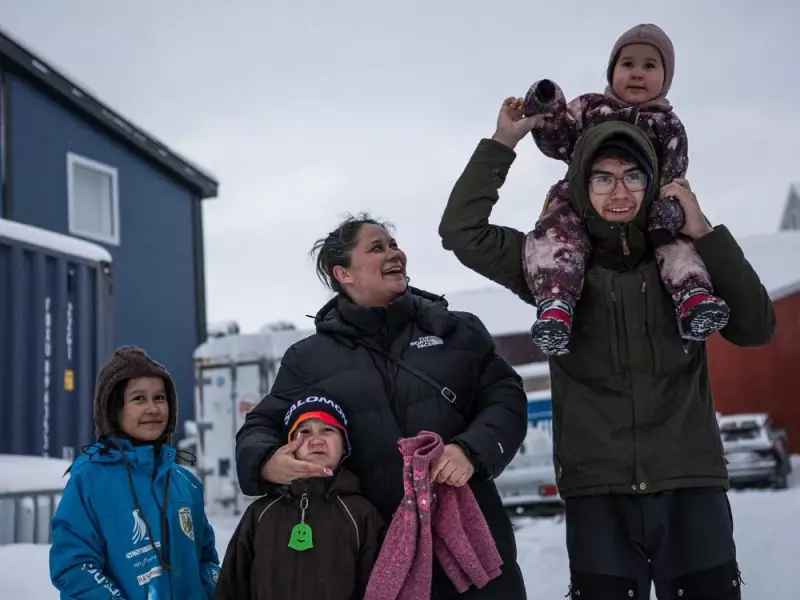
In a cozy café in Nuuk, the capital of Greenland, Lykke Lynge watches her four children enjoy hot chocolate, their innocent faces a stark contrast to the geopolitical tensions swirling around their homeland. Since Donald Trump returned to the White House last year with renewed ambitions to acquire Greenland, international politics has intruded into Arctic households, creating an unsettling environment for families across the territory.
Parental Strategies for Navigating Fear and Uncertainty
Lynge, a 42-year-old lawyer, relies on her Christian faith to maintain perspective amid the turmoil. "There's a lot of turmoil in the world," she acknowledges. "But even if we love our country, we have even higher values that allow us to sleep soundly and not be afraid." Her approach reflects a broader parental effort to shield children from aggressive political rhetoric while maintaining open communication about difficult topics.
The Greenlandic authorities recognized this challenge early, publishing a guide entitled "How to talk to children in times of uncertainty?" just one week after Trump's 2025 inauguration. Developed with contributions from UNICEF, this resource provides practical advice for parents facing unprecedented questions from their children.

The Role of Social Media in Childhood Anxiety
Tina Dam, chief programme officer for UNICEF in the Danish territory, explains the particular challenges of the digital age. "When somebody says they will come to take our country or they will bomb us or something, then of course children will get very scared because they cannot navigate for themselves in all this news," she observes.
Social media platforms, particularly TikTok, have become primary information sources for Greenland's youth, exposing them to content not designed for their developmental stage. "Today, children have access to a lot of information not meant for them," Dam notes, "and definitely not appropriate for their age." This reality has forced parents to become more proactive in monitoring and discussing what their children encounter online.
Cultural Resilience and Unanswerable Questions
Arnakkuluk Jo Kleist, a 41-year-old consultant, regularly discusses current events with her 13-year-old daughter, Manumina. While the teenager consumes TikTok content about the political situation, Kleist notes she "doesn't seem very nervous, luckily, as much as maybe we are." Still, challenging questions arise that lack clear answers.
"Sometimes there are questions she's asking — about what if this happens — that I don't have any answers to," Kleist admits, "because no one actually has the answer to such questions." This uncertainty represents a common parental experience as families navigate unpredictable political developments.
Drawing Strength from Inuit Traditions
Greenland's Inuit culture provides a framework for coping with situations beyond individual control. "We have a history and we have conditions in our country where sometimes things happen and we are used to being in situations that are out of our control," Kleist explains. "We try to adapt to it and say, well, what can I do in this situation?" This cultural resilience helps families maintain perspective amid external pressures.
Some Greenlandic children and teenagers are taking proactive steps through social media, using platforms to share their perspectives with the world. Their messages represent a new generation engaging with complex geopolitical issues while seeking to protect their homeland's future.
The UNICEF guide emphasizes several key strategies for parents:

- Maintaining calm and open communication with children
- Actively listening to children's concerns and validating their feelings
- Limiting personal news consumption to model healthy media habits
- Creating safe spaces for difficult conversations about uncertainty
As Dam summarizes the parental responsibility: "We need to be aware of that as adults and be protective about our children and be able to talk with our children about the things they hear — because the rhetoric is quite aggressive." This protective role has become increasingly important as political developments continue to impact family life in Greenland.