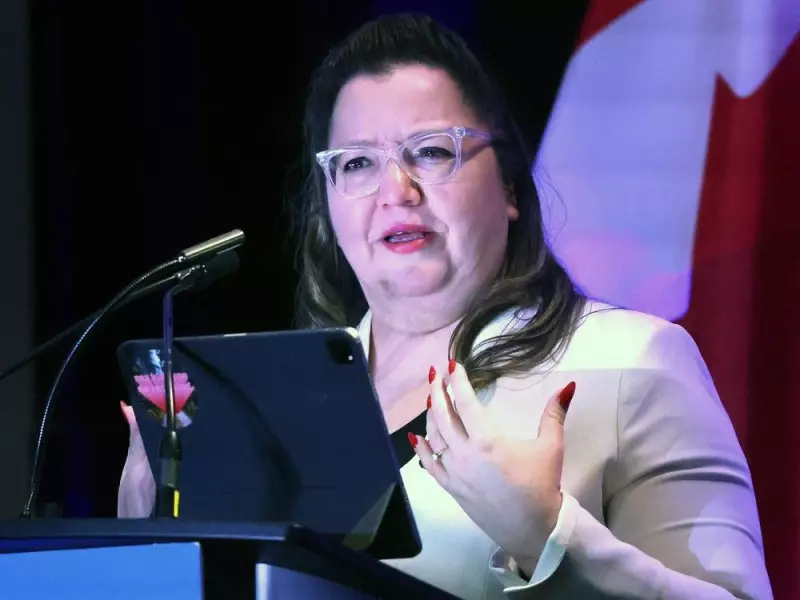
National Chief of the Assembly of First Nations (AFN), Cindy Woodhouse Nepinak, has issued a sharp critique of the Carney government's recent federal budget, labeling it a significant setback for Indigenous communities across Canada.
Budget Widens Socioeconomic Gap, Says Chief
Speaking at the Special Chiefs Assembly in Ottawa, Woodhouse Nepinak argued that the government's fiscal plan fails to address longstanding inequalities. Instead of closing the gap between First Nations and Canadians, this budget makes things more difficult, she stated. The National Chief expressed particular disappointment as this was the new government's first major opportunity to rebuild trust after the contentious passage of Bill C-5, which she noted was rammed through Parliament in 20 days without consultation in June.
Memorandum of Understanding Draws Fury
Woodhouse Nepinak also strongly condemned a memorandum of understanding (MOU) signed by the federal and Alberta governments on November 27, 2025. The agreement aims to position Canada as a global energy superpower but, according to the AFN leader, was made without the free, prior, and informed consent of First Nations. As if First Nations rights can be wiped away with one federal, provincial MOU, she remarked.

She delivered a firm warning to all levels of government, emphasizing that the Chiefs are united. The truth is that Canada can create all the MOUs, project offices, advisory groups, that they want... When it comes to approving large national projects on First Nations lands, there will not be getting around rights holders.
Government Response and Broader Context
When questioned by reporters about the lack of consultation prior to signing the energy MOU, Minister of Canadian Identity and Culture Marc Miller acknowledged the need for better engagement. The work starts now. It should have started yesterday, Miller said before a Cabinet meeting on Tuesday. He admitted that reaching agreement is a difficult and complex process that requires a personal commitment to improving community lives and ensuring benefits from projects like pipelines.
Woodhouse Nepinak framed the struggle as one with national implications, positioning First Nations as defenders of environmental rights for all Canadians. She cited external pressures including climate change, political threats from the United States under Donald Trump, and separatist sentiments in Alberta and Quebec. Canada is at a crossroads in its relationship with First Nations, she concluded, underscoring the critical moment for the country.
The National Chief's comments were delivered following a November 6 appearance at the Calgary Chamber of Commerce, where she discussed the role of First Nations in nation-building and economic prosperity.