First Nations Chiefs Unite Against Alberta Separatism, Mock Independence Promises
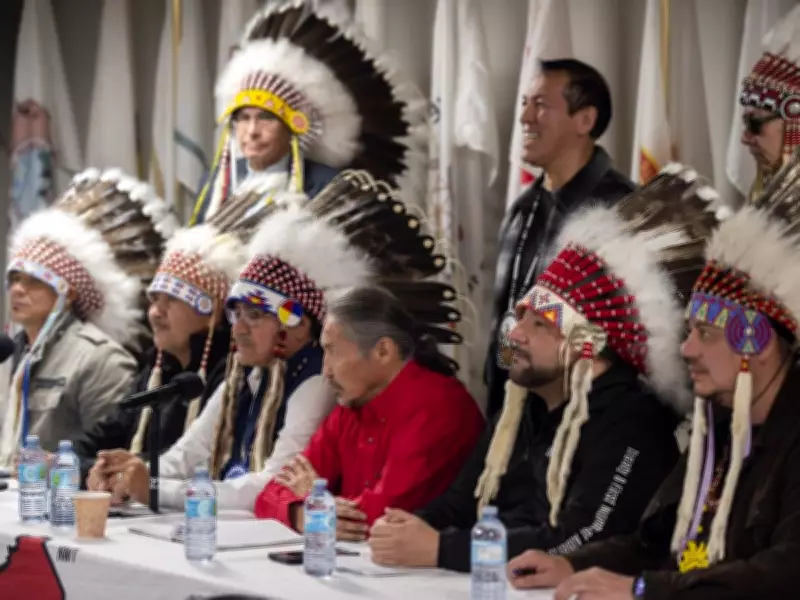
In a powerful display of unity, First Nations leaders from across Alberta gathered in Edmonton this week to forcefully reject claims that Indigenous communities would benefit from an independent Alberta. Grand chiefs and chiefs representing Treaty 6, 7 and 8 territories came together to specifically target Jeffrey Rath, a prominent figure in Alberta's separatist movement, whose promises were met with derision and laughter from the assembled Indigenous leadership.
Separatist Promises Meet Indigenous Skepticism
The gathering occurred just days after Rath, speaking at a Stay Free Alberta event in Edmonton, made bold claims about how Alberta's Indigenous population would fare under independence. "We'll triple the amount of money spent on the Indigenous people of Alberta, through a constitutionalized revenue-sharing program," Rath declared. "We'll lift them out of the abject poverty that Ottawa has left them in, in an embarrassing fashion, for 100 and some odd years."
These statements were met with outright rejection by the Treaty leaders who convened at the Treaty 8 First Nations of Alberta offices. Chief Billy-Joe Tuccaro of Mikisew Cree Nation expressed particular skepticism, noting Rath's complicated history with Indigenous communities. "He's going to state that we'd benefit a lot more," Tuccaro remarked. "That's funny that he would state that publicly when, at times, he represented a lot of us."

Legal Actions and Broken Relationships
The First Nations' distrust of Rath extends beyond political disagreements into personal and legal territory. Several Indigenous communities have taken legal action against both the separatist petition and Alberta's Bill 14, which enables citizen initiatives like the independence push. The legal challenges come from:
- Sturgeon Lake Cree Nation
- The Blackfoot Confederacy
- Athabasca Chipewyan First Nation
- Mikisew Cree Nation (planning to launch suit)
These legal actions follow previous litigation involving Rath himself. In 2025, Mikisew Cree Nation successfully sued Rath to erase his claim for contingency fees, with Tallcree First Nation and Sturgeon Lake Cree Nation also pursuing legal action against the lawyer. The relationships between Rath and Indigenous communities soured over payment disputes for his previous work representing First Nations in treaty claims that reached the Supreme Court of Canada.
Concerns Over Racial Tension and Treaty Rights
Beyond the specific targeting of Rath's claims, the First Nations leaders expressed broader concerns about the separatist movement's impact on racial harmony in Alberta. Several chiefs noted that the referendum petition is creating racial tension across the province, pointing to a recent Stay Free Alberta town hall in Didsbury that resulted in a complaint being filed with anti-hate watchdog StopHateAB.
The gathering served as a powerful reminder of treaty obligations that transcend provincial politics. The leaders emphasized that treaty rights exist between First Nations and the Crown, not with provincial governments, making the entire premise of benefiting from Alberta independence legally and historically questionable from their perspective.
Separatist Claims Versus Indigenous Reality
Rath's separatist movement, known as the Alberta Prosperity Project, has made additional claims about international support, including meetings with the U.S. State Department and efforts to secure American credit guarantees to jumpstart an independent Alberta's economy. However, these assertions did little to sway the Indigenous leaders who view the entire separatist enterprise with deep suspicion.
The unified front presented by Treaties 6, 7 and 8 leadership sends a clear message that Alberta's Indigenous communities are not merely passive observers in the separatism debate but active participants determined to protect their treaty rights and sovereignty. Their collective laughter at Rath's promises serves as both political commentary and a strategic demonstration of Indigenous unity in the face of what they perceive as empty political promises.