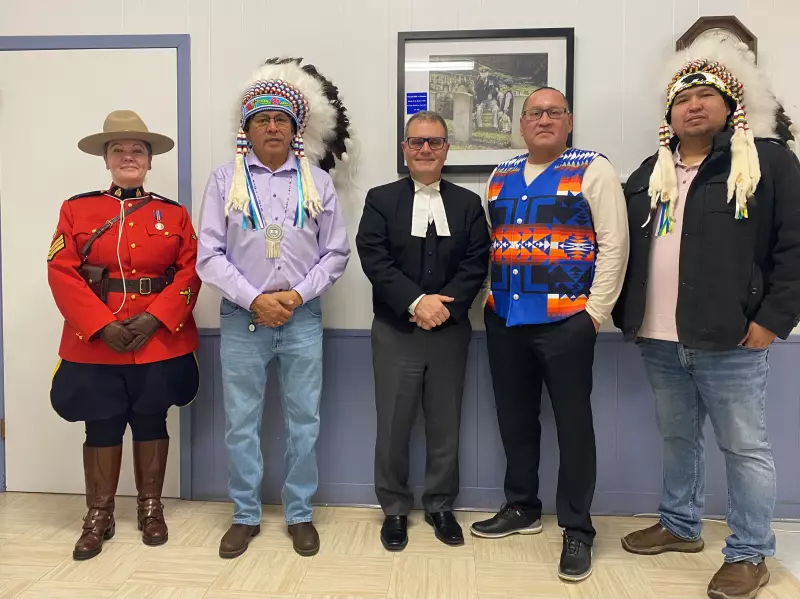
In a significant step towards integrating Indigenous traditions with the Canadian justice system, the Cote First Nation has officially launched a new cultural support initiative at the courthouse in Kamsack, Saskatchewan. The program, blessed during a ceremony on Tuesday, December 17, 2025, seeks to provide culturally relevant assistance to community members navigating court proceedings.
A Ceremony of Commitment and Collaboration
The initiative was formally inaugurated with a blessing ceremony held at the Kamsack Legion Hall. The event brought together key figures from the First Nation and the provincial justice system, symbolizing a collaborative partnership. Chief George Cote of the Cote First Nation was joined by Judge Derek Maher, alongside community members Cory Cadotte and Chief Alvin Musqua, to mark the beginning of this vital service.
This program represents a direct response to the calls for action to address the overrepresentation of Indigenous peoples in the justice system. By establishing a presence within the courthouse, the Cote First Nation aims to offer support that respects and incorporates cultural practices, language, and community values.

Bridging Cultural Understanding in the Justice System
The core function of the cultural support initiative is to serve as a resource for Indigenous individuals, their families, and even court officials. Trained support workers, deeply connected to Cote traditions, will be available to explain court processes, provide emotional and spiritual support, and help facilitate communication that honors cultural protocols.
Experts in Indigenous justice suggest that such initiatives can lead to more meaningful participation in legal proceedings and potentially better outcomes. The program is not about challenging the court's authority but about ensuring that Indigenous individuals do not face the system alone and that their cultural identity is acknowledged within it.
Looking Forward: Implications and Potential
The launch in Kamsack is being watched closely by other communities and justice officials across Saskatchewan and beyond. It serves as a practical model for how Indigenous communities and provincial courts can work together to create a more equitable and culturally sensitive legal environment.
The success of this initiative could pave the way for similar programs in other jurisdictions, contributing to the broader national journey of reconciliation. For the Cote First Nation, this is more than a new service; it is an assertion of sovereignty and a commitment to caring for their members in all aspects of life, including within the halls of justice.
The ceremony on December 17th was not just an opening but a declaration that cultural safety is an essential component of a fair and accessible justice system for all Canadians.