OTTAWA — Prime Minister Mark Carney’s government is backing away from stating that those living on First Nations have a “human right” to clean drinking water, proposing instead that it would be government policy to make progress towards that goal.
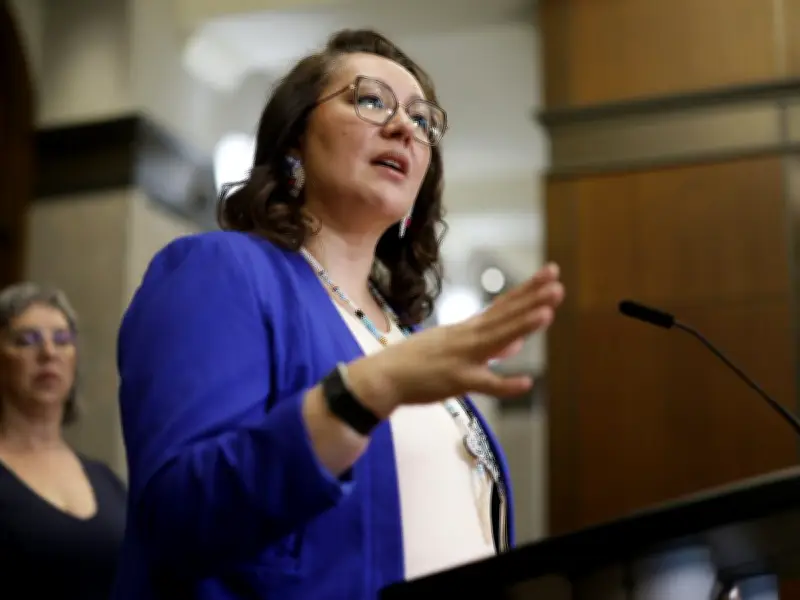
The shift in wording from a former version of the bill was contained in a new piece of legislation Indigenous Services Minister Mandy Gull-Masty tabled on Tuesday.
With the goal of addressing the systemic lack of access to safe drinking water on First Nations, an issue that has resulted in years-long boil water advisories for some communities and court challenges, the minister pledged that alongside tabling a bill that seeks to establish minimum standards for on-reserve drinking water and wastewater, the federal Liberal government would spend $4.6 billion over five years on infrastructure and system maintenance.

Striking a Balance
At the same time, Gull-Masty emphasized the need to strike a “balance” when it came to offering protections for source water and taking steps to guard the bill from potential future court challenges over matters of jurisdiction.
“It’s critical that we ensure source water protection is in this legislation, but we must also ensure that we are constructively working together with provinces and territories to conclude trilateral agreements,” she said on Tuesday. “We believe that this strikes the right balance, while also ensuring that this legislation can truly stand the test of time.”
Criticism from First Nations Leaders
Assembly of First Nations National Chief Cindy Woodhouse Nepinak named the proposed protections for source water as being one of the areas where the legislation was lacking. The legislation states that First Nations have jurisdiction over source water “on, in and under First Nation lands.”
“To us,” Woodhouse Nepinak said in an interview on Tuesday, “First Nation land is coast to coast to coast. That hasn’t been identified in this bill.”
Another amendment Woodhouse Nepinak says she believes needs to be made is the restoration of language in the bill that recognizes access to safe drinking water as a human right, a removal that she called a “disappointment.”
“I think there’s going to be a lot of tough discussions on that,” she said. “We always welcome new money that’s going to close some of these gaps when it comes to infrastructure and water, but when it comes to our rights, you know, we won’t be trampled on.”
Previous Bill Had Explicit Language
An earlier version of the bill known as Bill C-61, which was introduced in late 2023 but died when former prime minister Justin Trudeau prorogued Parliament in January 2025, had explicitly stated First Nations had a right to clean drinking water. Specifically, that legislation read: “It is recognized and affirmed that it is a human right of every individual on First Nations land to have access to clean and safe drinking water in accordance with this act.”