British Columbia's 150-Year Legacy of Unresolved Indigenous Land Claims
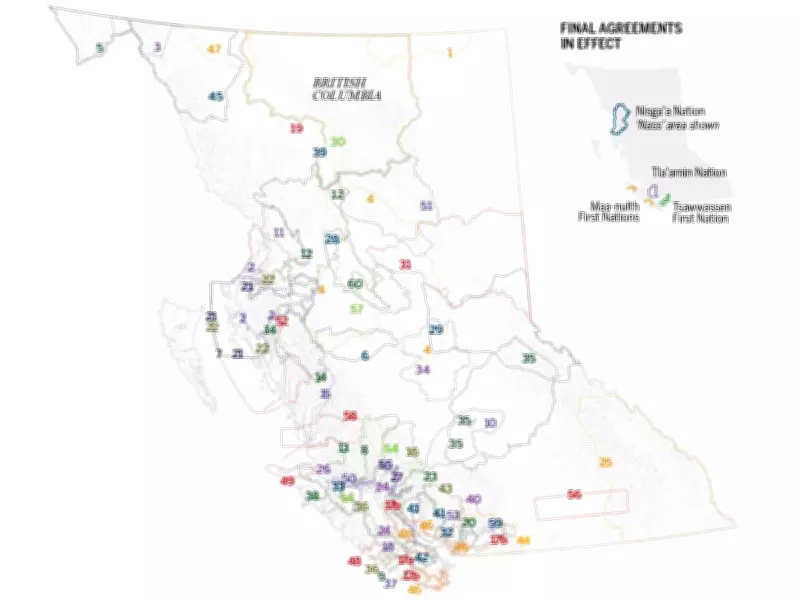
The intricate web of overlapping Indigenous land claims in British Columbia represents a legal and social challenge that has been developing for more than a century and a half. This complex situation stems directly from the province's historical failure to establish comprehensive treaties with First Nations, creating what experts describe as a self-inflicted problem with far-reaching consequences.
The Historical Foundation of Current Disputes
Following the establishment of the Colony of Vancouver Island in 1849, Governor James Douglas initiated what appeared to be a promising framework for Indigenous relations. Between 1850 and 1854, he negotiated fourteen agreements known as the Douglas Treaties with First Nations communities. These treaties secured lands for European settlement activities including fur trapping and mining operations.
"These early treaties might have established a template for future arrangements," explained Kent McNeil, an Indigenous law expert at York University. "Instead, British Columbia essentially abandoned the treaty-making process for the next 150 years."

The cessation of treaty negotiations resulted primarily from the Hudson's Bay Company's refusal to continue funding such discussions. This decision created a legal vacuum that has persisted through generations, leaving approximately 80 percent of British Columbia's lands subject to unresolved Indigenous claims.
The Contemporary Consequences of Historical Neglect
The absence of formal land agreements has produced what McNeil describes as "a patchwork of unresolved, overlapping and highly complex land claims" that continue to challenge British Columbia's legal and economic systems. The province's situation remains unique within Canada, as other regions including Ontario and the prairie provinces established treaties with the majority of their First Nations communities during the same historical period.
"B.C. really created this problem for itself by not entering into treaties back then, and that's why there are these massive land claims," McNeil emphasized. "While other governments were negotiating agreements, British Columbia simply allowed British immigrants to settle on non-treaty lands without establishing proper legal frameworks."
The consequences of this historical oversight have been substantial and multifaceted. Endless court challenges have drained public resources for decades, while uncertainty surrounding land title rights has repeatedly disrupted critical economic investments. Major infrastructure projects including mines, pipelines, and port expansions have faced significant delays and complications due to unresolved Indigenous land claims.
Recent Developments Highlight Ongoing Challenges
The complex nature of British Columbia's land claim situation gained renewed attention recently following the federal government's agreement with the Musqueam Indian Band. Announced on February 20, this agreement formally recognizes the Musqueam's "rights and title" over their traditional territory in southern British Columbia.
This territory encompasses more than 500,000 hectares, including substantial portions of Metro Vancouver. The agreement acknowledges the First Nation's rights to use, manage, and occupy these lands, raising questions about potential implications for existing private property rights throughout the region.
These concerns have been amplified by a landmark British Columbia Supreme Court ruling from last summer. In that decision, Justice Barbara Young determined that Cowichan claims to specific lands in Richmond and along the Fraser River should take precedence over certain Crown-granted fee-simple titles in those areas.
As British Columbia continues to grapple with this 150-year legacy of unresolved land claims, the province faces ongoing challenges in balancing Indigenous rights, private property interests, and economic development. The historical failure to establish treaties has created a legal landscape of remarkable complexity that will likely require generations of careful negotiation and reconciliation to fully resolve.