The Vancouver Foundation, one of British Columbia's oldest charitable organizations, has come under scrutiny after its latest grant listings revealed a $300,000 award to a "Decolonial Dog Sanctuary" that functions as an illegal blockade against a major natural gas pipeline.
Grant Funds "Land-Based Re-occupation"
Listed in the foundation's recently updated grant recipients, the project is described as a "form of land-based re-occupation." The grant documentation states the initiative is "deeply embedded in cultural, legal, and territorial frameworks maintained through relational, hereditary authority rather than external or colonial agreements."
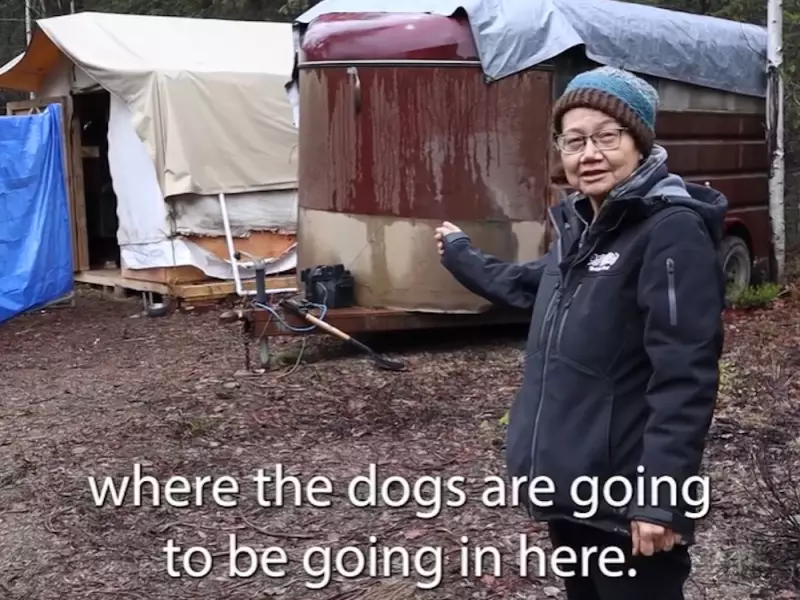
However, the grant materials did not explicitly mention the sanctuary's primary purpose: to physically obstruct the construction of the Prince Rupert Gas Transmission (PRGT) pipeline. The camp, known as Wilp Aasosxw and adopting the motto "puppies not pipelines," is located in the forests outside Hazelton, B.C.

The Sanctuary as a Blockade
The site consists of makeshift wooden structures and a converted bus situated directly on the pipeline's planned right-of-way. In a November 2024 profile on Indiginews, the sanctuary's overseer, Teresa Brown, made the anti-pipeline mission clear, stating, "They're not getting in here. Over my dead body."
Brown is identified in Vancouver Foundation documents as a "Wilp Matriarch and Hereditary Representative of the territory." She lives on-site at the sanctuary, which has housed more than 42 dogs since its establishment, according to its official Facebook page.
In a web video posted in late 2024, the project was explicitly labeled a "Land Defence + Dog Sanctuary." Brown has shared on social media that while she had limited prior knowledge of dog care, she believes aggressive dogs can "evolve into versions of themselves that thirst again for love." She also credited the project with helping her reduce dependence on prescription pain medication, attributing this improvement to the healing nature of the land.
Broader Context and Reaction
This grant represents a notable example of institutional funding being directed toward a form of direct action and civil disobedience. The Vancouver Foundation, a major philanthropic entity, typically supports a wide range of community and social initiatives. The decision to fund a project with an explicit goal of halting industrial development highlights the complex intersections of decolonization activism, environmental protest, and charitable giving in Canada.
The revelation has sparked debate about the boundaries of charitable activities and the support of illegal encampments, even when framed within the context of Indigenous land re-occupation and decolonial action. The situation continues to develop as the PRGT pipeline project and the dog sanctuary blockade remain at an impasse.