

Municipal Leaders Unite in Call for PEQ Program Restoration
Municipal representatives from both the Montreal and Quebec City metropolitan areas issued a collective demand on Thursday for the provincial government to reverse its November decision to terminate the Programme de l’expérience québécoise (PEQ) immigration pathway. The coordinated appeal comes as hundreds of French-speaking immigrants who had planned their lives around the program now face uncertainty about their permanent residency status in Quebec.
Grandfather Clause Requested for Affected Immigrants
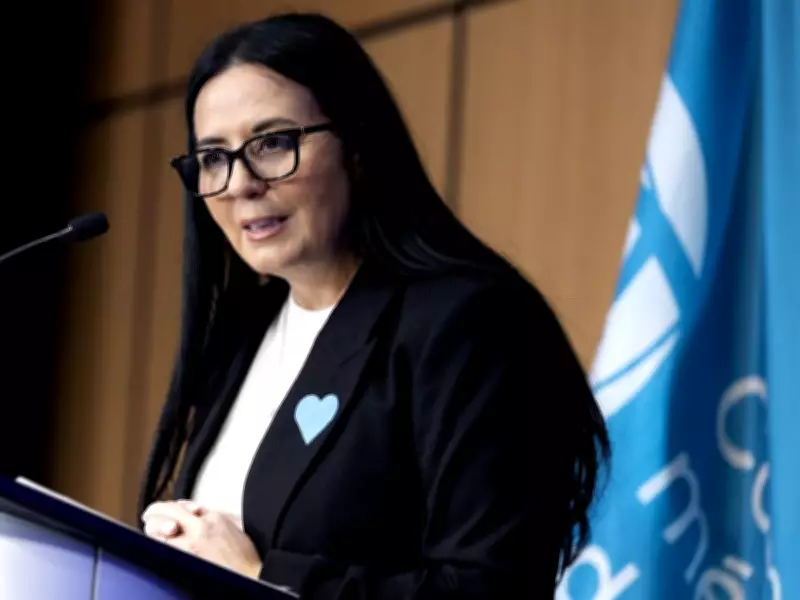
Identical motions passed by the Communauté métropolitaine de Montréal (CMM) and the Communauté métropolitaine de Québec (CMQ) specifically request the implementation of a grandfather clause. This provision would allow individuals who were preparing to apply to the PEQ at the time of its cancellation to still access the now-eliminated immigration pathway. "It's a question of keeping our word," emphasized Montreal Mayor Soraya Martinez Ferrada, who also serves as president of the CMM.
"We brought those people to us because we needed them," Martinez Ferrada stated during Thursday's proceedings. "And they left everything behind to buy a home, have kids here, work here, make their lives here." The mayor, who became Montreal's first immigrant mayor, argued that her own experience demonstrates the successful integration of immigrants into Quebec society.

Program Cancellation Leaves Immigrants in Limbo
The abrupt termination of the PEQ program in November created immediate disruption for French-speaking immigrants who had gained work or study experience in Quebec specifically to qualify for the program. Many discovered they no longer had a clear path to permanent residence after planning their lives around this immigration option. Prior to the program's official cancellation, Immigration Minister Jean-François Roberge had frozen PEQ applications without advance notice, leaving applicants without recourse.
Quebec City Mayor Bruno Marchand, who presides over the QMM, expressed urgency about the situation. "We can't wait until April 12," Marchand told reporters, referencing the date when Coalition Avenir Québec members will select their new leader. "Every week, people are leaving." Marchand emphasized that affected immigrants are already integrated into Quebec communities and speak French, calling for the province to treat them with "humanity."
Political Landscape and Economic Implications
The two candidates competing to replace François Legault as premier—Christine Fréchette and Bernard Drainville—have both promised partial reopenings of the PEQ program. However, Minister Roberge has indicated no changes will occur before the next premier assumes office. This political timeline creates additional uncertainty for immigrants affected by the program's cancellation.
Martinez Ferrada highlighted the economic consequences of losing integrated immigrant workers. "If you take for instance the tourism sector in Montreal, it's probably around four or five per cent of the GDP," she explained. "If you take away my labour in terms of that area, it can actually paralyze a couple of sectors." The mayor noted that when immigrants who have integrated into the economy depart, it creates significant impacts for cities like Montreal.
Broad Coalition Supports Program Restoration
Last Friday, mayors, union representatives, and business leaders gathered in Quebec City to call for immediate reinstatement of the PEQ program. Union des municipalités du Québec president Guillaume Tremblay noted the unusual alignment of diverse organizations on this issue, telling immigrants directly: "Organizations which almost never find themselves side by side are united for you because the situation is critical."
Despite the minister's current position, Martinez Ferrada expressed optimism about potential changes ahead. "If you look at what's happening with the (CAQ) leadership race and if you look at what other parties are saying, I have hope that things will change," she predicted. The mayor framed the issue as one of coherence and respect, arguing that maintaining stability for immigrant communities benefits both social cohesion and economic prosperity in Quebec.






