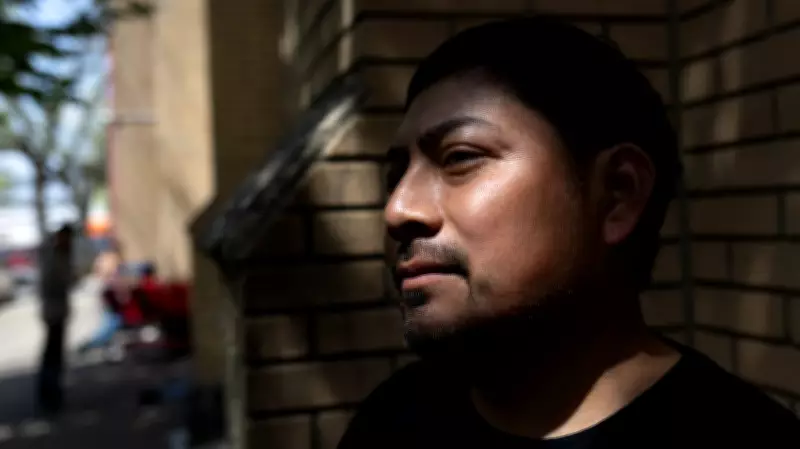
Federal agents have arrested hundreds of immigrants off New York and New Jersey streets in recent months in a stealth enforcement campaign that disproportionately targeted people from Latin American countries, according to an investigation by THE CITY based on a review of more than 1,200 lawsuits.
Disproportionate Impact on Latinos
More than 93% of the people grabbed off area streets who filed suit were from Latin American countries, although Latinos make up only 66% of immigrants without legal status in the region. The arrests have rattled Latino neighborhoods, as people disappear in moments as mundane as buying milk, walking their dog, taking out the trash or picking up their children from soccer practice.
Street arrests are different from other types of immigration enforcement in that they unfold in minutes, often on quiet residential streets and out of public view. Many immigrants who had no expectation of being detained were targeted at the sole discretion of agents in the field. In some accounts of the arrests, Immigration and Customs Enforcement (ICE) agents said they stopped people because they looked similar to someone they had a warrant for, then realized they had a different subject but apprehended the person anyway.

The surprise encounters often left immigrants stunned, as they feared they were being kidnapped. Some ran in terror from the masked agents. Other encounters turned violent as officers deployed taser guns and smashed car windows. Agents at times shouted racial epithets, calling one immigrant a “maldito Mexicano” — “fucking Mexican” — during the arrest, according to court filings.
Legal Challenges and Judicial Response
Street arrests were rare in the New York metro area before President Donald Trump’s second term. As they ramped up in recent months, lawyers have sued the administration, arguing the arrests violate the Constitution, and federal judges have increasingly slammed ICE’s tactics as illegal. THE CITY’s findings come as a federal judge has barred most ICE arrests at immigration courthouses in New York City and as White House border czar Tom Homan has threatened to “flood the zone” with ICE agents, raising the specter that racially-targeted street arrests could escalate sharply.
Since the vast majority of these arrests have gone unreported and federal immigration data does not distinguish street arrests from others, THE CITY reviewed every emergency lawsuit filed by immigrants challenging the legality of their detention in three federal courts from October 15, 2025 to March 15, 2026. Known as habeas corpus petitions, the lawsuits have skyrocketed in response to the Trump administration’s enforcement campaign. Many of them offer rich details about the arrests, including the locations, circumstances and demographics of people arrested.
In the database of petitions, THE CITY identified 430 street arrests across the New York metro area, including Long Island and New Jersey. Difficult to track, these arrests have drawn little public scrutiny compared to the ICE arrests inside immigration court at 26 Federal Plaza, which have attracted throngs of court observers, elected officials and photographers. Yet during the five-month period of our review, THE CITY found that street arrests were far more common than immigration court arrests in the habeas petitions.
Within THE CITY’s dataset, Latinos comprised nearly all of the street arrests in the region while they accounted for just 55% of arrests in administrative settings like ICE check-ins, U.S. Citizenship and Immigration Services (USCIS) appointments and immigration court hearings.
Elora Mukherjee, a law professor at Columbia University and the director of their Immigrants’ Rights Clinic, said in response to THE CITY’s findings: “The data confirms what all New Yorkers know, which is that ICE engages in racial profiling when carrying out street arrests.”

In a statement, the Department of Homeland Security said: “Allegations that DHS law enforcement engages in ‘racial profiling’ are disgusting, reckless, and categorically FALSE. What makes someone a target for immigration enforcement is if they are illegally in the U.S.—NOT their skin color, race, or ethnicity.” Not every immigrant who is arrested files a habeas petition; only about one in ten did so during these five months. The actual number of street arrests is likely much higher than what is captured in THE CITY’s database.
Community Fear and Preparation
As word has spread through some Latino neighborhoods where ICE agents show up again and again, many prepare for the worst. Sisters plead with brothers to share their locations with them, day laborers avoid work, and men write the numbers of emergency contacts in Sharpie marker on their arms.
On an afternoon last December, ICE agents surrounded Juan and arrested him while he was watching a game of dominos on Staten Island. At the time, he had lived in the United States for nearly two decades and had just visited with his two children, who are both U.S. citizens.
Juan was surrounded by ICE agents on Staten Island while he was watching a game of dominoes last December, April 15, 2026. Ben Fractenberg/THE CITY
Ben Fractenberg/THE CITY
“You never know. You could just be heading to the store and get arrested right around the corner,” Juan, who was released after filing a habeas petition, told THE CITY in Spanish. Like all immigrants quoted in this article, he is not identified by his full name out of fear of retaliation in their ongoing immigration proceedings. “The truth is, I walk around in fear,” Juan said.
It was already dark as Florencio was coming home to Corona, Queens after a day of painting an apartment in Manhattan. When he reached his block, a masked man shouted at him. As more men emerged from their cars, he feared he was about to be kidnapped. At the same moment, his wife, Fidelina, was corralling their three children out of the door of their home for a grocery store run before dinner. Their 13-year old son heard the shouts and tugged at his mother. “Mama, it’s ICE,” he said.
Under the dull glow of street lamps, Fidelina wasn’t sure. Her nine-year-old son recognized his father first. “It’s daddy!” he shouted. Florencio stole a glance towards his children just a few feet away, then turned and ran. Outnumbered, he felt a pair of hands press into his back. The force sent him to the ground so fast that his ankle twisted and his forehead skidded across the asphalt. ICE agents handcuffed him, shoved him into an unmarked car and whisked him away. The account of Florencio’s arrest is based on court records, ICE records and extensive interviews with the family.
Florencio with his young daughter in Corona, Queens, March 27, 2026. Ben Fractenberg/THE CITY
Ben Fractenberg/THE CITY
Florencio’s detention is part of a pattern across the region where ICE agents stopped and arrested people in Latino neighborhoods based on their appearance, while they claimed to be looking for other people, according to internal ICE records. In court filings and interviews, lawyers said that the arrests violate constitutional protections from unreasonable search and seizure and that agents often don’t have enough evidence to make the arrests at all.
Paige Austin, an attorney for Make the Road, an immigrant advocacy organization that has handled dozens of habeas petitions in the last year, said: “As soon as someone is not free to leave, that’s a seizure, and there’s no basis for the seizure in most of these cases.” Instead, they’re making assumptions based on appearance and what jobs they work and where they live, she said. “It’s just pure racial profiling.”
In ICE’s account of his arrest, agents said they’d first approached Florencio because he had “the same build and likeness” to a person they were trying to arrest that day. The agency claimed that Florencio voluntarily admitted he had crossed the border illegally before they tried to arrest him. But in an interview with THE CITY and in his court filing, Florencio disputed that account, saying he was already handcuffed when agents drove him to a nearby parking lot where they rifled through his wallet, took his phone and snapped a photo of his face. They showed him pictures of the man they said they were looking for and told him the man was from Ecuador. “I’m not Ecuadorian. I’m Guatemalan. I’ve been here for almost 13 years,” he recalled pleading with the agents in Spanish. The agents told him it didn’t matter, Florencio said. “You have to come with us because you’re here without papers, too.”
ICE maintains that its stops are legal and consistent with the constitution. “Our agents are properly trained to determine alienage and removability. If and when we do encounter individuals subject to arrest, our law enforcement is trained to ask a series of well-determined questions,” the Department of Homeland Security said in a statement to THE CITY. But in dozens of cases, immigrants repeatedly described being surrounded by multiple cars and swarmed by officers, which they say made it impossible for them to leave.
Michael Musa-Obregon, an immigration lawyer based in Queens who frequently files habeas petitions, said: “They’re arresting first, then they’re finding the justification later. It’s all illegal.”
In early February, ICE agents were in Port Richmond, Staten Island, looking for a 25-year-old man from Mexico named Julio, according to an ICE document. They circled the same residential block again and again, first detaining a 36-year-old from Guatemala named Isaias, then a 21-year-old named Juan, also from Guatemala. In separate arrest reports, ICE officials described each as “a male who was believed to be the intended target.” Agents then arrested a 47-year-old man from Mexico named Alejandro because he was leaving the location they were staking out, they said. After being apprehended, Isaias and Juan both decided to leave the country, federal court records indicate. A judge later ordered Alejandro’s release after lawyers filed a habeas petition. DHS said that it sought the cooperation of the NYPD to locate Julio, its original target, but the police agency declined because of sanctuary laws.
In another case, a 22-year-old from Guatemala was walking to his job as a vegetable grocer in Sunset Park, Brooklyn when six officers approached him on the street. They pulled out some photos of men for him to identify. “You’re Latino, you look like one of them. Do you know any of these guys?” the agent asked, according to court documents. When he said no, the officers asked him for identification and asked if he had papers. The 22-year-old gazed at their firearms and felt he had no choice but to respond, he said in filings. Then, they arrested him, too. In ICE’s account of the arrest, agents were driving to arrest someone else when they “noticed a person matching the target’s biographic information wearing a hooded jacket.”
Nationwide Legal Challenges
Immigrant advocates across the country have been challenging these arrest tactics in court. The American Civil Liberties Union has sued in California and Minnesota alleging ICE was using racial profiling to make warrantless arrests. In April, the New York Civil Liberties Union and other immigrant advocacy groups brought a similar class action lawsuit arguing these arrests violate the constitutional rights of immigrants.
Amy Belsher, the NYCLU’s director of immigrants’ rights litigation, said: “It’s an outrageous racial profiling policy of stopping Latino men primarily. It’s enormously harmful.”
Last September, Supreme Court Justice Brett Kavanaugh wrote in an opinion that race could be one factor when making arrests following ACLU’s California suit. The ruling allowed ICE agents to continue using race or ethnicity as one consideration in its immigration enforcement arrests around Los Angeles. While the Kavanaugh opinion applied only to that area, it set a tone for ICE enforcement tactics across the country, said Mukherjee, the Columbia Law professor. “The effects of that decision have reverberated across the country, including here in New York, where ICE officers and other federal enforcement officers working with ICE are emboldened to carry out racial profiling,” she said.
As petitions describing street arrests increasingly jam up court dockets, some federal judges in New York have condemned ICE’s practices. In January, a 24-year-old from Honduras was walking to catch the LIRR in Hempstead when seven cars full of immigration enforcement agents surrounded him. The officers arrested him without asking any questions and then later produced a warrant. Officials admitted that they arrested the wrong person, wrote Gary Brown, a Trump-appointed federal judge overseeing the case. ICE agents, he concluded, “grossly abused their authority.” “The abhorrent and illegal practices identified in this opinion are not limited to this case but are seemingly being inflicted on a widespread basis,” Brown continued. “This isn’t how things are supposed to work in America.”
Use of Force and Violence
Snow was still piled up on the street this February when Diego, from Ecuador, was surrounded by three ICE agents as he sat in his vehicle. “Auxilio! Ayúdenme!” he shouted. The pleas for help drew a neighbor to her window, who witnessed the arrest and partly captured what happened on her phone. When the neighbor finally saw Diego emerge from the vehicle, his face was bloody, she said. Pebbles of glass from his shattered driver-side window sprayed the street a day after his arrest. His injuries were later treated at a local hospital, court records show. DHS told THE CITY that Diego had become combative and started assaulting the officers who were trying to detain him. The arrest had a chilling effect on the neighbor watching from her window. “I felt so much sadness. No one wanted to go outside,” she said in an interview. Diego was taken just around the corner from where Florencio had been tackled in front of his wife and children a few months earlier.
Diego’s arrest was one of 29 incidents THE CITY identified across the region in which federal agents are accused in court records of using force while making a street arrest. According to ICE policy, agents may use force only as a last resort. Excessive use of force is prohibited. But agents, who are often masked, have bloodied men, drawn firearms, zapped people with stun guns, smashed car windows and forcibly dragged people out of their vehicles, according to accounts in the habeas petitions.
Stephanie Cordero, a lawyer with Latino Justice who has represented immigrants in habeas proceedings, said: “There’s absolutely no need for the force except to terrorize people.” One of her clients had a gun held to his head and was hit by an ICE agent’s vehicle as he was arrested outside of a Home Depot on Long Island, the petition alleges. All of the claims of violence reviewed by THE CITY involved a Latino person.
In Plainfield, New Jersey, a woman from El Salvador was loading laundry into her car when agents allegedly pulled her to the ground so roughly that she was left with fractured ribs. A man from the Dominican Republic who lives in Freeport, Long Island, was walking to the restaurant where he worked when, he said in court documents, agents pointed a gun at his head and twisted his arm, injuring his shoulder. And a man from Guatemala was punched repeatedly and shot with a stun gun several times during his arrest in Corona, he said in sworn testimony.
DHS said in a statement: “ICE law enforcement officers are trained to use the minimum amount of force necessary to resolve dangerous situations to prioritize the safety of the detainees, the public, and our officers,” adding that its officers regularly receive use of force training.
Immigration lawyers said they do their best to document what they can, but clients are often wary of filing additional legal claims. By submitting a habeas claim to challenge their detention, they are already opening another proceeding in federal court, in addition to their immigration case. Cordero said: “There’s a hierarchy of needs when we’re talking with our clients. The priority is to get people released from detention.”
Nationwide, there has been little oversight about the use of force in immigration arrests, which have surged to nearly 400,000 since Trump took office last year. While federal law enforcement officers have broad protections, prosecutors recently filed state felony charges against two immigration agents in Minnesota. At least five states including New Jersey have passed legislation that entitles individuals to monetary damages if federal agents violate their constitutional rights. In New York, a similar law was included as part of the state budget this month. It will allow people to sue retroactively over alleged offenses, going back to January 2025.
In New York City, one ICE supervisor, Brenden Cuni, was named in multiple lawsuits where immigrants said they were beaten up and shot with stun guns. He is the only agent to be named in the habeas petitions reviewed by THE CITY. When reached by phone, Cuni declined to comment.
One of those arrests involved a 21-year-old in The Bronx back in October. After providing his identification, agents told him he was being arrested. An agent tripped him, he said, and he fell face first to the pavement, breaking a tooth. As this petitioner was on the ground, Cuni began using a Taser on his legs, the lawsuit alleges. He begged the agents to stop, but Cuni only told him to shut up, according to court records. Cuni then discharged his stun gun a half dozen times in total. “Tasing feels really ugly. Your heart beats really fast and your whole body moves, even if you don’t want it to,” the 21-year old said in an affidavit submitted in court. Unable to stand, officers carried his crumpled and bleeding body into the van. Later he overheard the officers laughing as Cuni called him a “maldito Mexicano” or “fucking Mexican,” he said. “This is when I realized that the man had arrested me just for being Hispanic.”
Medical records confirmed the use of a Taser by the ICE officers. In their account of the arrest, ICE said the man resisted arrest and was warned multiple times before the agent discharged his stun gun. DHS told THE CITY he had become “assaultive and combative.” A month later, Cuni was named as the officer in a second habeas lawsuit for a man who was stunned with a Taser repeatedly in Corona. DHS said the man injured officers as they detained him and deployed the weapon in self-defense and to protect the public.
John Leschak, an immigration attorney in New Jersey, said: “They feel so empowered to just do whatever they want.” He has filed four habeas lawsuits on behalf of clients who have been arrested after ICE agents smashed their car windows. Julia, one of Leschak’s clients, was driving to a pharmacy to pick up medication in New Jersey with her husband when she noticed immigration officers following them. They drove home instead. After pulling into their driveway, agents ordered them out of the car. When they stayed put, one smashed a window. Officers pulled Julia from the vehicle and pressed her husband against the car, while rifling through his pockets. She begged them not to hurt him, explaining he had a lung problem and that they weren’t criminals. “I’m going to send you back to your country: Mexico,” one taunted her, according to her suit. Julia had trouble breathing, she was so scared. Later, while shackled and handcuffed inside the unmarked car, she asked why they had targeted her. One of the officers responded that “anyone who happens to cross our path right now is fair game. We’re out here to pick people up,” she recalled in an interview. Julia was eventually released, but her husband was deported. The sound of sirens still makes her skin prickle with fear. “It’s an act of abuse. They treat you like animals,” she told THE CITY in Spanish.
Family Ordeal and Legal Navigation
Early last November, Rosi answered a call at around noon from an unfamiliar number. On the phone, her boyfriend Jose explained that he had been arrested by ICE agents that morning as he was headed to work. Agents had grabbed one of their neighbors, too, he said. Rosi spent a few moments in quiet shock before she started frantically searching online for lawyers, she later recalled. Many replied that there was nothing they could do for her while others asked for large amounts of cash up front. “They grab them in the moment you least expect,” she told THE CITY in Spanish. “There were no instructions telling you exactly what to do, so you just try to do whatever is within your power.”
After two days, Rosi was connected to a pro-bono lawyer, who filed a petition challenging Jose’s arrest as “part of an operation of indiscriminate stops of Hispanic people in the Corona, Queens neighborhood.” A judge ordered his release 10 days later.
As street arrests sweep up people like Jose, their loved ones are left to navigate an inscrutable legal system that the Trump administration is reshaping at breakneck speed. Even with proper representation, immigrants face a shifting legal landscape in which federal courts are interpreting the administration’s policies in contradictory ways. Federal courts in New York and California have been especially favorable to people who file habeas petitions, often ordering people released right away. But in Louisiana and Texas, home to some of ICE’s largest facilities, federal judges have upheld the Trump administration’s policy of mandatory detention that began last July.
Reuben Kerben, who runs an immigration law practice in Queens and represents clients across the country, said: “Outside of those districts, to get somebody out and restore them to where they were before ICE illegally arrested them is really difficult.” Since detainees are frequently moved across state lines, and since habeas petitions must be filed in the same jurisdiction in which the person is being detained, area families are on the clock to file a lawsuit quickly, while the arrested immigrant is still in New York.
Although Fidelina didn’t quite know it at the time, that race to file began the minute ICE grabbed her husband Florencio last November. Like Rosi, she began calling immigration attorneys looking for legal assistance, but most didn’t know how to help her. As Fidelina kept searching for a lawyer, she saw an ad for what she believed were nonprofit legal services through Catholic Charities and started messaging with a man over WhatsApp. He promised to represent her for free. All Fidelina would have to pay, he told her, were the administrative costs of filing the documents in the case. She sent more than a dozen payments using the app, Zelle, and received detailed receipts with official-looking government seals. Then, she attended what she believed was an immigration court hearing through a WebEx video conference link. Two weeks and $13,000 later, payment records show, she realized it was all a scam.
By the time Fidelina got in touch with a legitimate private attorney who filed a habeas petition in federal court, two months had passed. In that time, Florencio had been transferred from New York to New Jersey to Texas and then finally to New Mexico. When his children called on Christmas and asked if he was coming home to celebrate with them, he took a deep breath to stop himself from crying. It was February by the time a federal judge in New Mexico ordered that immigration court grant him a bond hearing. Florencio was granted release. If he had been held in Texas where some federal judges have sided with the administration’s policy of mandatory detention without bond, he might still be locked up. The outcome of habeas petitions still vary by judges and jurisdictions. Four months after he was taken, he was dropped off at an airport near the detention center, left to find his own way home.
Fidelina said: “I wish someone had told me, ’Go to this lawyer, he’s good. Do these things so they don’t move your husband. But for me it wasn’t like that. I had to learn the hard way.”
Community Response and Activism
On a wintry Friday night in Port Richmond, Staten Island, advocates from Make the Road hosted a meeting to address the recent ICE arrests in the predominantly Latino community. The turnout was smaller than expected, as many immigrants remained worried about agents lurking in unmarked cars. An organizer passed around a stack of wallet-sized red cards with the Fourth and Fifth Amendments and reminded attendees that if they’re stopped, agents still need a reason to detain them. “Probable cause technically can’t be based on someone’s race or how someone speaks, but we know they use it for racial profiling,” said the lead organizer, Luba Cortés, speaking in Spanish, who urged participants not to volunteer information about themselves if confronted by immigration agents.
The meeting is just one of many efforts unfolding across New York in response to the Trump administration’s arrest tactics. After ICE made spectacular and concentrated shows of force in Los Angeles and Chicago last year, New York seemed poised for a similar showdown when agents in tactical gear flooded Canal Street targeting street vendors. Within minutes, hordes of angry New Yorkers formed a spontaneous protest, swarming and heckling the agents. A month later, activists got word of another potential Canal Street raid. After protests broke out, ICE agents eventually left the area without making any arrests. The Department of Homeland Security at the time called the protesters “violent agitators” and said they would “never apologize for enforcing the law and removing criminal illegal aliens.”
In the months since, activists have built out a citywide hotline to track ICE sightings and notify volunteers, who rush to the scene of a potential arrest. That’s what happened one afternoon in February when agents were spotted outside an apartment building in Bushwick, Brooklyn. Within minutes, volunteers arrived and confirmed that a man from Mexico had been grabbed while returning from work. Nearby, dozens of people surrounded the ICE agents’ car, blowing whistles, pounding their windows and throwing construction barriers in their path. The volunteers were able to connect his family to lawyers, who helped rapidly file a habeas petition. A judge ordered his release in just over a week. But on many occasions, street arrests have eluded activists, who show up after ICE vehicles have sped away.
The uptick of street arrests has put many Latino neighborhoods across the city on edge. In Sunset Park, arrests have been concentrated along a short stretch of the neighborhood. Some residents started writing the phone numbers of family members on their arms in case they’re stopped. A school offered escorts for parents and students walking home and a nearby church saw a drop in Sunday mass participants. “It’s nerve wracking,” said Samuel Cruz, a pastor at Trinity Lutheran Church. “Anyone who’s Latino has to be concerned with these ICE officers.” Alexa Avilés, the local City Council member, said that her office at times received multiple calls reporting street arrests in the area a day and works to connect families with resources when possible. “The tactics that we’re seeing are they’re coming faster and taking people faster. There’s a good number of people they’re taking that we don’t know who they are or what happened to them,” she said.
Lasting Trauma and Uncertainty
Even for those who are able to get out of ICE detention through a habeas petition, it’s only a temporary reprieve. After their release, they remain in deportation proceedings and must navigate the byzantine immigration court system. For days after Jose got out, he and his girlfriend Rosi hunkered down in their apartment, too scared to leave. Once routine errands like going to the laundromat or the grocery store suddenly became potential sources of terror. While their own lives had been rocked, the world around them seemed unaffected. “People seem so normal, walking around without fear,” said Rosi in Spanish.
Juan, who was arrested on Staten Island, had lived in the United States for nearly two decades before his arrest last December. Since his release, he uses an app on his phone to check in with ICE each day about his location. Sometimes officers come by to make sure he’s at home. Florencio, now back in Corona, remains anxious that he’ll be taken again. His 3-year-old daughter often begs him not to go to work. His wife, Fidelina, tries to push away her memories of that day. But sometimes it strikes her suddenly, and in an instant she’s back on their stoop standing next to her children watching her husband get dragged away. “They have all the power. They have all the authority. It doesn’t matter to them how many families they destroy,” she told THE CITY.
Additional reporting by Kennedy Sessions and Lilly Sabella. Edited by Richard Kim. Design and development by Sam Rabiyah. Photography by Ben Fractenberg, Alex Krales and Gwynne Hogan. Additional design support from Sarah Almukhtar.