

Federal Immigration Crackdown Targets Maine Communities
The Trump administration has expanded its mass deportation campaign to Maine, a state with relatively few undocumented residents but significant populations of African refugees in its urban centers. The Department of Homeland Security has named this enforcement surge "Operation Catch of the Day"—a reference to Maine's seafood industry—following similar operations like "Metro Surge" in Minnesota and "Midway Blitz" in Chicago.
Community Fear and Local Resistance
Reports of increased immigration arrests have created palpable fear in immigrant communities throughout Portland and Lewiston. This has prompted strong backlash from Governor Janet Mills and other Democratic leaders, including a refusal to issue undercover license plates that would help ICE agents obscure their vehicle identities.
"While we respect the law, we challenge the need for a paramilitary approach," declared Portland Mayor Mark Dion at a Wednesday news conference. "This council doesn't stand apart from our immigrant communities, we stand with them."

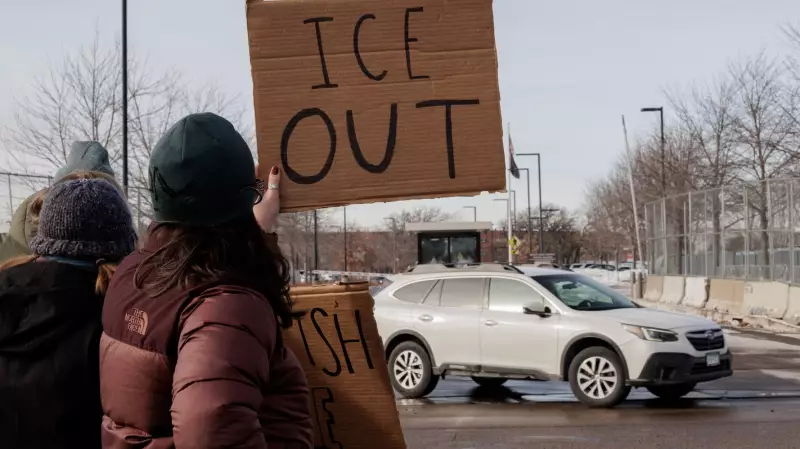
Citizens have organized neighborhood alert networks to warn about ICE presence and deliver food to immigrants afraid to leave their homes. Numerous businesses have posted signs stating ICE agents are not welcome, while Portland's school district—where more than half of students are non-white—is developing online learning plans in response to the situation.
Impact on Daily Life and Economy
City Council member Pious Ali, originally from Ghana, described the profound anxiety gripping Portland's immigrant population. "Our schools have seen about a quarter of immigrants not showing up," Ali reported, noting that many also fear going to work. "There are immigrants who live here who work in our hospitals, they work in our schools, they work in our hotels, they are part of the economic engine of our community."
Ali emphasized that ICE agents don't need to create trauma through aggressive tactics: "The federal government has the ability to contact these people without unleashing fear into our communities."
Another Portland councilor, Wes Pelletier, described how enforcement activity has caused residents to avoid leaving their homes even for basic necessities. Informal networks have emerged to track immigration agents, with business owners, teachers, and college students sharing information to alert neighborhoods. Volunteers have delivered groceries and diapers to families too frightened to venture outside.
"Every arrest feels like a wound to Portland," Pelletier stated emotionally.
Operation Details and Political Response
The enforcement action arrives in Maine—a predominantly rural state with approximately 1.4 million residents—as confrontations between ICE and demonstrators continue in Minnesota. There, ICE faces scrutiny following an agent's fatal shooting of Renee Good.
ICE did not respond to requests for comment about their Maine plans, but the Department of Homeland Security confirmed increased enforcement began Tuesday. Patricia Hyde, ICE deputy assistant director, told Fox News: "We have approximately 1,400 targets here in Maine," adding that agents had made 50 arrests by Tuesday.
Homeland Security Assistant Secretary Tricia McLaughlin stated: "We have launched Operation Catch of the Day to target the worst of the worst criminal illegal aliens in the state. On the first day of operations, we arrested illegal aliens convicted of aggravated assault, false imprisonment, and endangering the welfare of a child."
License Plate Controversy
Secretary of State Shenna Bellows, a longtime opponent of President Donald Trump, revealed that state officials received a request from U.S. Customs and Border Protection for confidential, undercover Maine license plates but decided against issuing them. These plates are typically used on unmarked vehicles.
"These requests in light of rumors of ICE deployment to Maine and abuses of power in Minnesota and elsewhere raise concerns," Bellows explained. "We have not revoked existing plates but have paused issuance of new plates. We want to be assured that Maine plates will not be used for lawless purposes."

Bellows cited accountability concerns, noting that ICE's use of license plates in other states has raised legal questions. Illinois Secretary of State Alexi Giannoulias, a Democrat, warned ICE agents last year that swapping or altering license plates is illegal.
Maine Senate Leader Trey Stewart, a top Republican, argued that withholding undercover plates jeopardizes public safety: "That really, one, puts us at odds as a state. Puts us at one end of an extreme that we really shouldn't be on."
Educational and Political Reactions
Portland Public Schools, Maine's largest and most diverse school district, implemented a "lockout" at two schools Tuesday to prevent anyone from entering buildings during concerns about nearby ICE activity. The district stated: "It was quickly determined that there was no threat to our school communities and the lockouts were lifted within minutes. This is an understandably tense time in our community, as reports and rumors of immigration enforcement actions grow."
Maine Democrats have strongly condemned the ICE activity. Devon Murphy-Anderson, executive director of the Maine Democratic Party, asserted: "The Trump administration has deployed ICE agents to Portland, Lewiston, and possibly other Maine communities. This is not about public safety. It is about fear, control, and political theater."
U.S. Attorney Andrew Benson, a Trump appointee, joined Democrats in calling for peaceful demonstrations while warning people to stay out of agents' way or face prosecution.
Historical Context and Community Profile
Portland and Lewiston have thousands of residents of African descent, with Somali immigration accelerating in the early 2000s. This has left Maine with one of the nation's highest Somali populations outside traditional immigrant gateway states.
Governor Mills has pushed back against what she characterizes as aggressive enforcement actions that undermine civil rights, stating they are "not welcome." Lewiston Mayor Carl Sheline similarly noted that ICE enforcement has caused "anxiety, fear or uncertainty" for many residents.
As the situation develops, Maine communities continue to organize resistance while navigating the complex realities of federal immigration enforcement in a politically charged national climate.





